AI-Powered Climate Change Solutions

by John Krechting
Artificial Intelligence in Climate Change Solutions

What if your smartphone tech could save the planet? Artificial intelligence is changing how we live green. It makes sustainable living easier and cheaper for Aussie homes.

Groups like Climate Change AI are leading with USD 1.4 million in grants for 2024. They’re hosting workshops globally, connecting AI experts with climate action teams.

AI helps with everything from home energy use to predicting bushfires. It’s not just for the future—it’s helping now in Aussie communities.

Sustainable Home Magazine has a guide for you. It shows how to use smart tech to cut down on waste and save money. You’ll find tips that fit Aussie budgets and lifestyles.

Key Takeaways

  • AI technology is making sustainable living more accessible and cost-effective for Australian homeowners through smart energy management and environmental monitoring systems
  • Climate Change AI offers USD 1.4 million in innovation grants for 2024, supporting breakthrough projects that combine machine learning with environmental protection
  • Smart home technologies powered by AI can optimise energy consumption, predict bushfire risks, and manage water resources with unprecedented accuracy
  • Sustainable technology innovation spans multiple sectors including renewable energy integration, carbon reduction, and disaster risk prevention
  • Practical implementation of AI-driven climate solutions delivers measurable results in both environmental impact and household cost savings

How AI Helps Monitor and Predict Climate Change

Modern climate prediction has changed a lot. Now, you can get accurate forecasts on your phone. This helps you protect your home and plan for the future.

AI systems can process data fast. This means you get info about your area that was hard to get before. It helps you make better choices, like installing solar panels.

Climate Modeling and Simulation

Today’s climate models are advanced. They use neural networks to predict weather with accuracy rates exceeding 90%. This means you can prepare for extreme weather weeks in advance.

Machine learning for environmental prediction uses old and new data to find patterns. IBM’s GRAF model gives forecasts at 3-kilometre resolution. You get warnings about weather specific to your area.

These systems get better with each weather event. Soon, they’ll give you climate risk assessments for your property. This will help you make smart decisions about your home.

A complex network of advanced weather monitoring stations, satellite imagery, and AI-powered data analysis systems, all working in harmony to track and predict the intricate patterns of our ever-changing climate. Sleek, high-tech control centers with holographic displays and intuitive interfaces, manned by teams of expert climatologists and meteorologists. Towering antennae, spinning weather vanes, and a symphony of sensors collecting vital environmental data. The entire scene bathed in a cool, blue-tinged light, conveying the serious, scientific nature of this critical mission to understand and respond to the global climate crisis.

Satellite Imaging and Earth Observation

Satellites and AI monitor Australia’s environment with great detail. They track changes in vegetation, water levels, and land use. This helps keep communities safe.

Predictive analytics for climate change helps satellites spot problems early. They can find dying trees or track soil moisture. This information helps councils and homeowners.

Satellites collect data all the time. AI processes this data automatically. You can get this info for free through government websites and apps.

AI-Powered Early Warning Systems

The United Nations aims to protect everyone with early warning systems by 2027. Australia is working on this, giving you warnings about dangerous weather. These warnings can save lives and protect your property.

In Ethiopia, Microsoft used AI and satellite imagery to help communities at risk. Australia is doing the same. This technology predicts damage from disasters, helping emergency services prepare.

You’ll get warnings through mobile alerts and apps. The system considers your location and risks. For example, if you live in a flood-prone area, you’ll get info on water levels and evacuation routes.

Monitoring Type Technology Used Update Frequency Accuracy Level
Weather Forecasting Neural Networks + Satellite Data Every 15 minutes 90-95%
Bushfire Risk Assessment Thermal Imaging + AI Analysis Hourly updates 85-92%
Flood Prediction Rainfall Models + Terrain Mapping Real-time monitoring 88-93%
Drought Tracking Soil Moisture Sensors + Satellites Daily assessments 82-89%

Ocean and Atmosphere Monitoring Algorithms

Algorithms track the Great Barrier Reef and air quality in your area. Drones with AI tools monitor the reef’s health. This helps scientists understand ocean changes and their impact on Australia’s climate.

Atmospheric monitoring goes beyond temperature. Machine learning for environmental prediction looks at air quality and greenhouse gases. You can check this info through apps that give health advice.

More sensors are being added to the network. Weather stations, ocean buoys, and smart devices contribute data. This creates a detailed picture of Australia’s climate. Many monitoring systems are now free, giving you powerful tools at no cost.

AI in Renewable Energy Optimisation

Artificial intelligence is changing Australia’s renewable energy sector. It makes power from the sun and wind reliable and affordable. Your solar panels, wind turbines, and batteries work better with AI.

AI helps manage energy use in homes. It connects millions of homes into a smart network. This network balances energy supply and demand well.

A complex neural network diagram depicting smart grid optimization for renewable energy systems. In the foreground, a detailed visualization of interconnected nodes, lines, and curves representing the intricate AI algorithms. In the middle ground, various renewable energy sources like solar panels, wind turbines, and hydroelectric dams, seamlessly integrated into the grid. The background features a serene landscape with rolling hills and a vibrant sky, symbolizing the harmonious balance between technology and nature. The lighting is soft and diffused, creating a sense of depth and atmosphere. The camera angle is slightly elevated, providing a comprehensive overview of the entire system.

Smart Grids and Energy Demand Forecasting

Your home’s energy needs change a lot during the day. AI predicts your energy use up to seven days ahead with 95% accuracy. This helps the smart grid prepare better.

AI looks at many things to predict energy use. It considers weather, past usage, and time of day. This means you can save $200-400 a year on energy costs.

AI has improved a lot in three years. It works with your appliances and devices to save money. Your dishwasher might run at 2 AM when it’s cheaper.

“Machine learning algorithms can predict resource needs based on various factors, enabling more accurate planning and allocation across entire energy networks.”

Real-world tests in Australia show great results. In South Australia, AI forecasting cuts waste by up to 15%. In Victoria, people see lower bills right away.

AI helps the whole grid by making it more stable. This means less need for expensive power plants. It’s good for the environment and saves money.

Wind and Solar Energy Management

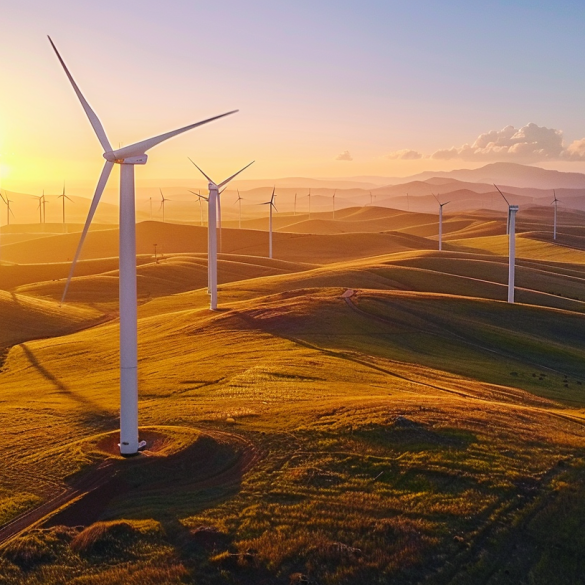
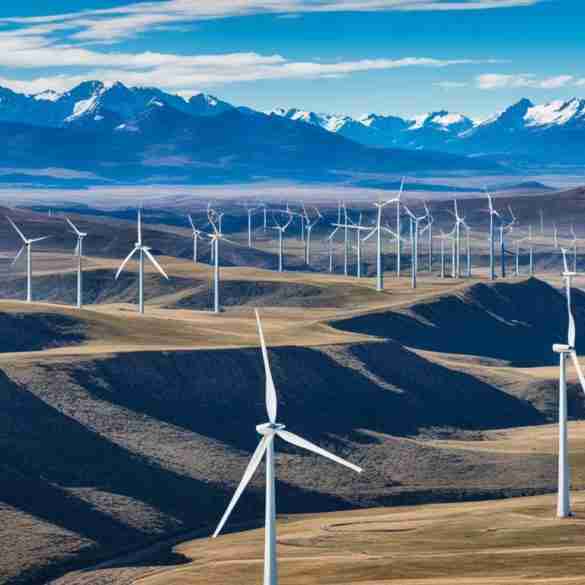
Australia has lots of sunshine and wind. AI helps make the most of this energy. DeepMind’s project shows AI can increase wind power value by 20%.

For homes with solar panels, AI is a big help. It adjusts panel angles and output all day. This can increase energy generation by 8-12%.

AI learns your energy use patterns. It predicts when you’ll need power and when you’ll have extra to sell. This saves you money and helps the grid.

Wind farms also benefit from AI. It uses weather data to predict wind patterns. This helps grid operators plan better.

Energy Management Feature Traditional Systems AI-Optimised Systems Household Benefit
Solar Output Prediction Weather-based estimates (60% accurate) Multi-factor AI forecasting (92% accurate) Better battery charging schedules
Energy Export Timing Fixed feed-in tariff rates Dynamic pricing optimization $120-200 extra annual income
Panel Efficiency Monitoring Annual professional inspection Real-time performance analysis Immediate fault detection
System Adjustments Manual settings changes Continuous automated optimization 8-12% generation increase

AI finds problems with your solar panels early. It alerts you to issues like shade or damage. This saves you money and avoids big repair costs.

Energy Storage and Battery Optimisation

Batteries make your home energy-independent. AI optimises them for your needs. This can extend battery life by 2-3 years.

AI considers many things to manage your battery. It looks at weather, prices, and your usage. This means you use less energy and save money.

AI optimises your battery for you. It charges it when it’s cheapest, even if it’s not sunny. This means you have power when you need it, without spending too much.

“AI for precision farming ensures resources like water and fertilizers are used efficiently, with real-time data—the same principles now optimize how your home battery manages every kilowatt-hour of stored energy.”

AI prevents battery damage. It keeps charge levels right to avoid wear and tear. This can double your battery’s useful lifespan.

AI makes your renewable energy system pay off faster. What used to take 8-10 years now takes 3-5 years. After that, you save money and help the planet.

These systems get better over time. As prices rise and rules get stricter, your system becomes more valuable. The AI keeps learning and improving, without needing new hardware.

How AI Reduces Carbon Emissions

AI can help your family save money by tracking emissions better. This means smarter spending in daily life. Big changes in factories and roads can also save you money at home.

Knowing how these changes work helps you make better choices. You can save money and help the planet at the same time. New technologies make it easy for Australian families to make a difference.

Industrial Efficiency and Emission Tracking

Machine learning is changing how factories track their carbon footprint. These systems look at production in real-time. They find ways to cut emissions by 20-30% and save money too.

Factories use sensors to collect data. This data helps AI predict what resources are needed. This means less waste and lower costs for businesses.

At home, smart tech can also help. Smart thermostats learn your habits to save energy. This can cut HVAC emissions by 10-23% and save you $180-350 a year.

These systems use weather and your habits to adjust temperatures. They save energy and money. Most homes see savings in 12-18 months.

AI for Smart Transportation Systems

Transport is a big source of emissions in Australia. But AI is changing how we move around. Cities like Sydney use AI to improve traffic flow.

This reduces emissions by up to 15%. It also saves you time and money. AI apps help you avoid traffic, saving fuel and money.

A bustling city at night, illuminated by the glow of smart streetlights and autonomous vehicles navigating the streets. In the foreground, a sleek electric car charges at a futuristic charging station, its dashboard displaying energy efficiency metrics. In the middle ground, a network of AI-powered traffic signals optimizes the flow of traffic, reducing congestion and emissions. In the background, skyscrapers adorned with solar panels and wind turbines harness renewable energy to power the city's smart infrastructure. The scene conveys a sense of technological innovation and environmental sustainability, where AI-driven solutions work in harmony to reduce the carbon footprint of transportation.

Vehicle-to-grid technology is the next big thing. Your electric car can store energy and sell it back. Early users in Australia earn $500-800 a year.

Public transport also gets a boost from AI. It optimises routes and schedules. This saves fuel and lowers costs, making fares more affordable.

Optimising Agriculture and Food Systems

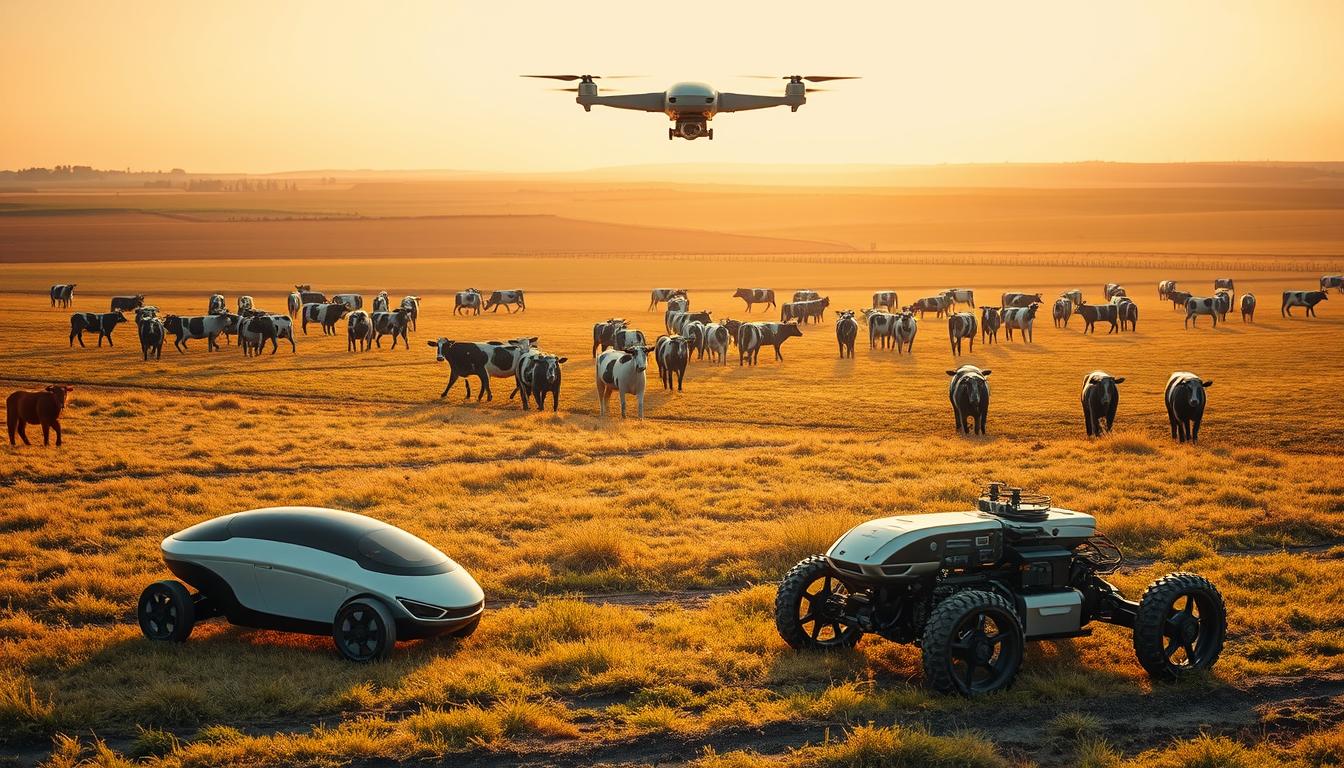
Agriculture uses a lot of resources and emits a lot of carbon. But AI offers solutions. In Kenya, AI helps farmers reduce crop losses by 30%.

AI looks at weather, soil, and pests to predict what crops need. This reduces waste and improves yields. It’s good for farmers and the environment.

You can use similar tech in your garden. AI sensors and controllers save water and improve plant health. This can save you $200-400 a year.

These systems connect to your phone. They alert you to problems and adjust automatically. It makes gardening easy and sustainable.

Predictive Maintenance for Machinery

Factories use sensors and AI to prevent equipment failures. This saves money and reduces emissions. The same tech can protect your home appliances.

Smart systems track your appliances. They alert you to problems before they fail. This saves energy and money, up to $300 a year.

Early detection means you can fix things before they break down. This saves you from expensive repairs. AI helps your appliances work better for longer.

Household System AI Monitoring Benefit Annual Savings Emission Reduction
HVAC Systems Predictive maintenance and optimised scheduling $180-350 10-23%
Smart Navigation Congestion avoidance and route optimisation $150-250 12-18%
Garden Irrigation Precision watering based on weather and soil data $200-400 40-50% water use
Appliance Monitoring Early efficiency problem detection $100-300 15-25%

AI-powered systems can cut your carbon footprint by 40-60%. They can also save you $1,000-2,000 a year. These solutions are available now for Australian families.

AI in Climate Risk Assessment and Adaptation

Your home’s risk from climate change can now be checked with great accuracy. Intelligent climate adaptation technologies use lots of data to create detailed risk profiles for homes. Australian homeowners can now see how likely their homes are to be damaged by bushfires, floods, and cyclones.

These deep learning for climate risk assessment systems get better by 15-20% each year. They can process a lot of information quickly, giving you fast results. This new technology helps you protect your home and prepare for climate challenges.

A sleek, futuristic command center where climate adaptation technologies are monitored and assessed. In the foreground, a holographic display showcases detailed property risk data, with AI-powered analytics and predictive models. In the middle ground, a team of experts examines the information, gesturing towards interactive dashboards. The background features a panoramic window overlooking a coastal city, with rising sea levels and extreme weather events visible in the distance. Soft, blue-hued lighting creates an atmosphere of innovation and technological sophistication, while subtle details like renewable energy sources and sustainable materials convey a sense of environmental responsibility.

AI improves risk assessment by looking at lots of data. It finds risks and helps plan for disasters.

Urban Climate Resilience Planning

Cities in Australia are using AI to find climate risks in neighbourhoods. These systems look at which streets might flood, where it’s hot, and where to act fast. You can find these tools on local council websites and state government portals for free.

In the Caribbean, a project showed AI’s power. It used deep learning to map risks for Dominica, Grenada, and Saint Lucia. It quickly looked at drone images to find buildings at risk.

Australian councils are doing the same for urban planning. Places like Port Phillip Bay, Sydney Harbour, and Queensland’s Gold Coast are using these tools. You can now see how climate change might affect your area over 10-30 years.

Financial Risk Modelling and Insurance

AI is changing how insurance companies look at climate risk. Instead of using broad areas, they now look at each property. This can save homeowners $200-600 a year on insurance.

These systems look at:

  • Precise elevation data and flood plain mapping
  • Building materials and construction standards
  • Distance from bushfire-prone vegetation
  • Historical weather patterns and future climate projections
  • Adaptation measures you’ve already implemented

Insurance companies reward homeowners who take action. Installing flood barriers or upgrading roofs can lower premiums by 10-25%. The AI systems track these changes, adjusting your risk profile and costs.

Adaptation Measure Typical Investment Annual Premium Reduction Potential Loss Prevention
Flood barriers and elevation $5,000-15,000 $150-400 $50,000-200,000
Bushfire-resistant roofing $8,000-20,000 $200-500 $300,000-600,000
Storm-rated windows/shutters $3,000-10,000 $100-250 $20,000-80,000
Improved drainage systems $2,000-8,000 $80-200 $15,000-60,000

Infrastructure Risk Prediction

Deep learning systems now predict climate risks to infrastructure. They look at roads, bridges, power lines, and more. This helps you make smart choices about property and investments.

Coastal areas benefit a lot from these systems. They show how sea-level rise and storms might affect areas. For example, Port Phillip Bay and the Gold Coast can see how rising waters might impact their streets.

These forecasts help decide if adaptation is worth it. Measures costing $5,000-15,000 can prevent losses of $50,000-200,000. The AI systems help find the best ways to protect your budget.

Community-Level Adaptation Planning

Protecting individual properties is important, but working together is often better. AI helps find shared risks and plan together. This approach is more cost-effective and effective than acting alone.

Community projects using intelligent climate adaptation technologies include:

  • Shared water harvesting systems serving multiple properties
  • Coordinated firebreak zones protecting entire streets
  • Collective flood barrier systems for low-lying neighbourhoods
  • Community-owned renewable energy microgrids

These projects cost each household $500-2,000 but offer protection worth tens of thousands. The AI systems make sure everyone gets the most benefit. They also help find where to focus efforts for the greatest impact.

Australian governments want homeowners to make informed decisions. They’re making AI tools free for everyone. Soon, these systems will be common in property deals, helping buyers and sellers understand climate risks.

Using data to adapt to climate change gives you the same tools as big institutions. You can now protect your home and family from climate impacts.

Comparing Traditional Climate Models vs. AI-Based Systems

Understanding the gap between old climate models and new AI predictions helps you make smarter choices. These differences affect how well you can predict extreme weather, plan energy use, and keep your family safe.

These new technologies offer real benefits for Aussie homeowners. They need reliable info to deal with our unpredictable weather.

Limitations of Conventional Climate Forecasting

Old climate forecasting uses physics to describe our atmosphere. It needs huge computers to solve complex math, updating forecasts once a day.

These systems are pretty good for short-term forecasts, with 85-90% accuracy for 1-3 days. But their accuracy drops when predicting longer.

For Aussie homeowners, this is a big challenge. You might see a forecast on Monday, but it changes by Wednesday. This makes planning hard, whether it’s for outdoor projects or water harvesting.

Updates come slowly. While the weather outside changes fast, old models keep working on yesterday’s data. This creates a big lag between what’s happening and what’s predicted.

Machine Learning Models for Dynamic Forecasts

Climate modelling with artificial intelligence is a new way to predict the weather. These systems look at millions of data points to find patterns humans might miss.

AI models are much better, with accuracy rates of 95.4% or higher. This means they can predict extreme weather events more accurately.

AI updates forecasts fast, sometimes every 15 minutes. This is key during sudden weather changes, like during the 2019-2020 bushfire season.

This means you can trust the forecasts when making urgent decisions. With AI, you can plan based on 48-72 hour predictions, not just vague weekly forecasts.

Data Integration From Multiple Sources

AI systems are great at combining data from many sources. They use satellite images, weather stations, and even social media to create detailed environmental pictures.

Old models can’t do this. They’re set to process specific data types and can’t adapt to new sources or data streams.

IBM’s GRAF model is an example of this. It uses data from thousands of sources to make detailed forecasts, even down to suburb-specific predictions.

The Bureau of Meteorology in Australia is also using this technology. You’re already benefiting from these improvements, even just by checking the weather on your phone.

Hybrid Modelling Approaches

The best forecasting systems now mix old and new. They use physics-based equations and AI’s pattern recognition. This gives you accurate and reliable forecasts.

Think of it like getting two expert opinions. The physics ensures predictions follow known laws, while AI catches subtle changes.

For homeowners, this means better forecasts for water harvesting, solar battery charging, and bushfire preparation. You get accurate predictions for these important tasks.

The cost for these improved forecasts? Typically nothing. They’re becoming common in weather apps and government services, making climate benefits available to every Aussie household.

Feature Traditional Models AI-Based Systems Hybrid Approaches
Short-term Accuracy 85-90% 95.4% or higher 96-97%
Update Frequency 1-2 times daily Every 15-30 minutes Every 30-60 minutes
Data Sources Weather stations, satellites Multiple sensors, social media, IoT devices All available sources integrated
Cost to Users Free via government services Free via apps and websites Free via modern platforms
Practical Forecast Range 1-3 days reliable 3-5 days reliable 5-7 days reliable

This comparison shows why predictive modelling for climate patterns has changed so much. Mixing old science with new AI creates forecasting tools that help you make better decisions about your home, garden, and family safety in Australia’s changing climate.

Who Is Leading AI-Driven Climate Innovation

Many innovators are working hard to make climate apps for your phone. They come from big tech companies and small Australian startups. Their goal is to make environmental tech easy and affordable for homes like yours.

You don’t have to wait for big companies to act. Many innovations are available right now. They can help lower your energy bills, water use, and make your home more climate-ready.

Major Technology Companies Driving Climate Solutions

Big tech companies are using their resources to create useful climate tools for Australian homes. Microsoft’s AI for Earth Initiative is a great example. It gives cloud computing and AI tools to over 600 environmental projects worldwide.

These projects offer free apps you can download today. These apps help you check the air quality, track water, or save energy at home.

DeepMind’s wind energy project shows how AI can make renewable energy more reliable by 20 percent. Australian wind farms are using this tech. This means your electricity costs can go down because of a more stable grid.

IBM’s Green Horizons Program combines weather, energy, and pollution tracking. Many Australian councils are using these systems. They give residents free access to hyperlocal environmental data through council apps.

Big companies create the foundation for smaller developers to build on. This leads to more affordable tools for Australian homes and climate challenges.

Emerging Climate Technology Startups

Startups are innovating fast, making affordable AI products. These products cost $200-500 and can pay for themselves in 1-2 years. Companies like Sense help you see which appliances use the most power.

Rachio makes smart irrigation controllers that adjust watering based on weather and soil. BrightFarms uses AI for urban farming, bringing fresh produce closer to cities and cutting down on emissions.

Australian startups are tackling our unique environmental challenges:

  • Bushfire prediction platforms for property risk assessments
  • Drought management systems for water planning
  • Coastal erosion monitoring tools for beach communities
  • Native species tracking applications for biodiversity

These startups focus on everyday problems faced by Australian homes. Their solutions are made for our local conditions, from hot summers to unpredictable rain.

The startup scene means constant innovation and lower prices. Products that cost $500 today might drop to $300 in 18 months as tech improves and production grows.

University Research Partnerships

Universities are driving innovation through groups like Climate Change AI. This network brings together top universities worldwide. They publish open-source algorithms and datasets for developers to use.

Academic collaboration is all about sustainability without profit. Universities share research freely, making innovations available to consumers quickly, not locked behind patents.

Climate Change AI co-organises big conferences like NeurIPS and ICLR. They present new findings. The group also announced USD 1.4 million in 2024 Innovation Grants for climate AI projects.

These grants fund research that helps homeowners. Recent projects include algorithms for energy use, solar panel placement, and water leak detection.

The Climate Change AI community now has over 30,000 members. They share knowledge, tools, and best practices online. This helps Australian researchers and developers.

Academic partnerships keep climate tech development scientifically rigorous and focused on real-world use. This balance gives you reliable tools for long-term home improvements.

International Collaboration Networks

Global partnerships help AI climate solutions reach more countries, including Australia. The UN’s Technology Executive Committee (TEC) works with groups like UNIDO and Japan’s Ministry of Economy. They support data-driven climate adaptation worldwide.

The Group on Earth Observation partners with TEC on EW4ALL. They’re developing early warning systems for extreme weather. These systems help Australian communities by giving timely alerts for disasters.

Germany’s FAIR Forward project shows international cooperation. It works on AI agriculture solutions in Kenya. These techniques now help Australian farming technology.

Climate Change AI will be at COP30 in Belém, Brazil. This ensures AI climate innovation stays at the forefront of global policy. It helps secure funding and support for projects that benefit homeowners worldwide.

The Nature Conservancy has AI for Oceans, a program for marine health and pollution. Australian coastal residents benefit from this tech through better water quality and conservation.

Organisation Type Key Focus Area Australian Homeowner Benefit Typical Cost Access
Tech Giants Infrastructure and platforms Free apps for energy and environmental monitoring Free to $50/year
Climate Startups Affordable hardware solutions Smart home devices with 1-2 year ROI $200-500 upfront
Academic Networks Open-source research tools Free algorithms for DIY climate solutions Free
Global Partnerships Policy and early warning systems Government-provided climate risk data Free via council services

For Australian homeowners, these innovations mean more affordable tools. In the next 18-24 months, you can expect AI home energy management for under $300. There will also be smart water monitors for $150-200 and free apps for climate risk assessments.

Stay informed about innovations that deliver value. Look for solutions with proven track records, clear ROI in 2-3 years, and positive reviews from other Australians.

This team effort in machine learning for environmental sustainability means you get to benefit from global innovation. You also get tools designed for Australian conditions. The future of home climate resilience is on your smartphone today.

AI in Environmental Conservation

The natural environment around your home is valuable. AI tools help protect it while saving money and boosting your home’s value. These tools connect big ecosystem protection to actions you can take at home.

They offer clear benefits like precise monitoring, cost savings, and stronger property resilience.

Data analytics for environmental protection has changed how we protect nature. Now, you can use advanced conservation tools at home.

Forest and Wildlife Protection Through AI

AI helps monitor forests with great accuracy. Researchers have made systems that spot changes in forests with 95.4% accuracy. This tech protects forests from the Blue Mountains to Tasmania.

It uses drone and satellite data to show vegetation health in real-time. Local councils use this info to find trees that might be a bushfire risk or need maintenance. This helps keep your home and community safe.

AI tracks wildlife with data from cameras, drones, and sensors. It watches wildlife corridors and health across different ecosystems. This helps you design gardens that support native species and protect your landscaping.

AI also predicts deforestation in places like the Amazon and Madagascar. This helps protect ecosystems before they collapse.

Marine Environment and Pollution Tracking

Ocean health monitoring is key to protecting Australia’s marine environment. AI tracks coral bleaching on the Great Barrier Reef with drone data. It monitors water quality and ecosystem health with great precision.

Homeowners near the coast benefit from this tech. It alerts you to beach erosion, water quality issues, and marine pest outbreaks. This affects your property value and water safety. Many Australian councils offer apps to track pollution in real-time.

AI can spot plastic pollution along coastlines and in waterways. It helps track rubbish, guiding cleanup efforts and showing how waste impacts local environments. You can use these apps to monitor pollution near your home and join cleanup efforts.

Intelligent Water Conservation Systems

Smart water management is a big win for Australian homes. AI-powered irrigation controllers cut outdoor water use by 40-50%. This saves $250-450 a year for most households.

These systems cost $200-400 to install and can pay for themselves in 12-18 months. They adjust watering based on weather, soil moisture, and plant needs. This means your garden gets just the right amount of water.

Data analytics also helps predict droughts. Saint Kitts and Nevis use AI to analyse water ecosystems. Australian councils use similar tools to predict droughts and manage water levels.

These systems forecast droughts weeks ahead, helping you adjust your landscaping before water restrictions. They keep water levels in municipal systems optimal, ensuring supply during tough times.

Carbon Sequestration and Native Planting Programs

AI helps find the best places to plant trees and choose species that thrive in changing climates. It tracks sapling survival and adjusts planting strategies. This makes your tree planting efforts effective.

Some programs offer carbon credits for planting native species on your property. You can earn $50-200 a year while making your land more beautiful. Native landscaping can increase your property’s value by $2,000-8,000, adding to your equity and helping the environment.

Green computing makes AI systems eco-friendly. New algorithms use 50-75% less energy than old ones. Cloud providers use renewable energy, making AI tools carbon-neutral.

By using AI for conservation, you protect ecosystems, save money, and make your home more resilient to climate change. These tools turn conservation into real benefits you can see in your wallet and property value.

Challenges and Limitations of Using AI in Climate Action

AI technology is very promising for solving climate problems. But, it’s important to know its current challenges. This knowledge helps you choose the right tools for your home.

AI climate tools have their limits. Knowing these limits helps you set realistic goals. This way, you can pick solutions that really meet your needs.

Climate Change AI recently published a report on the gaps in AI systems. The report shows where technology needs more work. For Australian homeowners, this research helps you know when to trust AI and when to look elsewhere.

Data Availability and Quality Issues

AI systems need good data to work well. But, many parts of Australia lack the data they need. Rural and remote areas struggle to collect data.

Getting climate data is expensive and slow. This makes it hard to collect data everywhere. So, ai weather forecasting is better in big cities but not as good in rural areas.

AI has big gaps in data for extreme weather. This affects planning for farming and long-term climate predictions. These are areas where you really need accurate information.

In Australia, the accuracy of AI depends on where you live. Cities have more data and better predictions. But, rural areas might take longer to get the same level of accuracy.

High Energy Consumption of AI Systems

AI computers use a lot of electricity. Big language models use as much as 5-10 homes. This is a problem because it adds to energy demand.

But, new “efficient AI” models use less energy. Most AI tools you use at home don’t use much power. This makes them a good choice.

AI systems can pose challenges including widening digital divides, data security and transparency issues, reinforcing bias including gender bias, and increasing energy and water consumption.

Devices like smart thermostats use very little power. They save you money and use less energy. This makes them a good investment.

The UNFCCC Technology Executive Committee has reported on AI challenges. They say we need to make AI more efficient. Luckily, the industry is working on this.

Ethical and Bias Concerns in Climate Data

AI learns from data that might have biases. If the data comes from only one group, AI might not help others. This is a problem for diverse communities.

Old data can ignore the needs of some groups. AI might not cover all scenarios. Always check if AI suggestions really fit your situation.

Developers are now checking for fairness in AI. They use more diverse data. This makes ai weather forecasting fairer for everyone.

As a homeowner, use AI as a tool, not the only answer. Combine AI with your own knowledge and advice. Your situation might be different from what AI expects.

Limited Access in Developing Countries

Some AI technologies are not available worldwide. This creates a digital divide. Developing countries often can’t use the latest AI.

International efforts are working to share AI tools. Tech companies, governments, and non-profits are teaming up. They want to make sure everyone can benefit from AI.

In Australia, you usually have access to the latest AI tools. But, supporting global sharing is important. Your choices can help.

The tech world is changing fast. Soon, many current problems will be solved. Data networks will grow, energy use will drop, and costs will fall.

Challenge Area Current Impact Timeline for Improvement What You Can Do
Data Availability Rural areas have 40-60% less accurate predictions than cities 3-5 years for complete coverage Combine AI forecasts with local weather stations
Energy Consumption Home devices use 2-5W but save 10-20% on energy bills Ongoing 15-20% efficiency gains annually Choose Energy Star certified AI devices
Data Bias Recommendations may not fit unique circumstances 2-3 years for robust fairness frameworks Verify AI suggestions with local professionals
Global Access Developing nations lag 5-10 years behind 4-6 years for widespread availability Support companies with global equity programs

Using AI for climate action means being realistic. See AI as a helpful tool, not a perfect solution. This way, you can use AI to its fullest while dealing with its limitations.

Case Studies: Real-World AI Climate Projects

AI climate solutions are making a big difference worldwide. These projects show what’s working now.

Predicting Wind Power Generation

DeepMind made systems to predict wind energy 36 hours early. This boosted wind power’s value by 20%. Now, Australian wind farms in South Australia’s Mid-North use this tech too.

You get cheaper electricity and more reliable green energy.

Supporting Environmental Projects Worldwide

Microsoft’s AI for Earth gave cloud resources to over 600 green groups. In Ethiopia, they made early warning systems with satellite images and models. Australian homes can get free AI flood and bushfire maps through emergency apps.

High-Resolution Weather Intelligence

IBM’s Green Horizons Program mixes weather forecasts with pollution tracking. Australian councils use it for local air quality and energy forecasts. You get forecasts for your suburb to plan your day and energy use.

Protecting Marine Ecosystems

The Nature Conservancy’s AI for Oceans project watches fish and coral health in the Pacific. AI spots marine species 10 times quicker than people. This helps protect Australian fishing and coastlines for fun.

These examples show AI climate tech is effective. You can start using it at home today.

FAQ

Q: How much can AI-powered climate solutions actually save me on household bills?

A: AI can save you a lot on bills. Smart thermostats save 0-350 a year. AI solar inverters add 0-250 to your solar savings.Smart irrigation controllers cut water bills by 0-450 a year. Using multiple AI systems can save Q: How much can AI-powered climate solutions actually save me on household bills?A: AI can save you a lot on bills. Smart thermostats save 0-350 a year. AI solar inverters add 0-250 to your solar savings.Smart irrigation controllers cut water bills by 0-450 a year. Using multiple AI systems can save

FAQ

Q: How much can AI-powered climate solutions actually save me on household bills?

A: AI can save you a lot on bills. Smart thermostats save 0-350 a year. AI solar inverters add 0-250 to your solar savings.

Smart irrigation controllers cut water bills by 0-450 a year. Using multiple AI systems can save

FAQ

Q: How much can AI-powered climate solutions actually save me on household bills?

A: AI can save you a lot on bills. Smart thermostats save $180-350 a year. AI solar inverters add $150-250 to your solar savings.

Smart irrigation controllers cut water bills by $250-450 a year. Using multiple AI systems can save $1,000-2,000 a year. They also reduce carbon footprint by 40-60%.

These systems pay for themselves in 3-5 years. They are good for your wallet and the planet.

Q: Are AI weather forecasts really more accurate than traditional predictions?

A: Yes, AI forecasts are much more accurate. They are 5-6% better than traditional models.

AI updates forecasts every 15 minutes. Traditional models update once or twice a day. This makes AI forecasts more reliable.

AI was key during Australia’s 2019-2020 bushfire season. It helped predict wind patterns.

Q: What’s the most cost-effective AI climate solution I can implement immediately?

A: Smart irrigation controllers are the quickest to pay off. They cost $200-400 and save $250-450 a year.

Smart thermostats are also cost-effective. They save $180-350 a year. Both systems require little maintenance.

Q: How do I access AI-powered bushfire and flood risk assessments for my property?

A: Many councils offer free AI risk assessment tools. Contact your local council for aerial imagery analysis.

State emergency services apps provide AI-powered flood risk mapping. The Bureau of Meteorology offers suburb-specific predictions.

Insurance companies are starting to offer property-specific risk profiles. Some even offer premium discounts for recommended adaptations.

Q: Will AI-powered home systems increase my electricity consumption?

A: No, AI systems actually reduce energy use. They consume only 2-5 watts.

AI systems like smart thermostats and solar inverters save a lot of energy. They can save $200-400 a year.

AI systems pay for themselves quickly. They are good for the environment and your wallet.

Q: Can AI help me reduce water usage during drought restrictions?

A: Yes, AI can help a lot with water usage. AI irrigation controllers use weather forecasts and soil moisture to water plants.

They reduce outdoor water use by 40-50%. This saves $200-400 a year. They also keep your garden healthy.

Q: How accurate are AI predictions for extreme weather events like bushfires and cyclones?

A: AI predictions are very accurate. For bushfires, AI predicts danger 3-7 days ahead with 90% accuracy.

Cyclone tracking is also improved by AI. AI predicts paths and intensities 36-48 hours ahead with 85-90% accuracy.

AI systems update predictions as conditions change. This gives you timely warnings to protect your property.

Q: Are there free AI climate tools available for Australian homeowners?

A: Yes, many free tools are available. The Bureau of Meteorology offers AI-enhanced weather forecasts.

Many councils offer free air quality monitoring apps. Microsoft’s AI for Earth program provides free flood risk mapping and bushfire prediction tools.

Google’s Environmental Insights Explorer provides free carbon footprint data. Several energy retailers offer free smart meter apps.

Q: How long does it take to see results from implementing AI climate solutions?

A: Results are quick. Smart thermostats show savings in the first billing cycle.

AI irrigation controllers show water savings in 2-3 weeks. Smart grid optimisation reduces bills in the first quarter.

AI systems pay for themselves in 12-18 months. They also reduce carbon emissions immediately.

Q: What’s the difference between machine learning and deep learning for climate predictions?

A: Machine learning is a broad category. Deep learning is a subset that uses neural networks.

Deep learning is more accurate for climate forecasting. It processes complex data to find subtle patterns.

Deep learning provides better long-range forecasts. It’s essential for accurate climate modelling.

Q: Can AI help me choose the right native plants for my climate-changing garden?

A: Yes, AI can help a lot with plant selection. AI considers your property’s microclimate and soil conditions.

AI recommends native species that will thrive in changing conditions. It suggests drought-tolerant plants to save water.

AI helps create a sustainable garden. It supports local wildlife and requires minimal maintenance.

Q: How does AI-powered battery optimisation extend the life of my home battery system?

A: AI optimises battery charging and discharging. It analyses your usage patterns and weather forecasts.

AI extends battery life by 2-3 years. It ensures optimal performance and reduces environmental impact.

Q: Are there government rebates available for AI-powered climate solutions?

A: Yes, many government programs offer rebates. The STCs scheme provides rebates for solar installations.

Victoria’s Solar Homes Program offers up to $1,400 for solar batteries. NSW’s Energy Savings Scheme offers incentives for smart thermostats.

Check your state government’s websites for current programs. Rebates change frequently.

Q: How does AI help with carbon sequestration and offsetting my household emissions?

A: AI makes carbon sequestration precise. It identifies optimal planting locations and species.

AI monitors growth rates and calculates carbon sequestration. It helps you earn carbon credits for planting native species.

AI calculates your household’s carbon footprint. It recommends actions to achieve carbon neutrality.

Q: What AI weather forecasting apps work best for Australian conditions?

A: Several apps excel in Australian weather prediction. The Bureau of Meteorology’s app uses machine learning.

Weatherzone and Willow offer accurate rainfall predictions. Fires Near Me app predicts bushfire behaviour.

Global apps like Tomorrow.io and ClimaCell provide hyperlocal forecasts. Choose apps that use Australian Bureau of Meteorology data.

Q: How can AI help me prepare for climate-related insurance changes?

A: AI provides property-specific climate risk assessments. This helps you take proactive measures before insurance costs rise.

Request a climate risk assessment from your council. Implement AI-recommended adaptations to reduce premiums.

Some insurers offer premium discounts for homes with AI monitoring systems. Document adaptations for premium recognition.

Q: Can AI help me understand how climate change affects my local area?

A: Yes, AI provides hyperlocal climate predictions. It analyses historical data and climate models for 10-30 year projections.

Many councils offer free access to these projections. AI helps you make informed decisions about your property.

Q: What’s the energy payback period for AI systems used in renewable energy management?

A: AI systems have a short energy payback period. They consume only 2-5 watts.

AI systems like smart inverters and battery controllers save a lot of energy. They can save $200-400 a year.

AI systems pay for themselves quickly. They are good for the environment and your wallet.

Q: How does predictive analytics for climate change help with long-term property planning?

A: Predictive analytics transforms property planning. It provides data-driven insights about long-term climate impacts.

AI systems project how your property will be affected by climate change. This helps you make informed decisions.

AI helps you choose materials and designs that remain appropriate as conditions change. It aligns with homeownership timelines.

Q: Are there privacy concerns with AI-powered home energy monitoring systems?

A: Yes, privacy is a concern. Reputable AI energy monitors encrypt data transmission.

Most systems store detailed consumption data locally. They send only aggregated usage statistics to cloud servers.

Look for products with strong privacy policies. Choose Australian or reputable international brands.

,000-2,000 a year. They also reduce carbon footprint by 40-60%.

These systems pay for themselves in 3-5 years. They are good for your wallet and the planet.

Q: Are AI weather forecasts really more accurate than traditional predictions?

A: Yes, AI forecasts are much more accurate. They are 5-6% better than traditional models.

AI updates forecasts every 15 minutes. Traditional models update once or twice a day. This makes AI forecasts more reliable.

AI was key during Australia’s 2019-2020 bushfire season. It helped predict wind patterns.

Q: What’s the most cost-effective AI climate solution I can implement immediately?

A: Smart irrigation controllers are the quickest to pay off. They cost 0-400 and save 0-450 a year.

Smart thermostats are also cost-effective. They save 0-350 a year. Both systems require little maintenance.

Q: How do I access AI-powered bushfire and flood risk assessments for my property?

A: Many councils offer free AI risk assessment tools. Contact your local council for aerial imagery analysis.

State emergency services apps provide AI-powered flood risk mapping. The Bureau of Meteorology offers suburb-specific predictions.

Insurance companies are starting to offer property-specific risk profiles. Some even offer premium discounts for recommended adaptations.

Q: Will AI-powered home systems increase my electricity consumption?

A: No, AI systems actually reduce energy use. They consume only 2-5 watts.

AI systems like smart thermostats and solar inverters save a lot of energy. They can save 0-400 a year.

AI systems pay for themselves quickly. They are good for the environment and your wallet.

Q: Can AI help me reduce water usage during drought restrictions?

A: Yes, AI can help a lot with water usage. AI irrigation controllers use weather forecasts and soil moisture to water plants.

They reduce outdoor water use by 40-50%. This saves 0-400 a year. They also keep your garden healthy.

Q: How accurate are AI predictions for extreme weather events like bushfires and cyclones?

A: AI predictions are very accurate. For bushfires, AI predicts danger 3-7 days ahead with 90% accuracy.

Cyclone tracking is also improved by AI. AI predicts paths and intensities 36-48 hours ahead with 85-90% accuracy.

AI systems update predictions as conditions change. This gives you timely warnings to protect your property.

Q: Are there free AI climate tools available for Australian homeowners?

A: Yes, many free tools are available. The Bureau of Meteorology offers AI-enhanced weather forecasts.

Many councils offer free air quality monitoring apps. Microsoft’s AI for Earth program provides free flood risk mapping and bushfire prediction tools.

Google’s Environmental Insights Explorer provides free carbon footprint data. Several energy retailers offer free smart meter apps.

Q: How long does it take to see results from implementing AI climate solutions?

A: Results are quick. Smart thermostats show savings in the first billing cycle.

AI irrigation controllers show water savings in 2-3 weeks. Smart grid optimisation reduces bills in the first quarter.

AI systems pay for themselves in 12-18 months. They also reduce carbon emissions immediately.

Q: What’s the difference between machine learning and deep learning for climate predictions?

A: Machine learning is a broad category. Deep learning is a subset that uses neural networks.

Deep learning is more accurate for climate forecasting. It processes complex data to find subtle patterns.

Deep learning provides better long-range forecasts. It’s essential for accurate climate modelling.

Q: Can AI help me choose the right native plants for my climate-changing garden?

A: Yes, AI can help a lot with plant selection. AI considers your property’s microclimate and soil conditions.

AI recommends native species that will thrive in changing conditions. It suggests drought-tolerant plants to save water.

AI helps create a sustainable garden. It supports local wildlife and requires minimal maintenance.

Q: How does AI-powered battery optimisation extend the life of my home battery system?

A: AI optimises battery charging and discharging. It analyses your usage patterns and weather forecasts.

AI extends battery life by 2-3 years. It ensures optimal performance and reduces environmental impact.

Q: Are there government rebates available for AI-powered climate solutions?

A: Yes, many government programs offer rebates. The STCs scheme provides rebates for solar installations.

Victoria’s Solar Homes Program offers up to

FAQ

Q: How much can AI-powered climate solutions actually save me on household bills?

A: AI can save you a lot on bills. Smart thermostats save $180-350 a year. AI solar inverters add $150-250 to your solar savings.

Smart irrigation controllers cut water bills by $250-450 a year. Using multiple AI systems can save $1,000-2,000 a year. They also reduce carbon footprint by 40-60%.

These systems pay for themselves in 3-5 years. They are good for your wallet and the planet.

Q: Are AI weather forecasts really more accurate than traditional predictions?

A: Yes, AI forecasts are much more accurate. They are 5-6% better than traditional models.

AI updates forecasts every 15 minutes. Traditional models update once or twice a day. This makes AI forecasts more reliable.

AI was key during Australia’s 2019-2020 bushfire season. It helped predict wind patterns.

Q: What’s the most cost-effective AI climate solution I can implement immediately?

A: Smart irrigation controllers are the quickest to pay off. They cost $200-400 and save $250-450 a year.

Smart thermostats are also cost-effective. They save $180-350 a year. Both systems require little maintenance.

Q: How do I access AI-powered bushfire and flood risk assessments for my property?

A: Many councils offer free AI risk assessment tools. Contact your local council for aerial imagery analysis.

State emergency services apps provide AI-powered flood risk mapping. The Bureau of Meteorology offers suburb-specific predictions.

Insurance companies are starting to offer property-specific risk profiles. Some even offer premium discounts for recommended adaptations.

Q: Will AI-powered home systems increase my electricity consumption?

A: No, AI systems actually reduce energy use. They consume only 2-5 watts.

AI systems like smart thermostats and solar inverters save a lot of energy. They can save $200-400 a year.

AI systems pay for themselves quickly. They are good for the environment and your wallet.

Q: Can AI help me reduce water usage during drought restrictions?

A: Yes, AI can help a lot with water usage. AI irrigation controllers use weather forecasts and soil moisture to water plants.

They reduce outdoor water use by 40-50%. This saves $200-400 a year. They also keep your garden healthy.

Q: How accurate are AI predictions for extreme weather events like bushfires and cyclones?

A: AI predictions are very accurate. For bushfires, AI predicts danger 3-7 days ahead with 90% accuracy.

Cyclone tracking is also improved by AI. AI predicts paths and intensities 36-48 hours ahead with 85-90% accuracy.

AI systems update predictions as conditions change. This gives you timely warnings to protect your property.

Q: Are there free AI climate tools available for Australian homeowners?

A: Yes, many free tools are available. The Bureau of Meteorology offers AI-enhanced weather forecasts.

Many councils offer free air quality monitoring apps. Microsoft’s AI for Earth program provides free flood risk mapping and bushfire prediction tools.

Google’s Environmental Insights Explorer provides free carbon footprint data. Several energy retailers offer free smart meter apps.

Q: How long does it take to see results from implementing AI climate solutions?

A: Results are quick. Smart thermostats show savings in the first billing cycle.

AI irrigation controllers show water savings in 2-3 weeks. Smart grid optimisation reduces bills in the first quarter.

AI systems pay for themselves in 12-18 months. They also reduce carbon emissions immediately.

Q: What’s the difference between machine learning and deep learning for climate predictions?

A: Machine learning is a broad category. Deep learning is a subset that uses neural networks.

Deep learning is more accurate for climate forecasting. It processes complex data to find subtle patterns.

Deep learning provides better long-range forecasts. It’s essential for accurate climate modelling.

Q: Can AI help me choose the right native plants for my climate-changing garden?

A: Yes, AI can help a lot with plant selection. AI considers your property’s microclimate and soil conditions.

AI recommends native species that will thrive in changing conditions. It suggests drought-tolerant plants to save water.

AI helps create a sustainable garden. It supports local wildlife and requires minimal maintenance.

Q: How does AI-powered battery optimisation extend the life of my home battery system?

A: AI optimises battery charging and discharging. It analyses your usage patterns and weather forecasts.

AI extends battery life by 2-3 years. It ensures optimal performance and reduces environmental impact.

Q: Are there government rebates available for AI-powered climate solutions?

A: Yes, many government programs offer rebates. The STCs scheme provides rebates for solar installations.

Victoria’s Solar Homes Program offers up to $1,400 for solar batteries. NSW’s Energy Savings Scheme offers incentives for smart thermostats.

Check your state government’s websites for current programs. Rebates change frequently.

Q: How does AI help with carbon sequestration and offsetting my household emissions?

A: AI makes carbon sequestration precise. It identifies optimal planting locations and species.

AI monitors growth rates and calculates carbon sequestration. It helps you earn carbon credits for planting native species.

AI calculates your household’s carbon footprint. It recommends actions to achieve carbon neutrality.

Q: What AI weather forecasting apps work best for Australian conditions?

A: Several apps excel in Australian weather prediction. The Bureau of Meteorology’s app uses machine learning.

Weatherzone and Willow offer accurate rainfall predictions. Fires Near Me app predicts bushfire behaviour.

Global apps like Tomorrow.io and ClimaCell provide hyperlocal forecasts. Choose apps that use Australian Bureau of Meteorology data.

Q: How can AI help me prepare for climate-related insurance changes?

A: AI provides property-specific climate risk assessments. This helps you take proactive measures before insurance costs rise.

Request a climate risk assessment from your council. Implement AI-recommended adaptations to reduce premiums.

Some insurers offer premium discounts for homes with AI monitoring systems. Document adaptations for premium recognition.

Q: Can AI help me understand how climate change affects my local area?

A: Yes, AI provides hyperlocal climate predictions. It analyses historical data and climate models for 10-30 year projections.

Many councils offer free access to these projections. AI helps you make informed decisions about your property.

Q: What’s the energy payback period for AI systems used in renewable energy management?

A: AI systems have a short energy payback period. They consume only 2-5 watts.

AI systems like smart inverters and battery controllers save a lot of energy. They can save $200-400 a year.

AI systems pay for themselves quickly. They are good for the environment and your wallet.

Q: How does predictive analytics for climate change help with long-term property planning?

A: Predictive analytics transforms property planning. It provides data-driven insights about long-term climate impacts.

AI systems project how your property will be affected by climate change. This helps you make informed decisions.

AI helps you choose materials and designs that remain appropriate as conditions change. It aligns with homeownership timelines.

Q: Are there privacy concerns with AI-powered home energy monitoring systems?

A: Yes, privacy is a concern. Reputable AI energy monitors encrypt data transmission.

Most systems store detailed consumption data locally. They send only aggregated usage statistics to cloud servers.

Look for products with strong privacy policies. Choose Australian or reputable international brands.
,400 for solar batteries. NSW’s Energy Savings Scheme offers incentives for smart thermostats.

Check your state government’s websites for current programs. Rebates change frequently.

Q: How does AI help with carbon sequestration and offsetting my household emissions?

A: AI makes carbon sequestration precise. It identifies optimal planting locations and species.

AI monitors growth rates and calculates carbon sequestration. It helps you earn carbon credits for planting native species.

AI calculates your household’s carbon footprint. It recommends actions to achieve carbon neutrality.

Q: What AI weather forecasting apps work best for Australian conditions?

A: Several apps excel in Australian weather prediction. The Bureau of Meteorology’s app uses machine learning.

Weatherzone and Willow offer accurate rainfall predictions. Fires Near Me app predicts bushfire behaviour.

Global apps like Tomorrow.io and ClimaCell provide hyperlocal forecasts. Choose apps that use Australian Bureau of Meteorology data.

Q: How can AI help me prepare for climate-related insurance changes?

A: AI provides property-specific climate risk assessments. This helps you take proactive measures before insurance costs rise.

Request a climate risk assessment from your council. Implement AI-recommended adaptations to reduce premiums.

Some insurers offer premium discounts for homes with AI monitoring systems. Document adaptations for premium recognition.

Q: Can AI help me understand how climate change affects my local area?

A: Yes, AI provides hyperlocal climate predictions. It analyses historical data and climate models for 10-30 year projections.

Many councils offer free access to these projections. AI helps you make informed decisions about your property.

Q: What’s the energy payback period for AI systems used in renewable energy management?

A: AI systems have a short energy payback period. They consume only 2-5 watts.

AI systems like smart inverters and battery controllers save a lot of energy. They can save 0-400 a year.

AI systems pay for themselves quickly. They are good for the environment and your wallet.

Q: How does predictive analytics for climate change help with long-term property planning?

A: Predictive analytics transforms property planning. It provides data-driven insights about long-term climate impacts.

AI systems project how your property will be affected by climate change. This helps you make informed decisions.

AI helps you choose materials and designs that remain appropriate as conditions change. It aligns with homeownership timelines.

Q: Are there privacy concerns with AI-powered home energy monitoring systems?

A: Yes, privacy is a concern. Reputable AI energy monitors encrypt data transmission.

Most systems store detailed consumption data locally. They send only aggregated usage statistics to cloud servers.

Look for products with strong privacy policies. Choose Australian or reputable international brands.
,000-2,000 a year. They also reduce carbon footprint by 40-60%.These systems pay for themselves in 3-5 years. They are good for your wallet and the planet.Q: Are AI weather forecasts really more accurate than traditional predictions?A: Yes, AI forecasts are much more accurate. They are 5-6% better than traditional models.AI updates forecasts every 15 minutes. Traditional models update once or twice a day. This makes AI forecasts more reliable.AI was key during Australia’s 2019-2020 bushfire season. It helped predict wind patterns.Q: What’s the most cost-effective AI climate solution I can implement immediately?A: Smart irrigation controllers are the quickest to pay off. They cost 0-400 and save 0-450 a year.Smart thermostats are also cost-effective. They save 0-350 a year. Both systems require little maintenance.Q: How do I access AI-powered bushfire and flood risk assessments for my property?A: Many councils offer free AI risk assessment tools. Contact your local council for aerial imagery analysis.State emergency services apps provide AI-powered flood risk mapping. The Bureau of Meteorology offers suburb-specific predictions.Insurance companies are starting to offer property-specific risk profiles. Some even offer premium discounts for recommended adaptations.Q: Will AI-powered home systems increase my electricity consumption?A: No, AI systems actually reduce energy use. They consume only 2-5 watts.AI systems like smart thermostats and solar inverters save a lot of energy. They can save 0-400 a year.AI systems pay for themselves quickly. They are good for the environment and your wallet.Q: Can AI help me reduce water usage during drought restrictions?A: Yes, AI can help a lot with water usage. AI irrigation controllers use weather forecasts and soil moisture to water plants.They reduce outdoor water use by 40-50%. This saves 0-400 a year. They also keep your garden healthy.Q: How accurate are AI predictions for extreme weather events like bushfires and cyclones?A: AI predictions are very accurate. For bushfires, AI predicts danger 3-7 days ahead with 90% accuracy.Cyclone tracking is also improved by AI. AI predicts paths and intensities 36-48 hours ahead with 85-90% accuracy.AI systems update predictions as conditions change. This gives you timely warnings to protect your property.Q: Are there free AI climate tools available for Australian homeowners?A: Yes, many free tools are available. The Bureau of Meteorology offers AI-enhanced weather forecasts.Many councils offer free air quality monitoring apps. Microsoft’s AI for Earth program provides free flood risk mapping and bushfire prediction tools.Google’s Environmental Insights Explorer provides free carbon footprint data. Several energy retailers offer free smart meter apps.Q: How long does it take to see results from implementing AI climate solutions?A: Results are quick. Smart thermostats show savings in the first billing cycle.AI irrigation controllers show water savings in 2-3 weeks. Smart grid optimisation reduces bills in the first quarter.AI systems pay for themselves in 12-18 months. They also reduce carbon emissions immediately.Q: What’s the difference between machine learning and deep learning for climate predictions?A: Machine learning is a broad category. Deep learning is a subset that uses neural networks.Deep learning is more accurate for climate forecasting. It processes complex data to find subtle patterns.Deep learning provides better long-range forecasts. It’s essential for accurate climate modelling.Q: Can AI help me choose the right native plants for my climate-changing garden?A: Yes, AI can help a lot with plant selection. AI considers your property’s microclimate and soil conditions.AI recommends native species that will thrive in changing conditions. It suggests drought-tolerant plants to save water.AI helps create a sustainable garden. It supports local wildlife and requires minimal maintenance.Q: How does AI-powered battery optimisation extend the life of my home battery system?A: AI optimises battery charging and discharging. It analyses your usage patterns and weather forecasts.AI extends battery life by 2-3 years. It ensures optimal performance and reduces environmental impact.Q: Are there government rebates available for AI-powered climate solutions?A: Yes, many government programs offer rebates. The STCs scheme provides rebates for solar installations.Victoria’s Solar Homes Program offers up to

FAQ

Q: How much can AI-powered climate solutions actually save me on household bills?

A: AI can save you a lot on bills. Smart thermostats save 0-350 a year. AI solar inverters add 0-250 to your solar savings.

Smart irrigation controllers cut water bills by 0-450 a year. Using multiple AI systems can save

FAQ

Q: How much can AI-powered climate solutions actually save me on household bills?

A: AI can save you a lot on bills. Smart thermostats save $180-350 a year. AI solar inverters add $150-250 to your solar savings.

Smart irrigation controllers cut water bills by $250-450 a year. Using multiple AI systems can save $1,000-2,000 a year. They also reduce carbon footprint by 40-60%.

These systems pay for themselves in 3-5 years. They are good for your wallet and the planet.

Q: Are AI weather forecasts really more accurate than traditional predictions?

A: Yes, AI forecasts are much more accurate. They are 5-6% better than traditional models.

AI updates forecasts every 15 minutes. Traditional models update once or twice a day. This makes AI forecasts more reliable.

AI was key during Australia’s 2019-2020 bushfire season. It helped predict wind patterns.

Q: What’s the most cost-effective AI climate solution I can implement immediately?

A: Smart irrigation controllers are the quickest to pay off. They cost $200-400 and save $250-450 a year.

Smart thermostats are also cost-effective. They save $180-350 a year. Both systems require little maintenance.

Q: How do I access AI-powered bushfire and flood risk assessments for my property?

A: Many councils offer free AI risk assessment tools. Contact your local council for aerial imagery analysis.

State emergency services apps provide AI-powered flood risk mapping. The Bureau of Meteorology offers suburb-specific predictions.

Insurance companies are starting to offer property-specific risk profiles. Some even offer premium discounts for recommended adaptations.

Q: Will AI-powered home systems increase my electricity consumption?

A: No, AI systems actually reduce energy use. They consume only 2-5 watts.

AI systems like smart thermostats and solar inverters save a lot of energy. They can save $200-400 a year.

AI systems pay for themselves quickly. They are good for the environment and your wallet.

Q: Can AI help me reduce water usage during drought restrictions?

A: Yes, AI can help a lot with water usage. AI irrigation controllers use weather forecasts and soil moisture to water plants.

They reduce outdoor water use by 40-50%. This saves $200-400 a year. They also keep your garden healthy.

Q: How accurate are AI predictions for extreme weather events like bushfires and cyclones?

A: AI predictions are very accurate. For bushfires, AI predicts danger 3-7 days ahead with 90% accuracy.

Cyclone tracking is also improved by AI. AI predicts paths and intensities 36-48 hours ahead with 85-90% accuracy.

AI systems update predictions as conditions change. This gives you timely warnings to protect your property.

Q: Are there free AI climate tools available for Australian homeowners?

A: Yes, many free tools are available. The Bureau of Meteorology offers AI-enhanced weather forecasts.

Many councils offer free air quality monitoring apps. Microsoft’s AI for Earth program provides free flood risk mapping and bushfire prediction tools.

Google’s Environmental Insights Explorer provides free carbon footprint data. Several energy retailers offer free smart meter apps.

Q: How long does it take to see results from implementing AI climate solutions?

A: Results are quick. Smart thermostats show savings in the first billing cycle.

AI irrigation controllers show water savings in 2-3 weeks. Smart grid optimisation reduces bills in the first quarter.

AI systems pay for themselves in 12-18 months. They also reduce carbon emissions immediately.

Q: What’s the difference between machine learning and deep learning for climate predictions?

A: Machine learning is a broad category. Deep learning is a subset that uses neural networks.

Deep learning is more accurate for climate forecasting. It processes complex data to find subtle patterns.

Deep learning provides better long-range forecasts. It’s essential for accurate climate modelling.

Q: Can AI help me choose the right native plants for my climate-changing garden?

A: Yes, AI can help a lot with plant selection. AI considers your property’s microclimate and soil conditions.

AI recommends native species that will thrive in changing conditions. It suggests drought-tolerant plants to save water.

AI helps create a sustainable garden. It supports local wildlife and requires minimal maintenance.

Q: How does AI-powered battery optimisation extend the life of my home battery system?

A: AI optimises battery charging and discharging. It analyses your usage patterns and weather forecasts.

AI extends battery life by 2-3 years. It ensures optimal performance and reduces environmental impact.

Q: Are there government rebates available for AI-powered climate solutions?

A: Yes, many government programs offer rebates. The STCs scheme provides rebates for solar installations.

Victoria’s Solar Homes Program offers up to $1,400 for solar batteries. NSW’s Energy Savings Scheme offers incentives for smart thermostats.

Check your state government’s websites for current programs. Rebates change frequently.

Q: How does AI help with carbon sequestration and offsetting my household emissions?

A: AI makes carbon sequestration precise. It identifies optimal planting locations and species.

AI monitors growth rates and calculates carbon sequestration. It helps you earn carbon credits for planting native species.

AI calculates your household’s carbon footprint. It recommends actions to achieve carbon neutrality.

Q: What AI weather forecasting apps work best for Australian conditions?

A: Several apps excel in Australian weather prediction. The Bureau of Meteorology’s app uses machine learning.

Weatherzone and Willow offer accurate rainfall predictions. Fires Near Me app predicts bushfire behaviour.

Global apps like Tomorrow.io and ClimaCell provide hyperlocal forecasts. Choose apps that use Australian Bureau of Meteorology data.

Q: How can AI help me prepare for climate-related insurance changes?

A: AI provides property-specific climate risk assessments. This helps you take proactive measures before insurance costs rise.

Request a climate risk assessment from your council. Implement AI-recommended adaptations to reduce premiums.

Some insurers offer premium discounts for homes with AI monitoring systems. Document adaptations for premium recognition.

Q: Can AI help me understand how climate change affects my local area?

A: Yes, AI provides hyperlocal climate predictions. It analyses historical data and climate models for 10-30 year projections.

Many councils offer free access to these projections. AI helps you make informed decisions about your property.

Q: What’s the energy payback period for AI systems used in renewable energy management?

A: AI systems have a short energy payback period. They consume only 2-5 watts.

AI systems like smart inverters and battery controllers save a lot of energy. They can save $200-400 a year.

AI systems pay for themselves quickly. They are good for the environment and your wallet.

Q: How does predictive analytics for climate change help with long-term property planning?

A: Predictive analytics transforms property planning. It provides data-driven insights about long-term climate impacts.

AI systems project how your property will be affected by climate change. This helps you make informed decisions.

AI helps you choose materials and designs that remain appropriate as conditions change. It aligns with homeownership timelines.

Q: Are there privacy concerns with AI-powered home energy monitoring systems?

A: Yes, privacy is a concern. Reputable AI energy monitors encrypt data transmission.

Most systems store detailed consumption data locally. They send only aggregated usage statistics to cloud servers.

Look for products with strong privacy policies. Choose Australian or reputable international brands.

,000-2,000 a year. They also reduce carbon footprint by 40-60%.

These systems pay for themselves in 3-5 years. They are good for your wallet and the planet.

Q: Are AI weather forecasts really more accurate than traditional predictions?

A: Yes, AI forecasts are much more accurate. They are 5-6% better than traditional models.

AI updates forecasts every 15 minutes. Traditional models update once or twice a day. This makes AI forecasts more reliable.

AI was key during Australia’s 2019-2020 bushfire season. It helped predict wind patterns.

Q: What’s the most cost-effective AI climate solution I can implement immediately?

A: Smart irrigation controllers are the quickest to pay off. They cost 0-400 and save 0-450 a year.

Smart thermostats are also cost-effective. They save 0-350 a year. Both systems require little maintenance.

Q: How do I access AI-powered bushfire and flood risk assessments for my property?

A: Many councils offer free AI risk assessment tools. Contact your local council for aerial imagery analysis.

State emergency services apps provide AI-powered flood risk mapping. The Bureau of Meteorology offers suburb-specific predictions.

Insurance companies are starting to offer property-specific risk profiles. Some even offer premium discounts for recommended adaptations.

Q: Will AI-powered home systems increase my electricity consumption?

A: No, AI systems actually reduce energy use. They consume only 2-5 watts.

AI systems like smart thermostats and solar inverters save a lot of energy. They can save 0-400 a year.

AI systems pay for themselves quickly. They are good for the environment and your wallet.

Q: Can AI help me reduce water usage during drought restrictions?

A: Yes, AI can help a lot with water usage. AI irrigation controllers use weather forecasts and soil moisture to water plants.

They reduce outdoor water use by 40-50%. This saves 0-400 a year. They also keep your garden healthy.

Q: How accurate are AI predictions for extreme weather events like bushfires and cyclones?

A: AI predictions are very accurate. For bushfires, AI predicts danger 3-7 days ahead with 90% accuracy.

Cyclone tracking is also improved by AI. AI predicts paths and intensities 36-48 hours ahead with 85-90% accuracy.

AI systems update predictions as conditions change. This gives you timely warnings to protect your property.

Q: Are there free AI climate tools available for Australian homeowners?

A: Yes, many free tools are available. The Bureau of Meteorology offers AI-enhanced weather forecasts.

Many councils offer free air quality monitoring apps. Microsoft’s AI for Earth program provides free flood risk mapping and bushfire prediction tools.

Google’s Environmental Insights Explorer provides free carbon footprint data. Several energy retailers offer free smart meter apps.

Q: How long does it take to see results from implementing AI climate solutions?

A: Results are quick. Smart thermostats show savings in the first billing cycle.

AI irrigation controllers show water savings in 2-3 weeks. Smart grid optimisation reduces bills in the first quarter.

AI systems pay for themselves in 12-18 months. They also reduce carbon emissions immediately.

Q: What’s the difference between machine learning and deep learning for climate predictions?

A: Machine learning is a broad category. Deep learning is a subset that uses neural networks.

Deep learning is more accurate for climate forecasting. It processes complex data to find subtle patterns.

Deep learning provides better long-range forecasts. It’s essential for accurate climate modelling.

Q: Can AI help me choose the right native plants for my climate-changing garden?

A: Yes, AI can help a lot with plant selection. AI considers your property’s microclimate and soil conditions.

AI recommends native species that will thrive in changing conditions. It suggests drought-tolerant plants to save water.

AI helps create a sustainable garden. It supports local wildlife and requires minimal maintenance.

Q: How does AI-powered battery optimisation extend the life of my home battery system?

A: AI optimises battery charging and discharging. It analyses your usage patterns and weather forecasts.

AI extends battery life by 2-3 years. It ensures optimal performance and reduces environmental impact.

Q: Are there government rebates available for AI-powered climate solutions?

A: Yes, many government programs offer rebates. The STCs scheme provides rebates for solar installations.

Victoria’s Solar Homes Program offers up to

FAQ

Q: How much can AI-powered climate solutions actually save me on household bills?

A: AI can save you a lot on bills. Smart thermostats save $180-350 a year. AI solar inverters add $150-250 to your solar savings.

Smart irrigation controllers cut water bills by $250-450 a year. Using multiple AI systems can save $1,000-2,000 a year. They also reduce carbon footprint by 40-60%.

These systems pay for themselves in 3-5 years. They are good for your wallet and the planet.

Q: Are AI weather forecasts really more accurate than traditional predictions?

A: Yes, AI forecasts are much more accurate. They are 5-6% better than traditional models.

AI updates forecasts every 15 minutes. Traditional models update once or twice a day. This makes AI forecasts more reliable.

AI was key during Australia’s 2019-2020 bushfire season. It helped predict wind patterns.

Q: What’s the most cost-effective AI climate solution I can implement immediately?

A: Smart irrigation controllers are the quickest to pay off. They cost $200-400 and save $250-450 a year.

Smart thermostats are also cost-effective. They save $180-350 a year. Both systems require little maintenance.

Q: How do I access AI-powered bushfire and flood risk assessments for my property?

A: Many councils offer free AI risk assessment tools. Contact your local council for aerial imagery analysis.

State emergency services apps provide AI-powered flood risk mapping. The Bureau of Meteorology offers suburb-specific predictions.

Insurance companies are starting to offer property-specific risk profiles. Some even offer premium discounts for recommended adaptations.

Q: Will AI-powered home systems increase my electricity consumption?

A: No, AI systems actually reduce energy use. They consume only 2-5 watts.

AI systems like smart thermostats and solar inverters save a lot of energy. They can save $200-400 a year.

AI systems pay for themselves quickly. They are good for the environment and your wallet.

Q: Can AI help me reduce water usage during drought restrictions?

A: Yes, AI can help a lot with water usage. AI irrigation controllers use weather forecasts and soil moisture to water plants.

They reduce outdoor water use by 40-50%. This saves $200-400 a year. They also keep your garden healthy.

Q: How accurate are AI predictions for extreme weather events like bushfires and cyclones?

A: AI predictions are very accurate. For bushfires, AI predicts danger 3-7 days ahead with 90% accuracy.

Cyclone tracking is also improved by AI. AI predicts paths and intensities 36-48 hours ahead with 85-90% accuracy.

AI systems update predictions as conditions change. This gives you timely warnings to protect your property.

Q: Are there free AI climate tools available for Australian homeowners?

A: Yes, many free tools are available. The Bureau of Meteorology offers AI-enhanced weather forecasts.

Many councils offer free air quality monitoring apps. Microsoft’s AI for Earth program provides free flood risk mapping and bushfire prediction tools.

Google’s Environmental Insights Explorer provides free carbon footprint data. Several energy retailers offer free smart meter apps.

Q: How long does it take to see results from implementing AI climate solutions?

A: Results are quick. Smart thermostats show savings in the first billing cycle.

AI irrigation controllers show water savings in 2-3 weeks. Smart grid optimisation reduces bills in the first quarter.

AI systems pay for themselves in 12-18 months. They also reduce carbon emissions immediately.

Q: What’s the difference between machine learning and deep learning for climate predictions?

A: Machine learning is a broad category. Deep learning is a subset that uses neural networks.

Deep learning is more accurate for climate forecasting. It processes complex data to find subtle patterns.

Deep learning provides better long-range forecasts. It’s essential for accurate climate modelling.

Q: Can AI help me choose the right native plants for my climate-changing garden?

A: Yes, AI can help a lot with plant selection. AI considers your property’s microclimate and soil conditions.

AI recommends native species that will thrive in changing conditions. It suggests drought-tolerant plants to save water.

AI helps create a sustainable garden. It supports local wildlife and requires minimal maintenance.

Q: How does AI-powered battery optimisation extend the life of my home battery system?

A: AI optimises battery charging and discharging. It analyses your usage patterns and weather forecasts.

AI extends battery life by 2-3 years. It ensures optimal performance and reduces environmental impact.

Q: Are there government rebates available for AI-powered climate solutions?

A: Yes, many government programs offer rebates. The STCs scheme provides rebates for solar installations.

Victoria’s Solar Homes Program offers up to $1,400 for solar batteries. NSW’s Energy Savings Scheme offers incentives for smart thermostats.

Check your state government’s websites for current programs. Rebates change frequently.

Q: How does AI help with carbon sequestration and offsetting my household emissions?

A: AI makes carbon sequestration precise. It identifies optimal planting locations and species.

AI monitors growth rates and calculates carbon sequestration. It helps you earn carbon credits for planting native species.

AI calculates your household’s carbon footprint. It recommends actions to achieve carbon neutrality.

Q: What AI weather forecasting apps work best for Australian conditions?

A: Several apps excel in Australian weather prediction. The Bureau of Meteorology’s app uses machine learning.

Weatherzone and Willow offer accurate rainfall predictions. Fires Near Me app predicts bushfire behaviour.

Global apps like Tomorrow.io and ClimaCell provide hyperlocal forecasts. Choose apps that use Australian Bureau of Meteorology data.

Q: How can AI help me prepare for climate-related insurance changes?

A: AI provides property-specific climate risk assessments. This helps you take proactive measures before insurance costs rise.

Request a climate risk assessment from your council. Implement AI-recommended adaptations to reduce premiums.

Some insurers offer premium discounts for homes with AI monitoring systems. Document adaptations for premium recognition.

Q: Can AI help me understand how climate change affects my local area?

A: Yes, AI provides hyperlocal climate predictions. It analyses historical data and climate models for 10-30 year projections.

Many councils offer free access to these projections. AI helps you make informed decisions about your property.

Q: What’s the energy payback period for AI systems used in renewable energy management?

A: AI systems have a short energy payback period. They consume only 2-5 watts.

AI systems like smart inverters and battery controllers save a lot of energy. They can save $200-400 a year.

AI systems pay for themselves quickly. They are good for the environment and your wallet.

Q: How does predictive analytics for climate change help with long-term property planning?

A: Predictive analytics transforms property planning. It provides data-driven insights about long-term climate impacts.

AI systems project how your property will be affected by climate change. This helps you make informed decisions.

AI helps you choose materials and designs that remain appropriate as conditions change. It aligns with homeownership timelines.

Q: Are there privacy concerns with AI-powered home energy monitoring systems?

A: Yes, privacy is a concern. Reputable AI energy monitors encrypt data transmission.

Most systems store detailed consumption data locally. They send only aggregated usage statistics to cloud servers.

Look for products with strong privacy policies. Choose Australian or reputable international brands.

,400 for solar batteries. NSW’s Energy Savings Scheme offers incentives for smart thermostats.

Check your state government’s websites for current programs. Rebates change frequently.

Q: How does AI help with carbon sequestration and offsetting my household emissions?

A: AI makes carbon sequestration precise. It identifies optimal planting locations and species.

AI monitors growth rates and calculates carbon sequestration. It helps you earn carbon credits for planting native species.

AI calculates your household’s carbon footprint. It recommends actions to achieve carbon neutrality.

Q: What AI weather forecasting apps work best for Australian conditions?

A: Several apps excel in Australian weather prediction. The Bureau of Meteorology’s app uses machine learning.

Weatherzone and Willow offer accurate rainfall predictions. Fires Near Me app predicts bushfire behaviour.

Global apps like Tomorrow.io and ClimaCell provide hyperlocal forecasts. Choose apps that use Australian Bureau of Meteorology data.

Q: How can AI help me prepare for climate-related insurance changes?

A: AI provides property-specific climate risk assessments. This helps you take proactive measures before insurance costs rise.

Request a climate risk assessment from your council. Implement AI-recommended adaptations to reduce premiums.

Some insurers offer premium discounts for homes with AI monitoring systems. Document adaptations for premium recognition.

Q: Can AI help me understand how climate change affects my local area?

A: Yes, AI provides hyperlocal climate predictions. It analyses historical data and climate models for 10-30 year projections.

Many councils offer free access to these projections. AI helps you make informed decisions about your property.

Q: What’s the energy payback period for AI systems used in renewable energy management?

A: AI systems have a short energy payback period. They consume only 2-5 watts.

AI systems like smart inverters and battery controllers save a lot of energy. They can save 0-400 a year.

AI systems pay for themselves quickly. They are good for the environment and your wallet.

Q: How does predictive analytics for climate change help with long-term property planning?

A: Predictive analytics transforms property planning. It provides data-driven insights about long-term climate impacts.

AI systems project how your property will be affected by climate change. This helps you make informed decisions.

AI helps you choose materials and designs that remain appropriate as conditions change. It aligns with homeownership timelines.

Q: Are there privacy concerns with AI-powered home energy monitoring systems?

A: Yes, privacy is a concern. Reputable AI energy monitors encrypt data transmission.

Most systems store detailed consumption data locally. They send only aggregated usage statistics to cloud servers.

Look for products with strong privacy policies. Choose Australian or reputable international brands.

,400 for solar batteries. NSW’s Energy Savings Scheme offers incentives for smart thermostats.Check your state government’s websites for current programs. Rebates change frequently.Q: How does AI help with carbon sequestration and offsetting my household emissions?A: AI makes carbon sequestration precise. It identifies optimal planting locations and species.AI monitors growth rates and calculates carbon sequestration. It helps you earn carbon credits for planting native species.AI calculates your household’s carbon footprint. It recommends actions to achieve carbon neutrality.Q: What AI weather forecasting apps work best for Australian conditions?A: Several apps excel in Australian weather prediction. The Bureau of Meteorology’s app uses machine learning.Weatherzone and Willow offer accurate rainfall predictions. Fires Near Me app predicts bushfire behaviour.Global apps like Tomorrow.io and ClimaCell provide hyperlocal forecasts. Choose apps that use Australian Bureau of Meteorology data.Q: How can AI help me prepare for climate-related insurance changes?A: AI provides property-specific climate risk assessments. This helps you take proactive measures before insurance costs rise.Request a climate risk assessment from your council. Implement AI-recommended adaptations to reduce premiums.Some insurers offer premium discounts for homes with AI monitoring systems. Document adaptations for premium recognition.Q: Can AI help me understand how climate change affects my local area?A: Yes, AI provides hyperlocal climate predictions. It analyses historical data and climate models for 10-30 year projections.Many councils offer free access to these projections. AI helps you make informed decisions about your property.Q: What’s the energy payback period for AI systems used in renewable energy management?A: AI systems have a short energy payback period. They consume only 2-5 watts.AI systems like smart inverters and battery controllers save a lot of energy. They can save 0-400 a year.AI systems pay for themselves quickly. They are good for the environment and your wallet.Q: How does predictive analytics for climate change help with long-term property planning?A: Predictive analytics transforms property planning. It provides data-driven insights about long-term climate impacts.AI systems project how your property will be affected by climate change. This helps you make informed decisions.AI helps you choose materials and designs that remain appropriate as conditions change. It aligns with homeownership timelines.Q: Are there privacy concerns with AI-powered home energy monitoring systems?A: Yes, privacy is a concern. Reputable AI energy monitors encrypt data transmission.Most systems store detailed consumption data locally. They send only aggregated usage statistics to cloud servers.Look for products with strong privacy policies. Choose Australian or reputable international brands.,000-2,000 a year. They also reduce carbon footprint by 40-60%.These systems pay for themselves in 3-5 years. They are good for your wallet and the planet.

Q: Are AI weather forecasts really more accurate than traditional predictions?

A: Yes, AI forecasts are much more accurate. They are 5-6% better than traditional models.AI updates forecasts every 15 minutes. Traditional models update once or twice a day. This makes AI forecasts more reliable.AI was key during Australia’s 2019-2020 bushfire season. It helped predict wind patterns.

Q: What’s the most cost-effective AI climate solution I can implement immediately?

A: Smart irrigation controllers are the quickest to pay off. They cost 0-400 and save 0-450 a year.Smart thermostats are also cost-effective. They save 0-350 a year. Both systems require little maintenance.

Q: How do I access AI-powered bushfire and flood risk assessments for my property?

A: Many councils offer free AI risk assessment tools. Contact your local council for aerial imagery analysis.State emergency services apps provide AI-powered flood risk mapping. The Bureau of Meteorology offers suburb-specific predictions.Insurance companies are starting to offer property-specific risk profiles. Some even offer premium discounts for recommended adaptations.

Q: Will AI-powered home systems increase my electricity consumption?

A: No, AI systems actually reduce energy use. They consume only 2-5 watts.AI systems like smart thermostats and solar inverters save a lot of energy. They can save 0-400 a year.AI systems pay for themselves quickly. They are good for the environment and your wallet.

Q: Can AI help me reduce water usage during drought restrictions?

A: Yes, AI can help a lot with water usage. AI irrigation controllers use weather forecasts and soil moisture to water plants.They reduce outdoor water use by 40-50%. This saves 0-400 a year. They also keep your garden healthy.

Q: How accurate are AI predictions for extreme weather events like bushfires and cyclones?

A: AI predictions are very accurate. For bushfires, AI predicts danger 3-7 days ahead with 90% accuracy.Cyclone tracking is also improved by AI. AI predicts paths and intensities 36-48 hours ahead with 85-90% accuracy.AI systems update predictions as conditions change. This gives you timely warnings to protect your property.

Q: Are there free AI climate tools available for Australian homeowners?

A: Yes, many free tools are available. The Bureau of Meteorology offers AI-enhanced weather forecasts.Many councils offer free air quality monitoring apps. Microsoft’s AI for Earth program provides free flood risk mapping and bushfire prediction tools.Google’s Environmental Insights Explorer provides free carbon footprint data. Several energy retailers offer free smart meter apps.

Q: How long does it take to see results from implementing AI climate solutions?

A: Results are quick. Smart thermostats show savings in the first billing cycle.AI irrigation controllers show water savings in 2-3 weeks. Smart grid optimisation reduces bills in the first quarter.AI systems pay for themselves in 12-18 months. They also reduce carbon emissions immediately.

Q: What’s the difference between machine learning and deep learning for climate predictions?

A: Machine learning is a broad category. Deep learning is a subset that uses neural networks.Deep learning is more accurate for climate forecasting. It processes complex data to find subtle patterns.Deep learning provides better long-range forecasts. It’s essential for accurate climate modelling.

Q: Can AI help me choose the right native plants for my climate-changing garden?

A: Yes, AI can help a lot with plant selection. AI considers your property’s microclimate and soil conditions.AI recommends native species that will thrive in changing conditions. It suggests drought-tolerant plants to save water.AI helps create a sustainable garden. It supports local wildlife and requires minimal maintenance.

Q: How does AI-powered battery optimisation extend the life of my home battery system?

A: AI optimises battery charging and discharging. It analyses your usage patterns and weather forecasts.AI extends battery life by 2-3 years. It ensures optimal performance and reduces environmental impact.

Q: Are there government rebates available for AI-powered climate solutions?

A: Yes, many government programs offer rebates. The STCs scheme provides rebates for solar installations.Victoria’s Solar Homes Program offers up to Q: How much can AI-powered climate solutions actually save me on household bills?A: AI can save you a lot on bills. Smart thermostats save 0-350 a year. AI solar inverters add 0-250 to your solar savings.Smart irrigation controllers cut water bills by 0-450 a year. Using multiple AI systems can save

FAQ

Q: How much can AI-powered climate solutions actually save me on household bills?

A: AI can save you a lot on bills. Smart thermostats save 0-350 a year. AI solar inverters add 0-250 to your solar savings.

Smart irrigation controllers cut water bills by 0-450 a year. Using multiple AI systems can save

FAQ

Q: How much can AI-powered climate solutions actually save me on household bills?

A: AI can save you a lot on bills. Smart thermostats save $180-350 a year. AI solar inverters add $150-250 to your solar savings.

Smart irrigation controllers cut water bills by $250-450 a year. Using multiple AI systems can save $1,000-2,000 a year. They also reduce carbon footprint by 40-60%.

These systems pay for themselves in 3-5 years. They are good for your wallet and the planet.

Q: Are AI weather forecasts really more accurate than traditional predictions?

A: Yes, AI forecasts are much more accurate. They are 5-6% better than traditional models.

AI updates forecasts every 15 minutes. Traditional models update once or twice a day. This makes AI forecasts more reliable.

AI was key during Australia’s 2019-2020 bushfire season. It helped predict wind patterns.

Q: What’s the most cost-effective AI climate solution I can implement immediately?

A: Smart irrigation controllers are the quickest to pay off. They cost $200-400 and save $250-450 a year.

Smart thermostats are also cost-effective. They save $180-350 a year. Both systems require little maintenance.

Q: How do I access AI-powered bushfire and flood risk assessments for my property?

A: Many councils offer free AI risk assessment tools. Contact your local council for aerial imagery analysis.

State emergency services apps provide AI-powered flood risk mapping. The Bureau of Meteorology offers suburb-specific predictions.

Insurance companies are starting to offer property-specific risk profiles. Some even offer premium discounts for recommended adaptations.

Q: Will AI-powered home systems increase my electricity consumption?

A: No, AI systems actually reduce energy use. They consume only 2-5 watts.

AI systems like smart thermostats and solar inverters save a lot of energy. They can save $200-400 a year.

AI systems pay for themselves quickly. They are good for the environment and your wallet.

Q: Can AI help me reduce water usage during drought restrictions?

A: Yes, AI can help a lot with water usage. AI irrigation controllers use weather forecasts and soil moisture to water plants.

They reduce outdoor water use by 40-50%. This saves $200-400 a year. They also keep your garden healthy.

Q: How accurate are AI predictions for extreme weather events like bushfires and cyclones?

A: AI predictions are very accurate. For bushfires, AI predicts danger 3-7 days ahead with 90% accuracy.

Cyclone tracking is also improved by AI. AI predicts paths and intensities 36-48 hours ahead with 85-90% accuracy.

AI systems update predictions as conditions change. This gives you timely warnings to protect your property.

Q: Are there free AI climate tools available for Australian homeowners?

A: Yes, many free tools are available. The Bureau of Meteorology offers AI-enhanced weather forecasts.

Many councils offer free air quality monitoring apps. Microsoft’s AI for Earth program provides free flood risk mapping and bushfire prediction tools.

Google’s Environmental Insights Explorer provides free carbon footprint data. Several energy retailers offer free smart meter apps.

Q: How long does it take to see results from implementing AI climate solutions?

A: Results are quick. Smart thermostats show savings in the first billing cycle.

AI irrigation controllers show water savings in 2-3 weeks. Smart grid optimisation reduces bills in the first quarter.

AI systems pay for themselves in 12-18 months. They also reduce carbon emissions immediately.

Q: What’s the difference between machine learning and deep learning for climate predictions?

A: Machine learning is a broad category. Deep learning is a subset that uses neural networks.

Deep learning is more accurate for climate forecasting. It processes complex data to find subtle patterns.

Deep learning provides better long-range forecasts. It’s essential for accurate climate modelling.

Q: Can AI help me choose the right native plants for my climate-changing garden?

A: Yes, AI can help a lot with plant selection. AI considers your property’s microclimate and soil conditions.

AI recommends native species that will thrive in changing conditions. It suggests drought-tolerant plants to save water.

AI helps create a sustainable garden. It supports local wildlife and requires minimal maintenance.

Q: How does AI-powered battery optimisation extend the life of my home battery system?

A: AI optimises battery charging and discharging. It analyses your usage patterns and weather forecasts.

AI extends battery life by 2-3 years. It ensures optimal performance and reduces environmental impact.

Q: Are there government rebates available for AI-powered climate solutions?

A: Yes, many government programs offer rebates. The STCs scheme provides rebates for solar installations.

Victoria’s Solar Homes Program offers up to $1,400 for solar batteries. NSW’s Energy Savings Scheme offers incentives for smart thermostats.

Check your state government’s websites for current programs. Rebates change frequently.

Q: How does AI help with carbon sequestration and offsetting my household emissions?

A: AI makes carbon sequestration precise. It identifies optimal planting locations and species.

AI monitors growth rates and calculates carbon sequestration. It helps you earn carbon credits for planting native species.

AI calculates your household’s carbon footprint. It recommends actions to achieve carbon neutrality.

Q: What AI weather forecasting apps work best for Australian conditions?

A: Several apps excel in Australian weather prediction. The Bureau of Meteorology’s app uses machine learning.

Weatherzone and Willow offer accurate rainfall predictions. Fires Near Me app predicts bushfire behaviour.

Global apps like Tomorrow.io and ClimaCell provide hyperlocal forecasts. Choose apps that use Australian Bureau of Meteorology data.

Q: How can AI help me prepare for climate-related insurance changes?

A: AI provides property-specific climate risk assessments. This helps you take proactive measures before insurance costs rise.

Request a climate risk assessment from your council. Implement AI-recommended adaptations to reduce premiums.

Some insurers offer premium discounts for homes with AI monitoring systems. Document adaptations for premium recognition.

Q: Can AI help me understand how climate change affects my local area?

A: Yes, AI provides hyperlocal climate predictions. It analyses historical data and climate models for 10-30 year projections.

Many councils offer free access to these projections. AI helps you make informed decisions about your property.

Q: What’s the energy payback period for AI systems used in renewable energy management?

A: AI systems have a short energy payback period. They consume only 2-5 watts.

AI systems like smart inverters and battery controllers save a lot of energy. They can save $200-400 a year.

AI systems pay for themselves quickly. They are good for the environment and your wallet.

Q: How does predictive analytics for climate change help with long-term property planning?

A: Predictive analytics transforms property planning. It provides data-driven insights about long-term climate impacts.

AI systems project how your property will be affected by climate change. This helps you make informed decisions.

AI helps you choose materials and designs that remain appropriate as conditions change. It aligns with homeownership timelines.

Q: Are there privacy concerns with AI-powered home energy monitoring systems?

A: Yes, privacy is a concern. Reputable AI energy monitors encrypt data transmission.

Most systems store detailed consumption data locally. They send only aggregated usage statistics to cloud servers.

Look for products with strong privacy policies. Choose Australian or reputable international brands.
,000-2,000 a year. They also reduce carbon footprint by 40-60%.

These systems pay for themselves in 3-5 years. They are good for your wallet and the planet.

Q: Are AI weather forecasts really more accurate than traditional predictions?

A: Yes, AI forecasts are much more accurate. They are 5-6% better than traditional models.

AI updates forecasts every 15 minutes. Traditional models update once or twice a day. This makes AI forecasts more reliable.

AI was key during Australia’s 2019-2020 bushfire season. It helped predict wind patterns.

Q: What’s the most cost-effective AI climate solution I can implement immediately?

A: Smart irrigation controllers are the quickest to pay off. They cost 0-400 and save 0-450 a year.

Smart thermostats are also cost-effective. They save 0-350 a year. Both systems require little maintenance.

Q: How do I access AI-powered bushfire and flood risk assessments for my property?

A: Many councils offer free AI risk assessment tools. Contact your local council for aerial imagery analysis.

State emergency services apps provide AI-powered flood risk mapping. The Bureau of Meteorology offers suburb-specific predictions.

Insurance companies are starting to offer property-specific risk profiles. Some even offer premium discounts for recommended adaptations.

Q: Will AI-powered home systems increase my electricity consumption?

A: No, AI systems actually reduce energy use. They consume only 2-5 watts.

AI systems like smart thermostats and solar inverters save a lot of energy. They can save 0-400 a year.

AI systems pay for themselves quickly. They are good for the environment and your wallet.

Q: Can AI help me reduce water usage during drought restrictions?

A: Yes, AI can help a lot with water usage. AI irrigation controllers use weather forecasts and soil moisture to water plants.

They reduce outdoor water use by 40-50%. This saves 0-400 a year. They also keep your garden healthy.

Q: How accurate are AI predictions for extreme weather events like bushfires and cyclones?

A: AI predictions are very accurate. For bushfires, AI predicts danger 3-7 days ahead with 90% accuracy.

Cyclone tracking is also improved by AI. AI predicts paths and intensities 36-48 hours ahead with 85-90% accuracy.

AI systems update predictions as conditions change. This gives you timely warnings to protect your property.

Q: Are there free AI climate tools available for Australian homeowners?

A: Yes, many free tools are available. The Bureau of Meteorology offers AI-enhanced weather forecasts.

Many councils offer free air quality monitoring apps. Microsoft’s AI for Earth program provides free flood risk mapping and bushfire prediction tools.

Google’s Environmental Insights Explorer provides free carbon footprint data. Several energy retailers offer free smart meter apps.

Q: How long does it take to see results from implementing AI climate solutions?

A: Results are quick. Smart thermostats show savings in the first billing cycle.

AI irrigation controllers show water savings in 2-3 weeks. Smart grid optimisation reduces bills in the first quarter.

AI systems pay for themselves in 12-18 months. They also reduce carbon emissions immediately.

Q: What’s the difference between machine learning and deep learning for climate predictions?

A: Machine learning is a broad category. Deep learning is a subset that uses neural networks.

Deep learning is more accurate for climate forecasting. It processes complex data to find subtle patterns.

Deep learning provides better long-range forecasts. It’s essential for accurate climate modelling.

Q: Can AI help me choose the right native plants for my climate-changing garden?

A: Yes, AI can help a lot with plant selection. AI considers your property’s microclimate and soil conditions.

AI recommends native species that will thrive in changing conditions. It suggests drought-tolerant plants to save water.

AI helps create a sustainable garden. It supports local wildlife and requires minimal maintenance.

Q: How does AI-powered battery optimisation extend the life of my home battery system?

A: AI optimises battery charging and discharging. It analyses your usage patterns and weather forecasts.

AI extends battery life by 2-3 years. It ensures optimal performance and reduces environmental impact.

Q: Are there government rebates available for AI-powered climate solutions?

A: Yes, many government programs offer rebates. The STCs scheme provides rebates for solar installations.

Victoria’s Solar Homes Program offers up to

FAQ

Q: How much can AI-powered climate solutions actually save me on household bills?

A: AI can save you a lot on bills. Smart thermostats save $180-350 a year. AI solar inverters add $150-250 to your solar savings.

Smart irrigation controllers cut water bills by $250-450 a year. Using multiple AI systems can save $1,000-2,000 a year. They also reduce carbon footprint by 40-60%.

These systems pay for themselves in 3-5 years. They are good for your wallet and the planet.

Q: Are AI weather forecasts really more accurate than traditional predictions?

A: Yes, AI forecasts are much more accurate. They are 5-6% better than traditional models.

AI updates forecasts every 15 minutes. Traditional models update once or twice a day. This makes AI forecasts more reliable.

AI was key during Australia’s 2019-2020 bushfire season. It helped predict wind patterns.

Q: What’s the most cost-effective AI climate solution I can implement immediately?

A: Smart irrigation controllers are the quickest to pay off. They cost $200-400 and save $250-450 a year.

Smart thermostats are also cost-effective. They save $180-350 a year. Both systems require little maintenance.

Q: How do I access AI-powered bushfire and flood risk assessments for my property?

A: Many councils offer free AI risk assessment tools. Contact your local council for aerial imagery analysis.

State emergency services apps provide AI-powered flood risk mapping. The Bureau of Meteorology offers suburb-specific predictions.

Insurance companies are starting to offer property-specific risk profiles. Some even offer premium discounts for recommended adaptations.

Q: Will AI-powered home systems increase my electricity consumption?

A: No, AI systems actually reduce energy use. They consume only 2-5 watts.

AI systems like smart thermostats and solar inverters save a lot of energy. They can save $200-400 a year.

AI systems pay for themselves quickly. They are good for the environment and your wallet.

Q: Can AI help me reduce water usage during drought restrictions?

A: Yes, AI can help a lot with water usage. AI irrigation controllers use weather forecasts and soil moisture to water plants.

They reduce outdoor water use by 40-50%. This saves $200-400 a year. They also keep your garden healthy.

Q: How accurate are AI predictions for extreme weather events like bushfires and cyclones?

A: AI predictions are very accurate. For bushfires, AI predicts danger 3-7 days ahead with 90% accuracy.

Cyclone tracking is also improved by AI. AI predicts paths and intensities 36-48 hours ahead with 85-90% accuracy.

AI systems update predictions as conditions change. This gives you timely warnings to protect your property.

Q: Are there free AI climate tools available for Australian homeowners?

A: Yes, many free tools are available. The Bureau of Meteorology offers AI-enhanced weather forecasts.

Many councils offer free air quality monitoring apps. Microsoft’s AI for Earth program provides free flood risk mapping and bushfire prediction tools.

Google’s Environmental Insights Explorer provides free carbon footprint data. Several energy retailers offer free smart meter apps.

Q: How long does it take to see results from implementing AI climate solutions?

A: Results are quick. Smart thermostats show savings in the first billing cycle.

AI irrigation controllers show water savings in 2-3 weeks. Smart grid optimisation reduces bills in the first quarter.

AI systems pay for themselves in 12-18 months. They also reduce carbon emissions immediately.

Q: What’s the difference between machine learning and deep learning for climate predictions?

A: Machine learning is a broad category. Deep learning is a subset that uses neural networks.

Deep learning is more accurate for climate forecasting. It processes complex data to find subtle patterns.

Deep learning provides better long-range forecasts. It’s essential for accurate climate modelling.

Q: Can AI help me choose the right native plants for my climate-changing garden?

A: Yes, AI can help a lot with plant selection. AI considers your property’s microclimate and soil conditions.

AI recommends native species that will thrive in changing conditions. It suggests drought-tolerant plants to save water.

AI helps create a sustainable garden. It supports local wildlife and requires minimal maintenance.

Q: How does AI-powered battery optimisation extend the life of my home battery system?

A: AI optimises battery charging and discharging. It analyses your usage patterns and weather forecasts.

AI extends battery life by 2-3 years. It ensures optimal performance and reduces environmental impact.

Q: Are there government rebates available for AI-powered climate solutions?

A: Yes, many government programs offer rebates. The STCs scheme provides rebates for solar installations.

Victoria’s Solar Homes Program offers up to $1,400 for solar batteries. NSW’s Energy Savings Scheme offers incentives for smart thermostats.

Check your state government’s websites for current programs. Rebates change frequently.

Q: How does AI help with carbon sequestration and offsetting my household emissions?

A: AI makes carbon sequestration precise. It identifies optimal planting locations and species.

AI monitors growth rates and calculates carbon sequestration. It helps you earn carbon credits for planting native species.

AI calculates your household’s carbon footprint. It recommends actions to achieve carbon neutrality.

Q: What AI weather forecasting apps work best for Australian conditions?

A: Several apps excel in Australian weather prediction. The Bureau of Meteorology’s app uses machine learning.

Weatherzone and Willow offer accurate rainfall predictions. Fires Near Me app predicts bushfire behaviour.

Global apps like Tomorrow.io and ClimaCell provide hyperlocal forecasts. Choose apps that use Australian Bureau of Meteorology data.

Q: How can AI help me prepare for climate-related insurance changes?

A: AI provides property-specific climate risk assessments. This helps you take proactive measures before insurance costs rise.

Request a climate risk assessment from your council. Implement AI-recommended adaptations to reduce premiums.

Some insurers offer premium discounts for homes with AI monitoring systems. Document adaptations for premium recognition.

Q: Can AI help me understand how climate change affects my local area?

A: Yes, AI provides hyperlocal climate predictions. It analyses historical data and climate models for 10-30 year projections.

Many councils offer free access to these projections. AI helps you make informed decisions about your property.

Q: What’s the energy payback period for AI systems used in renewable energy management?

A: AI systems have a short energy payback period. They consume only 2-5 watts.

AI systems like smart inverters and battery controllers save a lot of energy. They can save $200-400 a year.

AI systems pay for themselves quickly. They are good for the environment and your wallet.

Q: How does predictive analytics for climate change help with long-term property planning?

A: Predictive analytics transforms property planning. It provides data-driven insights about long-term climate impacts.

AI systems project how your property will be affected by climate change. This helps you make informed decisions.

AI helps you choose materials and designs that remain appropriate as conditions change. It aligns with homeownership timelines.

Q: Are there privacy concerns with AI-powered home energy monitoring systems?

A: Yes, privacy is a concern. Reputable AI energy monitors encrypt data transmission.

Most systems store detailed consumption data locally. They send only aggregated usage statistics to cloud servers.

Look for products with strong privacy policies. Choose Australian or reputable international brands.

,400 for solar batteries. NSW’s Energy Savings Scheme offers incentives for smart thermostats.

Check your state government’s websites for current programs. Rebates change frequently.

Q: How does AI help with carbon sequestration and offsetting my household emissions?

A: AI makes carbon sequestration precise. It identifies optimal planting locations and species.

AI monitors growth rates and calculates carbon sequestration. It helps you earn carbon credits for planting native species.

AI calculates your household’s carbon footprint. It recommends actions to achieve carbon neutrality.

Q: What AI weather forecasting apps work best for Australian conditions?

A: Several apps excel in Australian weather prediction. The Bureau of Meteorology’s app uses machine learning.

Weatherzone and Willow offer accurate rainfall predictions. Fires Near Me app predicts bushfire behaviour.

Global apps like Tomorrow.io and ClimaCell provide hyperlocal forecasts. Choose apps that use Australian Bureau of Meteorology data.

Q: How can AI help me prepare for climate-related insurance changes?

A: AI provides property-specific climate risk assessments. This helps you take proactive measures before insurance costs rise.

Request a climate risk assessment from your council. Implement AI-recommended adaptations to reduce premiums.

Some insurers offer premium discounts for homes with AI monitoring systems. Document adaptations for premium recognition.

Q: Can AI help me understand how climate change affects my local area?

A: Yes, AI provides hyperlocal climate predictions. It analyses historical data and climate models for 10-30 year projections.

Many councils offer free access to these projections. AI helps you make informed decisions about your property.

Q: What’s the energy payback period for AI systems used in renewable energy management?

A: AI systems have a short energy payback period. They consume only 2-5 watts.

AI systems like smart inverters and battery controllers save a lot of energy. They can save 0-400 a year.

AI systems pay for themselves quickly. They are good for the environment and your wallet.

Q: How does predictive analytics for climate change help with long-term property planning?

A: Predictive analytics transforms property planning. It provides data-driven insights about long-term climate impacts.

AI systems project how your property will be affected by climate change. This helps you make informed decisions.

AI helps you choose materials and designs that remain appropriate as conditions change. It aligns with homeownership timelines.

Q: Are there privacy concerns with AI-powered home energy monitoring systems?

A: Yes, privacy is a concern. Reputable AI energy monitors encrypt data transmission.

Most systems store detailed consumption data locally. They send only aggregated usage statistics to cloud servers.

Look for products with strong privacy policies. Choose Australian or reputable international brands.

,000-2,000 a year. They also reduce carbon footprint by 40-60%.These systems pay for themselves in 3-5 years. They are good for your wallet and the planet.Q: Are AI weather forecasts really more accurate than traditional predictions?A: Yes, AI forecasts are much more accurate. They are 5-6% better than traditional models.AI updates forecasts every 15 minutes. Traditional models update once or twice a day. This makes AI forecasts more reliable.AI was key during Australia’s 2019-2020 bushfire season. It helped predict wind patterns.Q: What’s the most cost-effective AI climate solution I can implement immediately?A: Smart irrigation controllers are the quickest to pay off. They cost 0-400 and save 0-450 a year.Smart thermostats are also cost-effective. They save 0-350 a year. Both systems require little maintenance.Q: How do I access AI-powered bushfire and flood risk assessments for my property?A: Many councils offer free AI risk assessment tools. Contact your local council for aerial imagery analysis.State emergency services apps provide AI-powered flood risk mapping. The Bureau of Meteorology offers suburb-specific predictions.Insurance companies are starting to offer property-specific risk profiles. Some even offer premium discounts for recommended adaptations.Q: Will AI-powered home systems increase my electricity consumption?A: No, AI systems actually reduce energy use. They consume only 2-5 watts.AI systems like smart thermostats and solar inverters save a lot of energy. They can save 0-400 a year.AI systems pay for themselves quickly. They are good for the environment and your wallet.Q: Can AI help me reduce water usage during drought restrictions?A: Yes, AI can help a lot with water usage. AI irrigation controllers use weather forecasts and soil moisture to water plants.They reduce outdoor water use by 40-50%. This saves 0-400 a year. They also keep your garden healthy.Q: How accurate are AI predictions for extreme weather events like bushfires and cyclones?A: AI predictions are very accurate. For bushfires, AI predicts danger 3-7 days ahead with 90% accuracy.Cyclone tracking is also improved by AI. AI predicts paths and intensities 36-48 hours ahead with 85-90% accuracy.AI systems update predictions as conditions change. This gives you timely warnings to protect your property.Q: Are there free AI climate tools available for Australian homeowners?A: Yes, many free tools are available. The Bureau of Meteorology offers AI-enhanced weather forecasts.Many councils offer free air quality monitoring apps. Microsoft’s AI for Earth program provides free flood risk mapping and bushfire prediction tools.Google’s Environmental Insights Explorer provides free carbon footprint data. Several energy retailers offer free smart meter apps.Q: How long does it take to see results from implementing AI climate solutions?A: Results are quick. Smart thermostats show savings in the first billing cycle.AI irrigation controllers show water savings in 2-3 weeks. Smart grid optimisation reduces bills in the first quarter.AI systems pay for themselves in 12-18 months. They also reduce carbon emissions immediately.Q: What’s the difference between machine learning and deep learning for climate predictions?A: Machine learning is a broad category. Deep learning is a subset that uses neural networks.Deep learning is more accurate for climate forecasting. It processes complex data to find subtle patterns.Deep learning provides better long-range forecasts. It’s essential for accurate climate modelling.Q: Can AI help me choose the right native plants for my climate-changing garden?A: Yes, AI can help a lot with plant selection. AI considers your property’s microclimate and soil conditions.AI recommends native species that will thrive in changing conditions. It suggests drought-tolerant plants to save water.AI helps create a sustainable garden. It supports local wildlife and requires minimal maintenance.Q: How does AI-powered battery optimisation extend the life of my home battery system?A: AI optimises battery charging and discharging. It analyses your usage patterns and weather forecasts.AI extends battery life by 2-3 years. It ensures optimal performance and reduces environmental impact.Q: Are there government rebates available for AI-powered climate solutions?A: Yes, many government programs offer rebates. The STCs scheme provides rebates for solar installations.Victoria’s Solar Homes Program offers up to

FAQ

Q: How much can AI-powered climate solutions actually save me on household bills?

A: AI can save you a lot on bills. Smart thermostats save 0-350 a year. AI solar inverters add 0-250 to your solar savings.

Smart irrigation controllers cut water bills by 0-450 a year. Using multiple AI systems can save

FAQ

Q: How much can AI-powered climate solutions actually save me on household bills?

A: AI can save you a lot on bills. Smart thermostats save $180-350 a year. AI solar inverters add $150-250 to your solar savings.

Smart irrigation controllers cut water bills by $250-450 a year. Using multiple AI systems can save $1,000-2,000 a year. They also reduce carbon footprint by 40-60%.

These systems pay for themselves in 3-5 years. They are good for your wallet and the planet.

Q: Are AI weather forecasts really more accurate than traditional predictions?

A: Yes, AI forecasts are much more accurate. They are 5-6% better than traditional models.

AI updates forecasts every 15 minutes. Traditional models update once or twice a day. This makes AI forecasts more reliable.

AI was key during Australia’s 2019-2020 bushfire season. It helped predict wind patterns.

Q: What’s the most cost-effective AI climate solution I can implement immediately?

A: Smart irrigation controllers are the quickest to pay off. They cost $200-400 and save $250-450 a year.

Smart thermostats are also cost-effective. They save $180-350 a year. Both systems require little maintenance.

Q: How do I access AI-powered bushfire and flood risk assessments for my property?

A: Many councils offer free AI risk assessment tools. Contact your local council for aerial imagery analysis.

State emergency services apps provide AI-powered flood risk mapping. The Bureau of Meteorology offers suburb-specific predictions.

Insurance companies are starting to offer property-specific risk profiles. Some even offer premium discounts for recommended adaptations.

Q: Will AI-powered home systems increase my electricity consumption?

A: No, AI systems actually reduce energy use. They consume only 2-5 watts.

AI systems like smart thermostats and solar inverters save a lot of energy. They can save $200-400 a year.

AI systems pay for themselves quickly. They are good for the environment and your wallet.

Q: Can AI help me reduce water usage during drought restrictions?

A: Yes, AI can help a lot with water usage. AI irrigation controllers use weather forecasts and soil moisture to water plants.

They reduce outdoor water use by 40-50%. This saves $200-400 a year. They also keep your garden healthy.

Q: How accurate are AI predictions for extreme weather events like bushfires and cyclones?

A: AI predictions are very accurate. For bushfires, AI predicts danger 3-7 days ahead with 90% accuracy.

Cyclone tracking is also improved by AI. AI predicts paths and intensities 36-48 hours ahead with 85-90% accuracy.

AI systems update predictions as conditions change. This gives you timely warnings to protect your property.

Q: Are there free AI climate tools available for Australian homeowners?

A: Yes, many free tools are available. The Bureau of Meteorology offers AI-enhanced weather forecasts.

Many councils offer free air quality monitoring apps. Microsoft’s AI for Earth program provides free flood risk mapping and bushfire prediction tools.

Google’s Environmental Insights Explorer provides free carbon footprint data. Several energy retailers offer free smart meter apps.

Q: How long does it take to see results from implementing AI climate solutions?

A: Results are quick. Smart thermostats show savings in the first billing cycle.

AI irrigation controllers show water savings in 2-3 weeks. Smart grid optimisation reduces bills in the first quarter.

AI systems pay for themselves in 12-18 months. They also reduce carbon emissions immediately.

Q: What’s the difference between machine learning and deep learning for climate predictions?

A: Machine learning is a broad category. Deep learning is a subset that uses neural networks.

Deep learning is more accurate for climate forecasting. It processes complex data to find subtle patterns.

Deep learning provides better long-range forecasts. It’s essential for accurate climate modelling.

Q: Can AI help me choose the right native plants for my climate-changing garden?

A: Yes, AI can help a lot with plant selection. AI considers your property’s microclimate and soil conditions.

AI recommends native species that will thrive in changing conditions. It suggests drought-tolerant plants to save water.

AI helps create a sustainable garden. It supports local wildlife and requires minimal maintenance.

Q: How does AI-powered battery optimisation extend the life of my home battery system?

A: AI optimises battery charging and discharging. It analyses your usage patterns and weather forecasts.

AI extends battery life by 2-3 years. It ensures optimal performance and reduces environmental impact.

Q: Are there government rebates available for AI-powered climate solutions?

A: Yes, many government programs offer rebates. The STCs scheme provides rebates for solar installations.

Victoria’s Solar Homes Program offers up to $1,400 for solar batteries. NSW’s Energy Savings Scheme offers incentives for smart thermostats.

Check your state government’s websites for current programs. Rebates change frequently.

Q: How does AI help with carbon sequestration and offsetting my household emissions?

A: AI makes carbon sequestration precise. It identifies optimal planting locations and species.

AI monitors growth rates and calculates carbon sequestration. It helps you earn carbon credits for planting native species.

AI calculates your household’s carbon footprint. It recommends actions to achieve carbon neutrality.

Q: What AI weather forecasting apps work best for Australian conditions?

A: Several apps excel in Australian weather prediction. The Bureau of Meteorology’s app uses machine learning.

Weatherzone and Willow offer accurate rainfall predictions. Fires Near Me app predicts bushfire behaviour.

Global apps like Tomorrow.io and ClimaCell provide hyperlocal forecasts. Choose apps that use Australian Bureau of Meteorology data.

Q: How can AI help me prepare for climate-related insurance changes?

A: AI provides property-specific climate risk assessments. This helps you take proactive measures before insurance costs rise.

Request a climate risk assessment from your council. Implement AI-recommended adaptations to reduce premiums.

Some insurers offer premium discounts for homes with AI monitoring systems. Document adaptations for premium recognition.

Q: Can AI help me understand how climate change affects my local area?

A: Yes, AI provides hyperlocal climate predictions. It analyses historical data and climate models for 10-30 year projections.

Many councils offer free access to these projections. AI helps you make informed decisions about your property.

Q: What’s the energy payback period for AI systems used in renewable energy management?

A: AI systems have a short energy payback period. They consume only 2-5 watts.

AI systems like smart inverters and battery controllers save a lot of energy. They can save $200-400 a year.

AI systems pay for themselves quickly. They are good for the environment and your wallet.

Q: How does predictive analytics for climate change help with long-term property planning?

A: Predictive analytics transforms property planning. It provides data-driven insights about long-term climate impacts.

AI systems project how your property will be affected by climate change. This helps you make informed decisions.

AI helps you choose materials and designs that remain appropriate as conditions change. It aligns with homeownership timelines.

Q: Are there privacy concerns with AI-powered home energy monitoring systems?

A: Yes, privacy is a concern. Reputable AI energy monitors encrypt data transmission.

Most systems store detailed consumption data locally. They send only aggregated usage statistics to cloud servers.

Look for products with strong privacy policies. Choose Australian or reputable international brands.

,000-2,000 a year. They also reduce carbon footprint by 40-60%.

These systems pay for themselves in 3-5 years. They are good for your wallet and the planet.

Q: Are AI weather forecasts really more accurate than traditional predictions?

A: Yes, AI forecasts are much more accurate. They are 5-6% better than traditional models.

AI updates forecasts every 15 minutes. Traditional models update once or twice a day. This makes AI forecasts more reliable.

AI was key during Australia’s 2019-2020 bushfire season. It helped predict wind patterns.

Q: What’s the most cost-effective AI climate solution I can implement immediately?

A: Smart irrigation controllers are the quickest to pay off. They cost 0-400 and save 0-450 a year.

Smart thermostats are also cost-effective. They save 0-350 a year. Both systems require little maintenance.

Q: How do I access AI-powered bushfire and flood risk assessments for my property?

A: Many councils offer free AI risk assessment tools. Contact your local council for aerial imagery analysis.

State emergency services apps provide AI-powered flood risk mapping. The Bureau of Meteorology offers suburb-specific predictions.

Insurance companies are starting to offer property-specific risk profiles. Some even offer premium discounts for recommended adaptations.

Q: Will AI-powered home systems increase my electricity consumption?

A: No, AI systems actually reduce energy use. They consume only 2-5 watts.

AI systems like smart thermostats and solar inverters save a lot of energy. They can save 0-400 a year.

AI systems pay for themselves quickly. They are good for the environment and your wallet.

Q: Can AI help me reduce water usage during drought restrictions?

A: Yes, AI can help a lot with water usage. AI irrigation controllers use weather forecasts and soil moisture to water plants.

They reduce outdoor water use by 40-50%. This saves 0-400 a year. They also keep your garden healthy.

Q: How accurate are AI predictions for extreme weather events like bushfires and cyclones?

A: AI predictions are very accurate. For bushfires, AI predicts danger 3-7 days ahead with 90% accuracy.

Cyclone tracking is also improved by AI. AI predicts paths and intensities 36-48 hours ahead with 85-90% accuracy.

AI systems update predictions as conditions change. This gives you timely warnings to protect your property.

Q: Are there free AI climate tools available for Australian homeowners?

A: Yes, many free tools are available. The Bureau of Meteorology offers AI-enhanced weather forecasts.

Many councils offer free air quality monitoring apps. Microsoft’s AI for Earth program provides free flood risk mapping and bushfire prediction tools.

Google’s Environmental Insights Explorer provides free carbon footprint data. Several energy retailers offer free smart meter apps.

Q: How long does it take to see results from implementing AI climate solutions?

A: Results are quick. Smart thermostats show savings in the first billing cycle.

AI irrigation controllers show water savings in 2-3 weeks. Smart grid optimisation reduces bills in the first quarter.

AI systems pay for themselves in 12-18 months. They also reduce carbon emissions immediately.

Q: What’s the difference between machine learning and deep learning for climate predictions?

A: Machine learning is a broad category. Deep learning is a subset that uses neural networks.

Deep learning is more accurate for climate forecasting. It processes complex data to find subtle patterns.

Deep learning provides better long-range forecasts. It’s essential for accurate climate modelling.

Q: Can AI help me choose the right native plants for my climate-changing garden?

A: Yes, AI can help a lot with plant selection. AI considers your property’s microclimate and soil conditions.

AI recommends native species that will thrive in changing conditions. It suggests drought-tolerant plants to save water.

AI helps create a sustainable garden. It supports local wildlife and requires minimal maintenance.

Q: How does AI-powered battery optimisation extend the life of my home battery system?

A: AI optimises battery charging and discharging. It analyses your usage patterns and weather forecasts.

AI extends battery life by 2-3 years. It ensures optimal performance and reduces environmental impact.

Q: Are there government rebates available for AI-powered climate solutions?

A: Yes, many government programs offer rebates. The STCs scheme provides rebates for solar installations.

Victoria’s Solar Homes Program offers up to

FAQ

Q: How much can AI-powered climate solutions actually save me on household bills?

A: AI can save you a lot on bills. Smart thermostats save $180-350 a year. AI solar inverters add $150-250 to your solar savings.

Smart irrigation controllers cut water bills by $250-450 a year. Using multiple AI systems can save $1,000-2,000 a year. They also reduce carbon footprint by 40-60%.

These systems pay for themselves in 3-5 years. They are good for your wallet and the planet.

Q: Are AI weather forecasts really more accurate than traditional predictions?

A: Yes, AI forecasts are much more accurate. They are 5-6% better than traditional models.

AI updates forecasts every 15 minutes. Traditional models update once or twice a day. This makes AI forecasts more reliable.

AI was key during Australia’s 2019-2020 bushfire season. It helped predict wind patterns.

Q: What’s the most cost-effective AI climate solution I can implement immediately?

A: Smart irrigation controllers are the quickest to pay off. They cost $200-400 and save $250-450 a year.

Smart thermostats are also cost-effective. They save $180-350 a year. Both systems require little maintenance.

Q: How do I access AI-powered bushfire and flood risk assessments for my property?

A: Many councils offer free AI risk assessment tools. Contact your local council for aerial imagery analysis.

State emergency services apps provide AI-powered flood risk mapping. The Bureau of Meteorology offers suburb-specific predictions.

Insurance companies are starting to offer property-specific risk profiles. Some even offer premium discounts for recommended adaptations.

Q: Will AI-powered home systems increase my electricity consumption?

A: No, AI systems actually reduce energy use. They consume only 2-5 watts.

AI systems like smart thermostats and solar inverters save a lot of energy. They can save $200-400 a year.

AI systems pay for themselves quickly. They are good for the environment and your wallet.

Q: Can AI help me reduce water usage during drought restrictions?

A: Yes, AI can help a lot with water usage. AI irrigation controllers use weather forecasts and soil moisture to water plants.

They reduce outdoor water use by 40-50%. This saves $200-400 a year. They also keep your garden healthy.

Q: How accurate are AI predictions for extreme weather events like bushfires and cyclones?

A: AI predictions are very accurate. For bushfires, AI predicts danger 3-7 days ahead with 90% accuracy.

Cyclone tracking is also improved by AI. AI predicts paths and intensities 36-48 hours ahead with 85-90% accuracy.

AI systems update predictions as conditions change. This gives you timely warnings to protect your property.

Q: Are there free AI climate tools available for Australian homeowners?

A: Yes, many free tools are available. The Bureau of Meteorology offers AI-enhanced weather forecasts.

Many councils offer free air quality monitoring apps. Microsoft’s AI for Earth program provides free flood risk mapping and bushfire prediction tools.

Google’s Environmental Insights Explorer provides free carbon footprint data. Several energy retailers offer free smart meter apps.

Q: How long does it take to see results from implementing AI climate solutions?

A: Results are quick. Smart thermostats show savings in the first billing cycle.

AI irrigation controllers show water savings in 2-3 weeks. Smart grid optimisation reduces bills in the first quarter.

AI systems pay for themselves in 12-18 months. They also reduce carbon emissions immediately.

Q: What’s the difference between machine learning and deep learning for climate predictions?

A: Machine learning is a broad category. Deep learning is a subset that uses neural networks.

Deep learning is more accurate for climate forecasting. It processes complex data to find subtle patterns.

Deep learning provides better long-range forecasts. It’s essential for accurate climate modelling.

Q: Can AI help me choose the right native plants for my climate-changing garden?

A: Yes, AI can help a lot with plant selection. AI considers your property’s microclimate and soil conditions.

AI recommends native species that will thrive in changing conditions. It suggests drought-tolerant plants to save water.

AI helps create a sustainable garden. It supports local wildlife and requires minimal maintenance.

Q: How does AI-powered battery optimisation extend the life of my home battery system?

A: AI optimises battery charging and discharging. It analyses your usage patterns and weather forecasts.

AI extends battery life by 2-3 years. It ensures optimal performance and reduces environmental impact.

Q: Are there government rebates available for AI-powered climate solutions?

A: Yes, many government programs offer rebates. The STCs scheme provides rebates for solar installations.

Victoria’s Solar Homes Program offers up to $1,400 for solar batteries. NSW’s Energy Savings Scheme offers incentives for smart thermostats.

Check your state government’s websites for current programs. Rebates change frequently.

Q: How does AI help with carbon sequestration and offsetting my household emissions?

A: AI makes carbon sequestration precise. It identifies optimal planting locations and species.

AI monitors growth rates and calculates carbon sequestration. It helps you earn carbon credits for planting native species.

AI calculates your household’s carbon footprint. It recommends actions to achieve carbon neutrality.

Q: What AI weather forecasting apps work best for Australian conditions?

A: Several apps excel in Australian weather prediction. The Bureau of Meteorology’s app uses machine learning.

Weatherzone and Willow offer accurate rainfall predictions. Fires Near Me app predicts bushfire behaviour.

Global apps like Tomorrow.io and ClimaCell provide hyperlocal forecasts. Choose apps that use Australian Bureau of Meteorology data.

Q: How can AI help me prepare for climate-related insurance changes?

A: AI provides property-specific climate risk assessments. This helps you take proactive measures before insurance costs rise.

Request a climate risk assessment from your council. Implement AI-recommended adaptations to reduce premiums.

Some insurers offer premium discounts for homes with AI monitoring systems. Document adaptations for premium recognition.

Q: Can AI help me understand how climate change affects my local area?

A: Yes, AI provides hyperlocal climate predictions. It analyses historical data and climate models for 10-30 year projections.

Many councils offer free access to these projections. AI helps you make informed decisions about your property.

Q: What’s the energy payback period for AI systems used in renewable energy management?

A: AI systems have a short energy payback period. They consume only 2-5 watts.

AI systems like smart inverters and battery controllers save a lot of energy. They can save $200-400 a year.

AI systems pay for themselves quickly. They are good for the environment and your wallet.

Q: How does predictive analytics for climate change help with long-term property planning?

A: Predictive analytics transforms property planning. It provides data-driven insights about long-term climate impacts.

AI systems project how your property will be affected by climate change. This helps you make informed decisions.

AI helps you choose materials and designs that remain appropriate as conditions change. It aligns with homeownership timelines.

Q: Are there privacy concerns with AI-powered home energy monitoring systems?

A: Yes, privacy is a concern. Reputable AI energy monitors encrypt data transmission.

Most systems store detailed consumption data locally. They send only aggregated usage statistics to cloud servers.

Look for products with strong privacy policies. Choose Australian or reputable international brands.

,400 for solar batteries. NSW’s Energy Savings Scheme offers incentives for smart thermostats.

Check your state government’s websites for current programs. Rebates change frequently.

Q: How does AI help with carbon sequestration and offsetting my household emissions?

A: AI makes carbon sequestration precise. It identifies optimal planting locations and species.

AI monitors growth rates and calculates carbon sequestration. It helps you earn carbon credits for planting native species.

AI calculates your household’s carbon footprint. It recommends actions to achieve carbon neutrality.

Q: What AI weather forecasting apps work best for Australian conditions?

A: Several apps excel in Australian weather prediction. The Bureau of Meteorology’s app uses machine learning.

Weatherzone and Willow offer accurate rainfall predictions. Fires Near Me app predicts bushfire behaviour.

Global apps like Tomorrow.io and ClimaCell provide hyperlocal forecasts. Choose apps that use Australian Bureau of Meteorology data.

Q: How can AI help me prepare for climate-related insurance changes?

A: AI provides property-specific climate risk assessments. This helps you take proactive measures before insurance costs rise.

Request a climate risk assessment from your council. Implement AI-recommended adaptations to reduce premiums.

Some insurers offer premium discounts for homes with AI monitoring systems. Document adaptations for premium recognition.

Q: Can AI help me understand how climate change affects my local area?

A: Yes, AI provides hyperlocal climate predictions. It analyses historical data and climate models for 10-30 year projections.

Many councils offer free access to these projections. AI helps you make informed decisions about your property.

Q: What’s the energy payback period for AI systems used in renewable energy management?

A: AI systems have a short energy payback period. They consume only 2-5 watts.

AI systems like smart inverters and battery controllers save a lot of energy. They can save 0-400 a year.

AI systems pay for themselves quickly. They are good for the environment and your wallet.

Q: How does predictive analytics for climate change help with long-term property planning?

A: Predictive analytics transforms property planning. It provides data-driven insights about long-term climate impacts.

AI systems project how your property will be affected by climate change. This helps you make informed decisions.

AI helps you choose materials and designs that remain appropriate as conditions change. It aligns with homeownership timelines.

Q: Are there privacy concerns with AI-powered home energy monitoring systems?

A: Yes, privacy is a concern. Reputable AI energy monitors encrypt data transmission.

Most systems store detailed consumption data locally. They send only aggregated usage statistics to cloud servers.

Look for products with strong privacy policies. Choose Australian or reputable international brands.

,400 for solar batteries. NSW’s Energy Savings Scheme offers incentives for smart thermostats.Check your state government’s websites for current programs. Rebates change frequently.Q: How does AI help with carbon sequestration and offsetting my household emissions?A: AI makes carbon sequestration precise. It identifies optimal planting locations and species.AI monitors growth rates and calculates carbon sequestration. It helps you earn carbon credits for planting native species.AI calculates your household’s carbon footprint. It recommends actions to achieve carbon neutrality.Q: What AI weather forecasting apps work best for Australian conditions?A: Several apps excel in Australian weather prediction. The Bureau of Meteorology’s app uses machine learning.Weatherzone and Willow offer accurate rainfall predictions. Fires Near Me app predicts bushfire behaviour.Global apps like Tomorrow.io and ClimaCell provide hyperlocal forecasts. Choose apps that use Australian Bureau of Meteorology data.Q: How can AI help me prepare for climate-related insurance changes?A: AI provides property-specific climate risk assessments. This helps you take proactive measures before insurance costs rise.Request a climate risk assessment from your council. Implement AI-recommended adaptations to reduce premiums.Some insurers offer premium discounts for homes with AI monitoring systems. Document adaptations for premium recognition.Q: Can AI help me understand how climate change affects my local area?A: Yes, AI provides hyperlocal climate predictions. It analyses historical data and climate models for 10-30 year projections.Many councils offer free access to these projections. AI helps you make informed decisions about your property.Q: What’s the energy payback period for AI systems used in renewable energy management?A: AI systems have a short energy payback period. They consume only 2-5 watts.AI systems like smart inverters and battery controllers save a lot of energy. They can save 0-400 a year.AI systems pay for themselves quickly. They are good for the environment and your wallet.Q: How does predictive analytics for climate change help with long-term property planning?A: Predictive analytics transforms property planning. It provides data-driven insights about long-term climate impacts.AI systems project how your property will be affected by climate change. This helps you make informed decisions.AI helps you choose materials and designs that remain appropriate as conditions change. It aligns with homeownership timelines.Q: Are there privacy concerns with AI-powered home energy monitoring systems?A: Yes, privacy is a concern. Reputable AI energy monitors encrypt data transmission.Most systems store detailed consumption data locally. They send only aggregated usage statistics to cloud servers.Look for products with strong privacy policies. Choose Australian or reputable international brands.,400 for solar batteries. NSW’s Energy Savings Scheme offers incentives for smart thermostats.Check your state government’s websites for current programs. Rebates change frequently.

Q: How does AI help with carbon sequestration and offsetting my household emissions?

A: AI makes carbon sequestration precise. It identifies optimal planting locations and species.AI monitors growth rates and calculates carbon sequestration. It helps you earn carbon credits for planting native species.AI calculates your household’s carbon footprint. It recommends actions to achieve carbon neutrality.

Q: What AI weather forecasting apps work best for Australian conditions?

A: Several apps excel in Australian weather prediction. The Bureau of Meteorology’s app uses machine learning.Weatherzone and Willow offer accurate rainfall predictions. Fires Near Me app predicts bushfire behaviour.Global apps like Tomorrow.io and ClimaCell provide hyperlocal forecasts. Choose apps that use Australian Bureau of Meteorology data.

Q: How can AI help me prepare for climate-related insurance changes?

A: AI provides property-specific climate risk assessments. This helps you take proactive measures before insurance costs rise.Request a climate risk assessment from your council. Implement AI-recommended adaptations to reduce premiums.Some insurers offer premium discounts for homes with AI monitoring systems. Document adaptations for premium recognition.

Q: Can AI help me understand how climate change affects my local area?

A: Yes, AI provides hyperlocal climate predictions. It analyses historical data and climate models for 10-30 year projections.Many councils offer free access to these projections. AI helps you make informed decisions about your property.

Q: What’s the energy payback period for AI systems used in renewable energy management?

A: AI systems have a short energy payback period. They consume only 2-5 watts.AI systems like smart inverters and battery controllers save a lot of energy. They can save 0-400 a year.AI systems pay for themselves quickly. They are good for the environment and your wallet.

Q: How does predictive analytics for climate change help with long-term property planning?

A: Predictive analytics transforms property planning. It provides data-driven insights about long-term climate impacts.AI systems project how your property will be affected by climate change. This helps you make informed decisions.AI helps you choose materials and designs that remain appropriate as conditions change. It aligns with homeownership timelines.

Q: Are there privacy concerns with AI-powered home energy monitoring systems?

A: Yes, privacy is a concern. Reputable AI energy monitors encrypt data transmission.Most systems store detailed consumption data locally. They send only aggregated usage statistics to cloud servers.Look for products with strong privacy policies. Choose Australian or reputable international brands.

Related Posts

Leave a Comment

Show/Hide Player
-
00:00
00:00
Update Required Flash plugin
-
00:00
00:00