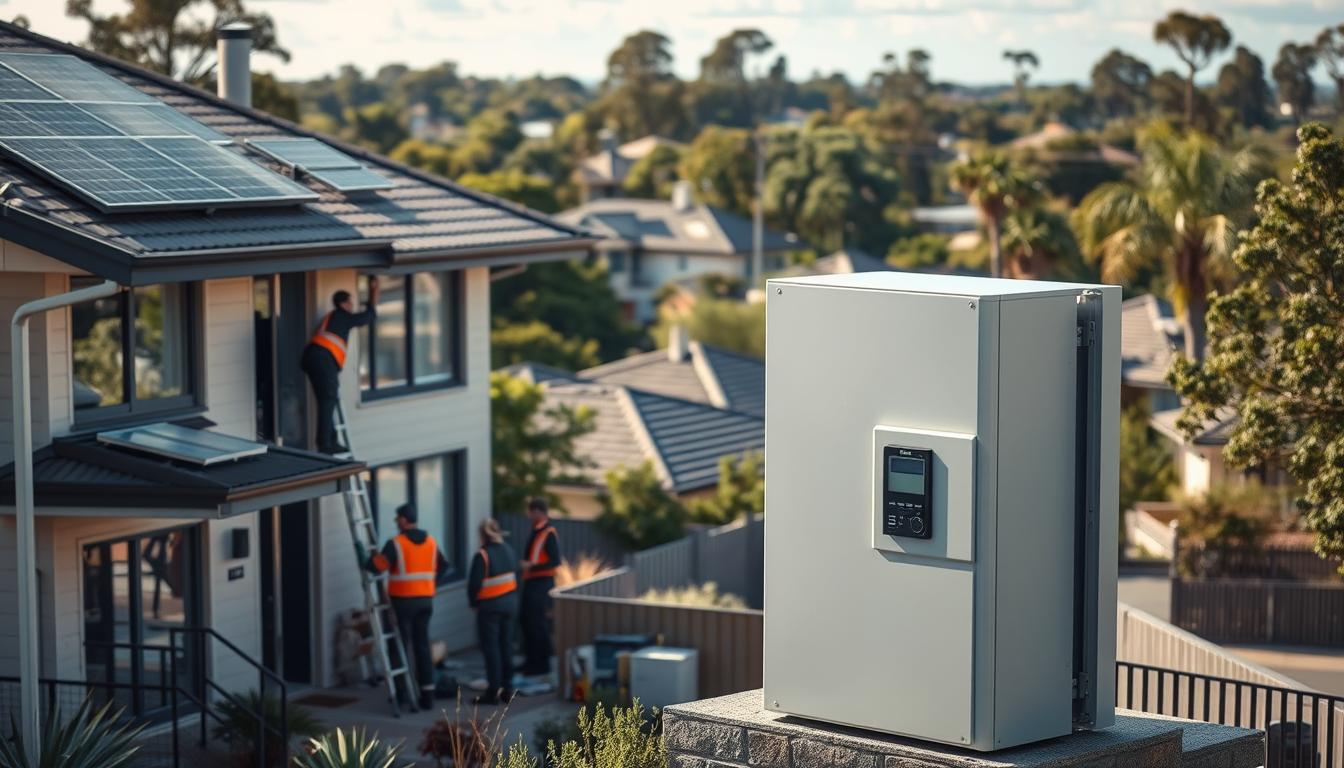
Australia Home Battery Storage Systems: Is Now the Time to Invest?

by John Krechting
Australia Home Battery Storage Systems

Could 2024 be the year your home becomes energy-independent? With a huge investment in clean energy, Australian families must decide on residential battery systems.

This year, $9 billion has gone into renewable energy projects. The Clean Energy Council says 4,029 MW of new energy projects have been planned. Also, 11,348 MWh will go to solar energy storage solutions.

Energy storage is leading the way, breaking records again. This growth is changing how Australians see power independence.

You’re at a crossroads where money meets the planet. This guide looks at if investing in australia home battery storage systems is right for you. It balances costs with long-term gains.

Key Takeaways

  • Record $9 billion investment in clean energy projects signals market maturity and stability
  • Government incentives and rebates currently make installation more affordable than ever
  • Energy independence reduces reliance on grid electricity and protects against rising power costs
  • Modern battery technology offers 10-15 year warranties with proven reliability
  • Payback periods have shortened to 6-10 years in most Australian regions
  • Environmental benefits include reduced carbon footprint and support for renewable energy transition

What Are Home Battery Storage Systems in Australia?

Storing your own electricity at home might sound new, but it’s becoming common in Australia. Home energy storage units are advanced but easy to use. They save extra energy from solar panels for when you need it.

Think of these systems as big batteries for your home. They work with your solar panels to make your home energy independent. This reduces your need for the traditional grid.

Definition and Core Components

A home battery system has three main parts. The heart is the battery cells, usually lithium-ion, where energy is stored in DC form.

The inverter changes the stored DC power into AC electricity for your home. Some systems, like the Tesla Powerwall Australia, have built-in inverters. Others need separate units.

A detailed, labeled diagram of the key components of a home energy storage system, including a lithium-ion battery pack, battery management system, inverter, and charge controller. The diagram is shown in a clean, technical style with a white background, using a combination of wireframe and solid 3D models to clearly illustrate the structure and interconnections of the system. The lighting is neutral, with soft shadows to provide depth and dimension. The diagram is oriented horizontally to best fit the article layout, and the components are arranged in a logical, easy-to-understand configuration.

Smart software manages the system. It decides when to store, use, or get energy from the grid. It learns your habits to save you money.

How Home Battery Storage Works

It starts when your solar panels make more energy than you use. Instead of sending it to the grid, your battery stores it.

In sunny hours, your panels power your home. Any extra energy goes to your battery. This energy is used when the sun is down or on cloudy days.

At night, your battery powers your home. It uses stored energy, not expensive grid electricity. This saves you money every day.

“Battery storage lets you use your solar energy when you need it, not just when it’s sunny.”

Australian Energy Market Commission

Key Players in the Market

Australia’s battery market has many players. Tesla leads with the Powerwall series, known for design and reliability. Tesla Powerwall Australia is very popular.

LG Chem offers the RESU range, known for being compact and affordable. Sonnen has premium systems with advanced features. BYD provides cost-effective options for those on a budget.

Local brands like Redback Technologies and Alpha ESS also offer off-grid power solutions for Australian homes.

Current Adoption Rates in Australia

Battery storage is growing fast in Australia. Over 100,000 systems were installed by 2024. Monthly numbers keep going up.

South Australia leads with about 6% of homes having battery storage. Victoria and Queensland follow, thanks to government rebates and high electricity costs.

Households save $800 to $1,500 a year on bills with battery storage. Falling prices and improving tech make more families join every month.

Rural areas are also adopting battery storage fast. It gives them energy security and independence the grid can’t offer. These systems often use solar and battery together for self-sufficiency.

Why Home Battery Storage Is Gaining Popularity in Australia

Many things are changing how Australians see energy storage. Batteries are now seen as a must-have, not just a fancy item. This change is because of real-life benefits that affect your wallet and daily life.

Understanding these reasons shows why household battery systems are becoming common in homes across the country.

A sun-drenched Australian suburb, lush with greenery and vibrant homes. In the foreground, a modern house showcases a sleek home battery system prominently installed on the exterior wall. The battery's digital display illuminates, indicating its active status and efficient energy storage. In the middle ground, neighboring homes also feature similar battery systems, highlighting their growing popularity. The background reveals a panoramic view of the urban landscape, with solar panels glinting on rooftops, reflecting the nation's embrace of renewable energy solutions. The scene emanates a sense of innovation, sustainability, and the Australian public's increasing enthusiasm for household battery storage technology.

Rising Electricity Costs

Your power bill shows Australia’s energy shift. With prices at 35-40 cents per kilowatt-hour, making your own power is more appealing. Some homes are cutting their power bills by up to 80% with solar and battery combos.

These savings add up over time. A family spending $2,400 a year on electricity can cut costs to under $500 with good renewable energy storage. Storing solar energy costs about 8-12 cents per kWh, much less than grid prices.

Renewable Energy Targets

Australia aims to get 82% of its electricity from renewables by 2030. This goal boosts support for home storage. The government offers rebates and incentives to help.

Choosing battery storage is smart. It supports national energy goals and gives you energy freedom. As renewable energy infrastructure grows, your investment becomes more valuable.

Blackout & Energy Security Concerns

Severe weather leads to more blackouts, making backup power essential. Recent summers have shown how fast grid problems can happen. Household battery systems offer peace of mind during these outages.

Energy security is more than just backup. It means you’re not tied to grid prices and outages. Systems like LG Chem RESU batteries keep your family’s needs met, even when power is off.

Consumer Attitudes Toward Sustainability

More people see battery storage as a way to be energy independent and help the planet. What was once seen as a pricey novelty is now viewed as a key part of eco-friendly living.

This change shows growing awareness of energy independence’s benefits. It’s not just about saving money; it’s about being part of a bigger environmental goal. The mix of financial benefits and caring for the planet motivates many to get batteries.

How Much Do Home Battery Systems Cost in Australia?

Home battery prices have changed a lot in recent years. Now, residential energy storage solutions are more affordable for Australian homes. Knowing all the costs helps you plan better and get the most from your investment.

The cost of battery storage is getting better. Government support is growing, and technology costs are falling. This makes now a great time to look into getting a system.

Average Cost of Systems

Home battery systems cost between $700 to $1,000 per kWh of usable capacity. A 10kWh system, for example, can cost between $8,000 and $10,000 before installation.

Here are some common system sizes and their costs:

  • 6.5kWh systems: $5,500 – $7,000 (good for small homes)
  • 10kWh systems: $8,000 – $10,500 (great for average families)
  • 13.5kWh systems: $10,500 – $13,500 (best for big homes)

A 11.5kWh system used to cost about $13,000. But with new subsidies, you could save around $4,000. This brings the cost down to about $9,000, making it a better deal.

Installation Fees and Setup Costs

Adding a professional installer will cost $1,500 to $3,000. The final price depends on your home’s electrical setup and where you want the battery.

Things that can affect installation costs include:

  1. Electrical panel compatibility: Older homes might need updates
  2. Battery location: Indoor or outdoor setups differ in complexity
  3. Cable runs: How far from solar panels and the main switchboard
  4. Site accessibility: Hard-to-reach spots increase labour time

Most sonnen battery installations need little electrical work. But some homes might need switchboard upgrades for safety.

Hidden Costs & Maintenance

There are extra costs to consider. Switchboard upgrades can add $500 to $2,000, depending on your home’s electrical setup.

Other ongoing costs include:

  • Monitoring subscriptions: $100 – $300 a year for tracking
  • Insurance adjustments: A bit more for home insurance
  • Maintenance checks: Annual checks cost $150 – $300
  • Battery replacement: Needed after 10-15 years, usually covered by warranty

Most good systems need little upkeep. Using smartphone apps for monitoring helps spot problems early, avoiding expensive fixes.

Modern batteries are built for long-term reliability. Many come with 10-year warranties, ensuring your investment is protected.

Price Trends Over the Last 5 Years

Battery prices have fallen by about 30% in the last five years. At the same time, they’ve gotten a lot better. This makes now a great time to get a new system.

Here are some key price changes:

YearAverage Cost per kWhTypical 10kWh SystemPerformance Improvement
2019$1,400$16,5008-year warranty standard
2021$1,100$13,20010-year warranties emerging
2023$900$10,800Improved cycle life
2024$800$9,600Smart integration features

New solar battery rebates in 2025 will cut upfront costs by about $3,500 for typical systems. This government support makes it easier to see a quick return on your investment.

Experts say prices will keep falling as manufacturing grows. But with current prices and rebates, now is a great time to act.

When planning your investment, think about all the costs and savings. This helps you understand the real return on investment for your situation and energy use.

Is Now the Best Time to Invest in a Battery System?

Many things are coming together to make now a great time to buy home battery systems. Big government rebates, proven tech, and good financing make it a good choice for Aussie homes. Knowing these points can help you decide on your energy future.

johnkrechting battery system on the wall of the garage for so d0b9b2ed 19d6 44b2 a8f1 9962b215d5d4 3

Impact of Government Rebates

Government help is at its highest, making batteries cheaper to install. The Cheaper Home Batteries Program started on July 1, 2025. It gives about 30% off on batteries in some states.

The federal rebate gives around $345 per usable kWh of battery. So, a 10kWh system could get up to $3,450 back. This makes batteries a smart buy for most homes.

States like NSW and WA offer extra help. But, these rebates only last so long. Act fast to get these incentives before they’re gone.

Interest Rate & Financing Conditions

Interest rates are a bit high, but they’re okay for energy investments. Green loans for renewable projects have rates 0.5-1% lower than usual.

Many installers offer payment plans over 2-5 years. This makes batteries more affordable without a big upfront cost. Some deals even have no interest for a while.

Your battery starts saving money right away. This can cover your loan payments, making it a good deal.

Expected Cost Reductions Ahead

Battery prices will keep going down, but not as fast as before. Now is a good time to buy because prices are already low.

Prices might drop 3-5% each year. But, the rebates you can get now are worth more than any future price cuts.

Brands like redback solar batteries have set prices as demand grows. They focus on making products better, not cheaper.

Investment TimingGovernment RebatesTechnology MaturityFinancing ConditionsOverall Advantage
2024-2025Peak incentives availableProven and reliableCompetitive green loansOptimal window
2026-2027Likely reduced incentivesIncremental improvementsStandard rates expectedModerate advantage
2028+Minimal government supportMarginal enhancementsMarket-rate financingLimited advantage

Expert Forecasts for 2025 and Beyond

Experts say demand will keep growing, keeping prices steady until 2027. The Australian Energy Market Operator expects more price hikes, making batteries more valuable.

Analysts think rebates will decrease as more people buy batteries. Now is the best time for rebates that won’t be the same later.

Experts say to invest in the next 12-18 months. This way, you get the most rebates and the tech is reliable.

Energy pros agree: waiting means missing out on savings and rebates. Your choice should balance today’s savings with your energy and green goals.

Who Benefits Most from Installing a Home Battery?

Home battery storage is best for certain households in Australia. Knowing your household type helps decide if it’s worth it. Even with improving technology, some homes see quick benefits that make it worth the cost.

It’s all about matching your energy use with the battery’s abilities. A typical home solar system without storage covers just 30-50% of power needs. But, adding a battery can boost this to 80-90% or even 100% of daily energy use.

johnkrechting battery system on the wall of the single garage 0ee0c933 3154 4088 8069 e847d97be3f3 2

Households with Solar Panels

Those with solar panels get the most from battery storage. Without a battery, you send extra solar energy to the grid for little money. Then, you buy expensive electricity back when it’s needed most.

Battery storage changes this. You store your solar energy for later use. This can double the value of your solar system. It helps cut your electricity bill by avoiding high rates that can be over 40 cents per kWh in some places.

Those on time-of-use tariffs get even more benefits. You use stored solar energy instead of paying high rates from 4pm to 9pm.

Off-Grid and Rural Homes

Rural and remote homes face unique energy challenges. Battery storage is very appealing. Grid connection costs can be very high, and the grid can be unreliable.

Battery systems offer energy independence and reliable backup power. Companies like Redback Technologies make hybrid systems for complete energy security.

These homes use more energy for things like water pumps and farm equipment. This means they can pay back the battery investment faster.

Families with High Energy Use

Households using 20kWh or more daily see quick returns on battery investments. The more energy you use, the faster you save money to pay back the battery.

These families often have many people, electric cars, pool pumps, or home businesses. The bigger your electricity bill, the more you can save with a battery.

They also benefit from shifting loads. You charge the battery during off-peak hours and use it during expensive peak hours. This saves money, even when you’re not using solar.

Eco-Conscious Homeowners

Environmentally motivated homes see batteries as key for sustainable living. They value both saving money and the planet. Batteries are seen as a long-term investment in clean energy.

These families often use other green tech like electric cars and smart homes. This approach boosts both environmental impact and system efficiency.

For them, energy security and sustainability are more important than just saving money. Having backup power during outages adds a lot of value beyond just saving money.

Household TypePrimary BenefitsTypical Payback PeriodKey Considerations
Solar Panel OwnersMaximise solar value, avoid peak rates7-10 yearsExisting solar system size and age
Rural/Off-Grid HomesEnergy security, grid independence5-8 yearsDistance from grid, backup requirements
High Energy Users (20kWh+)Large bill reductions, load shifting6-9 yearsPeak usage patterns, tariff structure
Eco-Conscious HouseholdsSustainability goals, energy independence8-12 yearsEnvironmental priorities, system integration

The key to successful battery use is enough energy use to justify the cost. You also need to manage your energy well to get the most out of it.

Those with critical medical equipment or home businesses get a big safety boost. Batteries prevent serious risks or losses from power outages.

Smart energy management is key for the best results. This means knowing your energy use, optimising charging, and maybe switching to time-of-use tariffs.

Where Are Home Battery Rebates Available in Australia?

Your location in Australia affects the rebates for home energy storage solutions. Rebates vary by state, with some states giving more support than others. Knowing this helps you save money and choose the best time to buy.

The federal program helps all states with a base support. You can get about $345 per kWh of usable capacity everywhere. This makes residential battery storage more affordable for everyone.

But, state programs offer different amounts of support. Some states give thousands of dollars in rebates. Others have different incentives. Let’s look at what’s available in each major state.

Victoria Solar Homes Program

Victoria has changed its battery support. They used to offer interest-free loans, but that program is closed now. The victorian battery scheme no longer offers the same financing as before.

Now, Victorians can only get the federal rebate of $345 per kWh. Without state support, the total incentive is less than before. This has made many rethink their battery plans.

Some local councils in Victoria might offer extra incentives. It’s good to check with your local council for any community programs.

South Australia Home Battery Scheme

South Australia supports residential battery storage with a rebate program. They offer subsidies that can lower your costs. This is in addition to federal incentives.

The program aims to help many households. It has income limits to help those who need it most. It’s been very popular and is driving more people to get batteries.

Rebates in South Australia are usually approved quickly. Most get approval in a few weeks. This helps you plan your battery installation.

Queensland Interest-Free Loans

Queensland’s battery support has changed a lot. The Battery Booster Program ended in May 2024 without a new program. This has made batteries less affordable for many.

Before it closed, Queensland offered interest-free loans. This made home energy storage solutions very affordable. The sudden end has slowed down battery adoption.

Now, Queensland relies on federal incentives. Some regional utilities might offer extra support. But the incentives are not as good as before.

Other Regional Programs

New South Wales has a new program, the VPP Incentive Program. They offer up to $1,500 for batteries connected to Virtual Power Plants. This program focuses on grid benefits.

Western Australia offers the most support. Their WA Residential Battery Rebate Scheme gives up to $3,800 plus interest-free loans up to $10,000. This makes WA the best state for battery investments.

Tasmania and the Northern Territory have limited battery programs. But, they do have federal schemes and some utility-specific incentives. It’s worth checking.

Regional councils across Australia sometimes offer extra incentives. These vary a lot. It’s good to check with your local council and electricity retailer for more savings.

The key is to act fast while programs are available. Rebate schemes often close when funds run out. Your location and timing affect both rebates and the best system size.

What Are the Best Home Battery Brands in Australia?

Choosing a trusted battery brand is key for energy independence. Australia has four top brands for household energy storage. Each brand has its own strengths in price, warranty, and features.

Think about the cost now and how reliable it will be later. All big brands offer 10-year warranties. They promise to keep 60-80% of the battery’s power after 10 years.

Tesla Powerwall 2

The Tesla Powerwall is well-known in Australia, priced at $15,569 for 13.5 kWh. It has a simple design for easy setup. It looks good on your wall too.

Tesla gives a 10-year warranty for both the battery and inverter. It works well with Tesla solar panels. You can check it all on their app. Premium pricing shows it’s a reliable choice.

Getting help from Tesla installers is easier now. They’re in many cities. The Powerwall is great for those who want a reliable system.

LG Chem RESU

LG Chem RESU systems are great value. They grow with you, thanks to their design. They’re made by experts in electronics, so they’re reliable and priced well.

LG offers a 10-year warranty and good support. You can start small and add more later. This is perfect for growing families.

LG is cheaper to install than some brands but doesn’t skimp on quality. They have a big service network in Australia.

Sonnen Eco

Sonnen Eco is known for its German engineering, priced at $12,724 for 10 kWh. It has smart software that saves energy. It’s great for those who want the best.

The 10-year warranty includes advanced monitoring. It learns your energy habits and adjusts. This helps you use less energy. This is key for energy independence.

It costs more upfront but offers top-notch features. Sonnen is for tech lovers who want control over their energy.

BYD Battery Box

BYD Battery Box systems are affordable and reliable, with 13.8 kWh for $13,945. They’re easy to expand and made on a large scale. BYD uses car battery tech for home use.

BYD’s warranty covers the battery for 10 years. They’re flexible for any home size. They’re a good choice for those watching their budget.

BYD’s service network is growing. They offer good household energy storage without high prices.

BrandCapacity (kWh)Price (AUD)Key Advantage
Tesla Powerwall 213.5$15,569Integrated design
LG Chem RESUVariableCompetitiveModular expansion
Sonnen Eco10$12,724Smart software
BYD Battery Box13.8$13,945Cost-effective

Think about local support, warranty service, and solar system compatibility. Each brand offers a path to energy independence with its own benefits.

How Do Home Battery Systems Compare to Other Energy Solutions?

Looking at battery storage against other energy solutions shows key trade-offs. Each option has its own pros and cons, fitting different needs and budgets.

Knowing these differences helps you pick the best for your home. Let’s see how battery storage compares to other choices for Australian homes.

Battery vs. Feed-in Tariffs

Feed-in tariffs give you money for your extra solar power. But, the pay is low, around 3-5 cents per kilowatt-hour.

On the other hand, buying electricity costs 35-40 cents per kilowatt-hour. This big price gap makes battery storage more appealing.

Storing solar energy in batteries saves you money. You miss out on some feed-in tariff money. But, you save a lot by not buying expensive grid electricity.

Mathematically, battery storage wins. LG Chem batteries and similar systems use your solar power when it’s most expensive. This gives you big savings over feed-in tariffs.

Battery vs. Generator Backup

Generators are good for emergency power but cost a lot to run and maintain. You need to buy fuel, service it regularly, and store it.

Battery power backup solutions are quiet and turn on automatically. They don’t need fuel, so you save money and hassle.

Batteries are easier to use than generators. Generators need manual start and make noise. Batteries keep your important appliances running smoothly without your help.

Long-term, batteries are cheaper. They don’t need fuel, saving you money over time. Generators use fuel every time they run.

Battery vs. Going Off-Grid

Going fully off-grid means no bills but costs a lot upfront. You need big batteries, backup power, and smart energy management for all weather.

Off-grid systems need careful planning and lifestyle changes. You must watch your energy use closely and might have to limit some activities.

Battery systems with grid connection are a good middle ground. They offer reliable backup and use solar power well, without the hassle of off-grid systems.

Most Australian homes prefer battery systems over off-grid. They get energy independence and the grid’s reliability for extreme weather or maintenance.

Battery vs. Community Energy Storage

Community energy storage splits costs among homes, making it cheaper. These big systems store more energy than individual homes can afford.

But, community systems give less control over your energy use. In big outages, they might not power all homes.

Personal battery systems give you full control. You choose which appliances get power during outages and how to store solar energy.

Solution TypeUpfront CostOngoing CostsBackup ReliabilityControl Level
Home Battery$8,000-$15,000Minimal maintenanceHighComplete
Feed-in Tariffs$0NoneNoneLimited
Generator Backup$2,000-$8,000Fuel + maintenanceHighManual
Off-Grid System$25,000-$50,000Regular maintenanceVariableComplete

The best choice depends on what you value most. Battery storage is a great choice for many, balancing independence and security without off-grid complexity.

It keeps you connected to the grid for reliability while using solar power well. This approach saves money now and secures your energy future, fitting most Australian homes’ needs.

When Will Battery Storage Reach Mass Adoption in Australia?

The shift to solar battery systems in Australia is fast. Market trends show a big growth ahead. This change from a niche tech to a common household energy management tool is happening quicker than expected.

Australia is setting new records with 4,029 MW and 11,348 MWh of new energy storage projects in 2024. The Clean Energy Council calls this “breaking records yet again.” These numbers show where we’re headed.

Current Growth Rates

The growth in home power backup systems is amazing. What started with a few hundred installations a year has grown to thousands monthly.

Residential battery installations have grown by over 300% in three years. Victoria leads with about 40% of new installations, followed by South Australia and Queensland.

Now, over 3,000 systems are installed monthly across the country. This growth is like the early days of solar panels, which also grew fast before becoming common.

Forecast for the Next 5–10 Years

Experts are excited about the future of household energy management. They think 30-40% of suitable Australian homes will have batteries by 2030.

When battery costs match grid electricity, more people will choose them. This is expected between 2026 and 2027.

Payback periods are key. When these periods are under 6-7 years, more people will adopt. Current trends suggest this will happen in the next three to four years.

By 2035, over 60% of homes with suitable roof space will have solar battery systems. This means about 4.5 million households nationwide.

Factors Driving Speed of Adoption

Several factors are speeding up the adoption of home power backup solutions in Australia. Knowing these drivers helps us see why adoption is getting faster.

Cost reductions are the main driver. Battery prices have fallen by 70% from 2015. Further drops are expected as production increases.

Better battery performance is also key. Modern systems last longer, work more efficiently, and are safer. This makes them more appealing to more people.

Government incentives help too. Rebates from the federal and state governments make it easier for people to adopt early. This creates momentum for more people to follow.

Installation has become easier. What used to need complex engineering now takes just one day for most electricians.

More people want energy independence. They see how household energy management systems can save money and protect against power outages.

International Comparisons

Australia is leading the world in residential energy storage. This shows us where we’re headed.

Australia’s rate of installations is higher than Germany’s, despite Germany’s longer history with renewable energy. Australian homes are installing solar battery systems at twice the rate of Europe.

California, known for its solar adoption, is slower than Australia in battery storage. Australian rates are about 40% higher than California’s.

Australia’s high electricity costs, great solar resources, and supportive policies create a perfect environment for battery storage. This makes it a smart choice for many.

Once 15% of suitable households adopt, growth becomes self-sustaining. Australia is getting close to this point in several states.

Choosing home power backup technology now puts you ahead of the curve. Early adopters get the most benefits from current incentives. They also help change Australia’s energy landscape to sustainable, decentralised power.

The evidence is clear: battery storage will become widespread in Australia in 5-7 years. The real question is whether you’ll be among the early adopters who benefit the most from this energy shift.

What Are the Environmental Impacts of Home Battery Storage?

Home battery storage has both good and bad sides for the environment. Choosing to use battery technology helps a lot. It also supports Australia’s goal to be more self-sufficient with electricity.

Carbon Footprint Reduction

Using batteries can cut your carbon footprint in half compared to just solar panels. A typical home system can stop 2-4 tonnes of CO2 from being released each year. This is because it uses more renewable energy and uses less fossil fuel from the grid.

Manufacturing and Disposal Considerations

Lithium-ion batteries can pay off their carbon debt in 2-3 years. This is because they replace fossil fuel use. Companies like sonnen battery now have programs to take back old batteries. Special recycling places also get valuable materials from old batteries.

Resource Extraction Challenges

There are worries about mining for lithium and cobalt. But, the industry is working on better ways to mine. They are also looking for new battery types that are better for the planet.

Overall Environmental Benefits

Studies show that battery systems can save 5-10 times more carbon than they use in making. Your choice to go for grid independence helps fight climate change. It also shows that people want clean energy solutions. Overall, using batteries is a good choice for Australians who want to help the planet.

FAQ

Q: How much does a home battery storage system cost in Australia?

A: Prices range from 0 to Q: How much does a home battery storage system cost in Australia?A: Prices range from 0 to

FAQ

Q: How much does a home battery storage system cost in Australia?

A: Prices range from 0 to

FAQ

Q: How much does a home battery storage system cost in Australia?

A: Prices range from $700 to $1,000 per kWh. A 10kWh system costs $8,000 to $10,000 before installation. Installation adds $1,500 to $3,000. You might also need to upgrade your switchboard for $500 to $2,000.

But, a new federal rebate program can give you a $3,500 discount. This makes the upfront cost much lower.

Q: Which home battery brands are most reliable in Australia?

A: Top brands include Tesla Powerwall, LG Chem RESU, Sonnen Eco, and BYD Battery Box. Tesla leads with a 10-year warranty and integrated inverter. LG Chem RESU offers great value with a modular design.

Sonnen Eco has German engineering and smart energy management. BYD Battery Box is affordable and scalable. All brands have 10-year warranties and promise 60-80% capacity after 10 years.

Q: How long does it take for a home battery system to pay for itself?

A: Payback times are 6-10 years, depending on your energy use and rates. Homes using a lot of energy and having solar panels pay back faster, often in 6-7 years.

Government rebates and rising electricity costs help pay back faster.

Q: What government rebates are available for home battery storage in Australia?

A: The federal program offers about $345 per kWh nationwide. NSW gives up to $1,500 for Virtual Power Plant participation. Western Australia offers the most, with rebates up to $3,800 and interest-free loans up to $10,000.

Victoria and Queensland no longer have interest-free loans or battery booster programs.

Q: Do I need solar panels to install a home battery system?

A: Solar panels are not required but offer the best benefits. They help store excess solar energy instead of exporting it for low feed-in tariffs. Without solar, batteries can provide backup power and manage tariffs, but returns are less.

Q: How long do home battery systems last?

A: Modern lithium-ion batteries last 10-15 years with proper care. Most makers offer 10-year warranties, ensuring 60-80% capacity. After the warranty, batteries can last several more years before needing replacement.

Q: Can home batteries power my entire house during blackouts?

A: Battery backup depends on system size and energy use. A 10kWh battery can power essential appliances for 8-12 hours during outages. For whole-house backup, you need a larger battery (15-20kWh+) and careful load management.

Q: Is 2024-2025 the best time to invest in home battery storage?

A: Yes, it’s a good time to invest. Government rebates offer immediate savings. Battery technology is mature, and while prices may drop, the current incentives and performance make waiting less beneficial. Rebate funding is limited and may decrease as more people adopt.

Q: What are the environmental benefits of home battery storage?

A: Home batteries prevent 2-4 tonnes of CO2 emissions yearly by using more renewable energy. They double the carbon savings of solar panels alone. Lifecycle analysis shows 5-10 times more carbon savings than manufacturing emissions over 10-15 years.

Q: How do home batteries compare to backup generators?

A: Home batteries are silent, automatic, and have no ongoing fuel costs or emissions. Generators need fuel, maintenance, and produce noise and emissions. Batteries offer seamless power switching, while generators require manual startup. Generators can run indefinitely with fuel, but battery runtime depends on stored capacity.

Q: What happens to old batteries when they need replacement?

A: Manufacturers have take-back programs and recycling facilities for old batteries. These facilities recover valuable materials like lithium, cobalt, and nickel. Recycling is improving, with focus on sustainable extraction and alternative chemistries to reduce environmental impact.

Q: Can I add more battery capacity to my system later?

A: Yes, some systems like LG Chem RESU and BYD Battery Box are modular. Expansion depends on your inverter capacity and manufacturer specifications. Tesla Powerwall systems can also be expanded with additional units, but this requires compatible hardware and professional installation.

Q: Do home batteries work with all electricity retailers?

A: Home batteries work with all retailers as they operate independently. Some retailers offer special tariffs or Virtual Power Plant programs that can save you money. Time-of-use tariffs benefit battery owners by avoiding expensive peak rates with stored solar energy.

Q: What maintenance do home battery systems require?

A: Modern batteries need little maintenance – just monitor them through apps and ensure good ventilation. Some systems have ongoing monitoring subscriptions for remote checks. Professional checks every 2-3 years ensure they work well and stay under warranty.

Q: How much space do home battery systems need?

A: Most systems need about 1.2m x 0.8m x 0.2m of wall space for the battery unit. You might also need space for inverters if not integrated. Make sure the installation spot has good ventilation, protection from weather, and is easy to access for maintenance. You can install indoors or outdoors, depending on the model and local rules.


,000 per kWh. A 10kWh system costs ,000 to ,000 before installation. Installation adds

FAQ

Q: How much does a home battery storage system cost in Australia?

A: Prices range from $700 to $1,000 per kWh. A 10kWh system costs $8,000 to $10,000 before installation. Installation adds $1,500 to $3,000. You might also need to upgrade your switchboard for $500 to $2,000.

But, a new federal rebate program can give you a $3,500 discount. This makes the upfront cost much lower.

Q: Which home battery brands are most reliable in Australia?

A: Top brands include Tesla Powerwall, LG Chem RESU, Sonnen Eco, and BYD Battery Box. Tesla leads with a 10-year warranty and integrated inverter. LG Chem RESU offers great value with a modular design.

Sonnen Eco has German engineering and smart energy management. BYD Battery Box is affordable and scalable. All brands have 10-year warranties and promise 60-80% capacity after 10 years.

Q: How long does it take for a home battery system to pay for itself?

A: Payback times are 6-10 years, depending on your energy use and rates. Homes using a lot of energy and having solar panels pay back faster, often in 6-7 years.

Government rebates and rising electricity costs help pay back faster.

Q: What government rebates are available for home battery storage in Australia?

A: The federal program offers about $345 per kWh nationwide. NSW gives up to $1,500 for Virtual Power Plant participation. Western Australia offers the most, with rebates up to $3,800 and interest-free loans up to $10,000.

Victoria and Queensland no longer have interest-free loans or battery booster programs.

Q: Do I need solar panels to install a home battery system?

A: Solar panels are not required but offer the best benefits. They help store excess solar energy instead of exporting it for low feed-in tariffs. Without solar, batteries can provide backup power and manage tariffs, but returns are less.

Q: How long do home battery systems last?

A: Modern lithium-ion batteries last 10-15 years with proper care. Most makers offer 10-year warranties, ensuring 60-80% capacity. After the warranty, batteries can last several more years before needing replacement.

Q: Can home batteries power my entire house during blackouts?

A: Battery backup depends on system size and energy use. A 10kWh battery can power essential appliances for 8-12 hours during outages. For whole-house backup, you need a larger battery (15-20kWh+) and careful load management.

Q: Is 2024-2025 the best time to invest in home battery storage?

A: Yes, it’s a good time to invest. Government rebates offer immediate savings. Battery technology is mature, and while prices may drop, the current incentives and performance make waiting less beneficial. Rebate funding is limited and may decrease as more people adopt.

Q: What are the environmental benefits of home battery storage?

A: Home batteries prevent 2-4 tonnes of CO2 emissions yearly by using more renewable energy. They double the carbon savings of solar panels alone. Lifecycle analysis shows 5-10 times more carbon savings than manufacturing emissions over 10-15 years.

Q: How do home batteries compare to backup generators?

A: Home batteries are silent, automatic, and have no ongoing fuel costs or emissions. Generators need fuel, maintenance, and produce noise and emissions. Batteries offer seamless power switching, while generators require manual startup. Generators can run indefinitely with fuel, but battery runtime depends on stored capacity.

Q: What happens to old batteries when they need replacement?

A: Manufacturers have take-back programs and recycling facilities for old batteries. These facilities recover valuable materials like lithium, cobalt, and nickel. Recycling is improving, with focus on sustainable extraction and alternative chemistries to reduce environmental impact.

Q: Can I add more battery capacity to my system later?

A: Yes, some systems like LG Chem RESU and BYD Battery Box are modular. Expansion depends on your inverter capacity and manufacturer specifications. Tesla Powerwall systems can also be expanded with additional units, but this requires compatible hardware and professional installation.

Q: Do home batteries work with all electricity retailers?

A: Home batteries work with all retailers as they operate independently. Some retailers offer special tariffs or Virtual Power Plant programs that can save you money. Time-of-use tariffs benefit battery owners by avoiding expensive peak rates with stored solar energy.

Q: What maintenance do home battery systems require?

A: Modern batteries need little maintenance – just monitor them through apps and ensure good ventilation. Some systems have ongoing monitoring subscriptions for remote checks. Professional checks every 2-3 years ensure they work well and stay under warranty.

Q: How much space do home battery systems need?

A: Most systems need about 1.2m x 0.8m x 0.2m of wall space for the battery unit. You might also need space for inverters if not integrated. Make sure the installation spot has good ventilation, protection from weather, and is easy to access for maintenance. You can install indoors or outdoors, depending on the model and local rules.

,500 to ,000. You might also need to upgrade your switchboard for 0 to ,000.

But, a new federal rebate program can give you a ,500 discount. This makes the upfront cost much lower.

Q: Which home battery brands are most reliable in Australia?

A: Top brands include Tesla Powerwall, LG Chem RESU, Sonnen Eco, and BYD Battery Box. Tesla leads with a 10-year warranty and integrated inverter. LG Chem RESU offers great value with a modular design.

Sonnen Eco has German engineering and smart energy management. BYD Battery Box is affordable and scalable. All brands have 10-year warranties and promise 60-80% capacity after 10 years.

Q: How long does it take for a home battery system to pay for itself?

A: Payback times are 6-10 years, depending on your energy use and rates. Homes using a lot of energy and having solar panels pay back faster, often in 6-7 years.

Government rebates and rising electricity costs help pay back faster.

Q: What government rebates are available for home battery storage in Australia?

A: The federal program offers about 5 per kWh nationwide. NSW gives up to

FAQ

Q: How much does a home battery storage system cost in Australia?

A: Prices range from $700 to $1,000 per kWh. A 10kWh system costs $8,000 to $10,000 before installation. Installation adds $1,500 to $3,000. You might also need to upgrade your switchboard for $500 to $2,000.

But, a new federal rebate program can give you a $3,500 discount. This makes the upfront cost much lower.

Q: Which home battery brands are most reliable in Australia?

A: Top brands include Tesla Powerwall, LG Chem RESU, Sonnen Eco, and BYD Battery Box. Tesla leads with a 10-year warranty and integrated inverter. LG Chem RESU offers great value with a modular design.

Sonnen Eco has German engineering and smart energy management. BYD Battery Box is affordable and scalable. All brands have 10-year warranties and promise 60-80% capacity after 10 years.

Q: How long does it take for a home battery system to pay for itself?

A: Payback times are 6-10 years, depending on your energy use and rates. Homes using a lot of energy and having solar panels pay back faster, often in 6-7 years.

Government rebates and rising electricity costs help pay back faster.

Q: What government rebates are available for home battery storage in Australia?

A: The federal program offers about $345 per kWh nationwide. NSW gives up to $1,500 for Virtual Power Plant participation. Western Australia offers the most, with rebates up to $3,800 and interest-free loans up to $10,000.

Victoria and Queensland no longer have interest-free loans or battery booster programs.

Q: Do I need solar panels to install a home battery system?

A: Solar panels are not required but offer the best benefits. They help store excess solar energy instead of exporting it for low feed-in tariffs. Without solar, batteries can provide backup power and manage tariffs, but returns are less.

Q: How long do home battery systems last?

A: Modern lithium-ion batteries last 10-15 years with proper care. Most makers offer 10-year warranties, ensuring 60-80% capacity. After the warranty, batteries can last several more years before needing replacement.

Q: Can home batteries power my entire house during blackouts?

A: Battery backup depends on system size and energy use. A 10kWh battery can power essential appliances for 8-12 hours during outages. For whole-house backup, you need a larger battery (15-20kWh+) and careful load management.

Q: Is 2024-2025 the best time to invest in home battery storage?

A: Yes, it’s a good time to invest. Government rebates offer immediate savings. Battery technology is mature, and while prices may drop, the current incentives and performance make waiting less beneficial. Rebate funding is limited and may decrease as more people adopt.

Q: What are the environmental benefits of home battery storage?

A: Home batteries prevent 2-4 tonnes of CO2 emissions yearly by using more renewable energy. They double the carbon savings of solar panels alone. Lifecycle analysis shows 5-10 times more carbon savings than manufacturing emissions over 10-15 years.

Q: How do home batteries compare to backup generators?

A: Home batteries are silent, automatic, and have no ongoing fuel costs or emissions. Generators need fuel, maintenance, and produce noise and emissions. Batteries offer seamless power switching, while generators require manual startup. Generators can run indefinitely with fuel, but battery runtime depends on stored capacity.

Q: What happens to old batteries when they need replacement?

A: Manufacturers have take-back programs and recycling facilities for old batteries. These facilities recover valuable materials like lithium, cobalt, and nickel. Recycling is improving, with focus on sustainable extraction and alternative chemistries to reduce environmental impact.

Q: Can I add more battery capacity to my system later?

A: Yes, some systems like LG Chem RESU and BYD Battery Box are modular. Expansion depends on your inverter capacity and manufacturer specifications. Tesla Powerwall systems can also be expanded with additional units, but this requires compatible hardware and professional installation.

Q: Do home batteries work with all electricity retailers?

A: Home batteries work with all retailers as they operate independently. Some retailers offer special tariffs or Virtual Power Plant programs that can save you money. Time-of-use tariffs benefit battery owners by avoiding expensive peak rates with stored solar energy.

Q: What maintenance do home battery systems require?

A: Modern batteries need little maintenance – just monitor them through apps and ensure good ventilation. Some systems have ongoing monitoring subscriptions for remote checks. Professional checks every 2-3 years ensure they work well and stay under warranty.

Q: How much space do home battery systems need?

A: Most systems need about 1.2m x 0.8m x 0.2m of wall space for the battery unit. You might also need space for inverters if not integrated. Make sure the installation spot has good ventilation, protection from weather, and is easy to access for maintenance. You can install indoors or outdoors, depending on the model and local rules.

,500 for Virtual Power Plant participation. Western Australia offers the most, with rebates up to ,800 and interest-free loans up to ,000.

Victoria and Queensland no longer have interest-free loans or battery booster programs.

Q: Do I need solar panels to install a home battery system?

A: Solar panels are not required but offer the best benefits. They help store excess solar energy instead of exporting it for low feed-in tariffs. Without solar, batteries can provide backup power and manage tariffs, but returns are less.

Q: How long do home battery systems last?

A: Modern lithium-ion batteries last 10-15 years with proper care. Most makers offer 10-year warranties, ensuring 60-80% capacity. After the warranty, batteries can last several more years before needing replacement.

Q: Can home batteries power my entire house during blackouts?

A: Battery backup depends on system size and energy use. A 10kWh battery can power essential appliances for 8-12 hours during outages. For whole-house backup, you need a larger battery (15-20kWh+) and careful load management.

Q: Is 2024-2025 the best time to invest in home battery storage?

A: Yes, it’s a good time to invest. Government rebates offer immediate savings. Battery technology is mature, and while prices may drop, the current incentives and performance make waiting less beneficial. Rebate funding is limited and may decrease as more people adopt.

Q: What are the environmental benefits of home battery storage?

A: Home batteries prevent 2-4 tonnes of CO2 emissions yearly by using more renewable energy. They double the carbon savings of solar panels alone. Lifecycle analysis shows 5-10 times more carbon savings than manufacturing emissions over 10-15 years.

Q: How do home batteries compare to backup generators?

A: Home batteries are silent, automatic, and have no ongoing fuel costs or emissions. Generators need fuel, maintenance, and produce noise and emissions. Batteries offer seamless power switching, while generators require manual startup. Generators can run indefinitely with fuel, but battery runtime depends on stored capacity.

Q: What happens to old batteries when they need replacement?

A: Manufacturers have take-back programs and recycling facilities for old batteries. These facilities recover valuable materials like lithium, cobalt, and nickel. Recycling is improving, with focus on sustainable extraction and alternative chemistries to reduce environmental impact.

Q: Can I add more battery capacity to my system later?

A: Yes, some systems like LG Chem RESU and BYD Battery Box are modular. Expansion depends on your inverter capacity and manufacturer specifications. Tesla Powerwall systems can also be expanded with additional units, but this requires compatible hardware and professional installation.

Q: Do home batteries work with all electricity retailers?

A: Home batteries work with all retailers as they operate independently. Some retailers offer special tariffs or Virtual Power Plant programs that can save you money. Time-of-use tariffs benefit battery owners by avoiding expensive peak rates with stored solar energy.

Q: What maintenance do home battery systems require?

A: Modern batteries need little maintenance – just monitor them through apps and ensure good ventilation. Some systems have ongoing monitoring subscriptions for remote checks. Professional checks every 2-3 years ensure they work well and stay under warranty.

Q: How much space do home battery systems need?

A: Most systems need about 1.2m x 0.8m x 0.2m of wall space for the battery unit. You might also need space for inverters if not integrated. Make sure the installation spot has good ventilation, protection from weather, and is easy to access for maintenance. You can install indoors or outdoors, depending on the model and local rules.

,000 per kWh. A 10kWh system costs ,000 to ,000 before installation. Installation adds

FAQ

Q: How much does a home battery storage system cost in Australia?

A: Prices range from 0 to

FAQ

Q: How much does a home battery storage system cost in Australia?

A: Prices range from $700 to $1,000 per kWh. A 10kWh system costs $8,000 to $10,000 before installation. Installation adds $1,500 to $3,000. You might also need to upgrade your switchboard for $500 to $2,000.

But, a new federal rebate program can give you a $3,500 discount. This makes the upfront cost much lower.

Q: Which home battery brands are most reliable in Australia?

A: Top brands include Tesla Powerwall, LG Chem RESU, Sonnen Eco, and BYD Battery Box. Tesla leads with a 10-year warranty and integrated inverter. LG Chem RESU offers great value with a modular design.

Sonnen Eco has German engineering and smart energy management. BYD Battery Box is affordable and scalable. All brands have 10-year warranties and promise 60-80% capacity after 10 years.

Q: How long does it take for a home battery system to pay for itself?

A: Payback times are 6-10 years, depending on your energy use and rates. Homes using a lot of energy and having solar panels pay back faster, often in 6-7 years.

Government rebates and rising electricity costs help pay back faster.

Q: What government rebates are available for home battery storage in Australia?

A: The federal program offers about $345 per kWh nationwide. NSW gives up to $1,500 for Virtual Power Plant participation. Western Australia offers the most, with rebates up to $3,800 and interest-free loans up to $10,000.

Victoria and Queensland no longer have interest-free loans or battery booster programs.

Q: Do I need solar panels to install a home battery system?

A: Solar panels are not required but offer the best benefits. They help store excess solar energy instead of exporting it for low feed-in tariffs. Without solar, batteries can provide backup power and manage tariffs, but returns are less.

Q: How long do home battery systems last?

A: Modern lithium-ion batteries last 10-15 years with proper care. Most makers offer 10-year warranties, ensuring 60-80% capacity. After the warranty, batteries can last several more years before needing replacement.

Q: Can home batteries power my entire house during blackouts?

A: Battery backup depends on system size and energy use. A 10kWh battery can power essential appliances for 8-12 hours during outages. For whole-house backup, you need a larger battery (15-20kWh+) and careful load management.

Q: Is 2024-2025 the best time to invest in home battery storage?

A: Yes, it’s a good time to invest. Government rebates offer immediate savings. Battery technology is mature, and while prices may drop, the current incentives and performance make waiting less beneficial. Rebate funding is limited and may decrease as more people adopt.

Q: What are the environmental benefits of home battery storage?

A: Home batteries prevent 2-4 tonnes of CO2 emissions yearly by using more renewable energy. They double the carbon savings of solar panels alone. Lifecycle analysis shows 5-10 times more carbon savings than manufacturing emissions over 10-15 years.

Q: How do home batteries compare to backup generators?

A: Home batteries are silent, automatic, and have no ongoing fuel costs or emissions. Generators need fuel, maintenance, and produce noise and emissions. Batteries offer seamless power switching, while generators require manual startup. Generators can run indefinitely with fuel, but battery runtime depends on stored capacity.

Q: What happens to old batteries when they need replacement?

A: Manufacturers have take-back programs and recycling facilities for old batteries. These facilities recover valuable materials like lithium, cobalt, and nickel. Recycling is improving, with focus on sustainable extraction and alternative chemistries to reduce environmental impact.

Q: Can I add more battery capacity to my system later?

A: Yes, some systems like LG Chem RESU and BYD Battery Box are modular. Expansion depends on your inverter capacity and manufacturer specifications. Tesla Powerwall systems can also be expanded with additional units, but this requires compatible hardware and professional installation.

Q: Do home batteries work with all electricity retailers?

A: Home batteries work with all retailers as they operate independently. Some retailers offer special tariffs or Virtual Power Plant programs that can save you money. Time-of-use tariffs benefit battery owners by avoiding expensive peak rates with stored solar energy.

Q: What maintenance do home battery systems require?

A: Modern batteries need little maintenance – just monitor them through apps and ensure good ventilation. Some systems have ongoing monitoring subscriptions for remote checks. Professional checks every 2-3 years ensure they work well and stay under warranty.

Q: How much space do home battery systems need?

A: Most systems need about 1.2m x 0.8m x 0.2m of wall space for the battery unit. You might also need space for inverters if not integrated. Make sure the installation spot has good ventilation, protection from weather, and is easy to access for maintenance. You can install indoors or outdoors, depending on the model and local rules.

,000 per kWh. A 10kWh system costs ,000 to ,000 before installation. Installation adds

FAQ

Q: How much does a home battery storage system cost in Australia?

A: Prices range from $700 to $1,000 per kWh. A 10kWh system costs $8,000 to $10,000 before installation. Installation adds $1,500 to $3,000. You might also need to upgrade your switchboard for $500 to $2,000.

But, a new federal rebate program can give you a $3,500 discount. This makes the upfront cost much lower.

Q: Which home battery brands are most reliable in Australia?

A: Top brands include Tesla Powerwall, LG Chem RESU, Sonnen Eco, and BYD Battery Box. Tesla leads with a 10-year warranty and integrated inverter. LG Chem RESU offers great value with a modular design.

Sonnen Eco has German engineering and smart energy management. BYD Battery Box is affordable and scalable. All brands have 10-year warranties and promise 60-80% capacity after 10 years.

Q: How long does it take for a home battery system to pay for itself?

A: Payback times are 6-10 years, depending on your energy use and rates. Homes using a lot of energy and having solar panels pay back faster, often in 6-7 years.

Government rebates and rising electricity costs help pay back faster.

Q: What government rebates are available for home battery storage in Australia?

A: The federal program offers about $345 per kWh nationwide. NSW gives up to $1,500 for Virtual Power Plant participation. Western Australia offers the most, with rebates up to $3,800 and interest-free loans up to $10,000.

Victoria and Queensland no longer have interest-free loans or battery booster programs.

Q: Do I need solar panels to install a home battery system?

A: Solar panels are not required but offer the best benefits. They help store excess solar energy instead of exporting it for low feed-in tariffs. Without solar, batteries can provide backup power and manage tariffs, but returns are less.

Q: How long do home battery systems last?

A: Modern lithium-ion batteries last 10-15 years with proper care. Most makers offer 10-year warranties, ensuring 60-80% capacity. After the warranty, batteries can last several more years before needing replacement.

Q: Can home batteries power my entire house during blackouts?

A: Battery backup depends on system size and energy use. A 10kWh battery can power essential appliances for 8-12 hours during outages. For whole-house backup, you need a larger battery (15-20kWh+) and careful load management.

Q: Is 2024-2025 the best time to invest in home battery storage?

A: Yes, it’s a good time to invest. Government rebates offer immediate savings. Battery technology is mature, and while prices may drop, the current incentives and performance make waiting less beneficial. Rebate funding is limited and may decrease as more people adopt.

Q: What are the environmental benefits of home battery storage?

A: Home batteries prevent 2-4 tonnes of CO2 emissions yearly by using more renewable energy. They double the carbon savings of solar panels alone. Lifecycle analysis shows 5-10 times more carbon savings than manufacturing emissions over 10-15 years.

Q: How do home batteries compare to backup generators?

A: Home batteries are silent, automatic, and have no ongoing fuel costs or emissions. Generators need fuel, maintenance, and produce noise and emissions. Batteries offer seamless power switching, while generators require manual startup. Generators can run indefinitely with fuel, but battery runtime depends on stored capacity.

Q: What happens to old batteries when they need replacement?

A: Manufacturers have take-back programs and recycling facilities for old batteries. These facilities recover valuable materials like lithium, cobalt, and nickel. Recycling is improving, with focus on sustainable extraction and alternative chemistries to reduce environmental impact.

Q: Can I add more battery capacity to my system later?

A: Yes, some systems like LG Chem RESU and BYD Battery Box are modular. Expansion depends on your inverter capacity and manufacturer specifications. Tesla Powerwall systems can also be expanded with additional units, but this requires compatible hardware and professional installation.

Q: Do home batteries work with all electricity retailers?

A: Home batteries work with all retailers as they operate independently. Some retailers offer special tariffs or Virtual Power Plant programs that can save you money. Time-of-use tariffs benefit battery owners by avoiding expensive peak rates with stored solar energy.

Q: What maintenance do home battery systems require?

A: Modern batteries need little maintenance – just monitor them through apps and ensure good ventilation. Some systems have ongoing monitoring subscriptions for remote checks. Professional checks every 2-3 years ensure they work well and stay under warranty.

Q: How much space do home battery systems need?

A: Most systems need about 1.2m x 0.8m x 0.2m of wall space for the battery unit. You might also need space for inverters if not integrated. Make sure the installation spot has good ventilation, protection from weather, and is easy to access for maintenance. You can install indoors or outdoors, depending on the model and local rules.
,500 to ,000. You might also need to upgrade your switchboard for 0 to ,000.

But, a new federal rebate program can give you a ,500 discount. This makes the upfront cost much lower.

Q: Which home battery brands are most reliable in Australia?

A: Top brands include Tesla Powerwall, LG Chem RESU, Sonnen Eco, and BYD Battery Box. Tesla leads with a 10-year warranty and integrated inverter. LG Chem RESU offers great value with a modular design.

Sonnen Eco has German engineering and smart energy management. BYD Battery Box is affordable and scalable. All brands have 10-year warranties and promise 60-80% capacity after 10 years.

Q: How long does it take for a home battery system to pay for itself?

A: Payback times are 6-10 years, depending on your energy use and rates. Homes using a lot of energy and having solar panels pay back faster, often in 6-7 years.

Government rebates and rising electricity costs help pay back faster.

Q: What government rebates are available for home battery storage in Australia?

A: The federal program offers about 5 per kWh nationwide. NSW gives up to

FAQ

Q: How much does a home battery storage system cost in Australia?

A: Prices range from $700 to $1,000 per kWh. A 10kWh system costs $8,000 to $10,000 before installation. Installation adds $1,500 to $3,000. You might also need to upgrade your switchboard for $500 to $2,000.

But, a new federal rebate program can give you a $3,500 discount. This makes the upfront cost much lower.

Q: Which home battery brands are most reliable in Australia?

A: Top brands include Tesla Powerwall, LG Chem RESU, Sonnen Eco, and BYD Battery Box. Tesla leads with a 10-year warranty and integrated inverter. LG Chem RESU offers great value with a modular design.

Sonnen Eco has German engineering and smart energy management. BYD Battery Box is affordable and scalable. All brands have 10-year warranties and promise 60-80% capacity after 10 years.

Q: How long does it take for a home battery system to pay for itself?

A: Payback times are 6-10 years, depending on your energy use and rates. Homes using a lot of energy and having solar panels pay back faster, often in 6-7 years.

Government rebates and rising electricity costs help pay back faster.

Q: What government rebates are available for home battery storage in Australia?

A: The federal program offers about $345 per kWh nationwide. NSW gives up to $1,500 for Virtual Power Plant participation. Western Australia offers the most, with rebates up to $3,800 and interest-free loans up to $10,000.

Victoria and Queensland no longer have interest-free loans or battery booster programs.

Q: Do I need solar panels to install a home battery system?

A: Solar panels are not required but offer the best benefits. They help store excess solar energy instead of exporting it for low feed-in tariffs. Without solar, batteries can provide backup power and manage tariffs, but returns are less.

Q: How long do home battery systems last?

A: Modern lithium-ion batteries last 10-15 years with proper care. Most makers offer 10-year warranties, ensuring 60-80% capacity. After the warranty, batteries can last several more years before needing replacement.

Q: Can home batteries power my entire house during blackouts?

A: Battery backup depends on system size and energy use. A 10kWh battery can power essential appliances for 8-12 hours during outages. For whole-house backup, you need a larger battery (15-20kWh+) and careful load management.

Q: Is 2024-2025 the best time to invest in home battery storage?

A: Yes, it’s a good time to invest. Government rebates offer immediate savings. Battery technology is mature, and while prices may drop, the current incentives and performance make waiting less beneficial. Rebate funding is limited and may decrease as more people adopt.

Q: What are the environmental benefits of home battery storage?

A: Home batteries prevent 2-4 tonnes of CO2 emissions yearly by using more renewable energy. They double the carbon savings of solar panels alone. Lifecycle analysis shows 5-10 times more carbon savings than manufacturing emissions over 10-15 years.

Q: How do home batteries compare to backup generators?

A: Home batteries are silent, automatic, and have no ongoing fuel costs or emissions. Generators need fuel, maintenance, and produce noise and emissions. Batteries offer seamless power switching, while generators require manual startup. Generators can run indefinitely with fuel, but battery runtime depends on stored capacity.

Q: What happens to old batteries when they need replacement?

A: Manufacturers have take-back programs and recycling facilities for old batteries. These facilities recover valuable materials like lithium, cobalt, and nickel. Recycling is improving, with focus on sustainable extraction and alternative chemistries to reduce environmental impact.

Q: Can I add more battery capacity to my system later?

A: Yes, some systems like LG Chem RESU and BYD Battery Box are modular. Expansion depends on your inverter capacity and manufacturer specifications. Tesla Powerwall systems can also be expanded with additional units, but this requires compatible hardware and professional installation.

Q: Do home batteries work with all electricity retailers?

A: Home batteries work with all retailers as they operate independently. Some retailers offer special tariffs or Virtual Power Plant programs that can save you money. Time-of-use tariffs benefit battery owners by avoiding expensive peak rates with stored solar energy.

Q: What maintenance do home battery systems require?

A: Modern batteries need little maintenance – just monitor them through apps and ensure good ventilation. Some systems have ongoing monitoring subscriptions for remote checks. Professional checks every 2-3 years ensure they work well and stay under warranty.

Q: How much space do home battery systems need?

A: Most systems need about 1.2m x 0.8m x 0.2m of wall space for the battery unit. You might also need space for inverters if not integrated. Make sure the installation spot has good ventilation, protection from weather, and is easy to access for maintenance. You can install indoors or outdoors, depending on the model and local rules.
,500 for Virtual Power Plant participation. Western Australia offers the most, with rebates up to ,800 and interest-free loans up to ,000.

Victoria and Queensland no longer have interest-free loans or battery booster programs.

Q: Do I need solar panels to install a home battery system?

A: Solar panels are not required but offer the best benefits. They help store excess solar energy instead of exporting it for low feed-in tariffs. Without solar, batteries can provide backup power and manage tariffs, but returns are less.

Q: How long do home battery systems last?

A: Modern lithium-ion batteries last 10-15 years with proper care. Most makers offer 10-year warranties, ensuring 60-80% capacity. After the warranty, batteries can last several more years before needing replacement.

Q: Can home batteries power my entire house during blackouts?

A: Battery backup depends on system size and energy use. A 10kWh battery can power essential appliances for 8-12 hours during outages. For whole-house backup, you need a larger battery (15-20kWh+) and careful load management.

Q: Is 2024-2025 the best time to invest in home battery storage?

A: Yes, it’s a good time to invest. Government rebates offer immediate savings. Battery technology is mature, and while prices may drop, the current incentives and performance make waiting less beneficial. Rebate funding is limited and may decrease as more people adopt.

Q: What are the environmental benefits of home battery storage?

A: Home batteries prevent 2-4 tonnes of CO2 emissions yearly by using more renewable energy. They double the carbon savings of solar panels alone. Lifecycle analysis shows 5-10 times more carbon savings than manufacturing emissions over 10-15 years.

Q: How do home batteries compare to backup generators?

A: Home batteries are silent, automatic, and have no ongoing fuel costs or emissions. Generators need fuel, maintenance, and produce noise and emissions. Batteries offer seamless power switching, while generators require manual startup. Generators can run indefinitely with fuel, but battery runtime depends on stored capacity.

Q: What happens to old batteries when they need replacement?

A: Manufacturers have take-back programs and recycling facilities for old batteries. These facilities recover valuable materials like lithium, cobalt, and nickel. Recycling is improving, with focus on sustainable extraction and alternative chemistries to reduce environmental impact.

Q: Can I add more battery capacity to my system later?

A: Yes, some systems like LG Chem RESU and BYD Battery Box are modular. Expansion depends on your inverter capacity and manufacturer specifications. Tesla Powerwall systems can also be expanded with additional units, but this requires compatible hardware and professional installation.

Q: Do home batteries work with all electricity retailers?

A: Home batteries work with all retailers as they operate independently. Some retailers offer special tariffs or Virtual Power Plant programs that can save you money. Time-of-use tariffs benefit battery owners by avoiding expensive peak rates with stored solar energy.

Q: What maintenance do home battery systems require?

A: Modern batteries need little maintenance – just monitor them through apps and ensure good ventilation. Some systems have ongoing monitoring subscriptions for remote checks. Professional checks every 2-3 years ensure they work well and stay under warranty.

Q: How much space do home battery systems need?

A: Most systems need about 1.2m x 0.8m x 0.2m of wall space for the battery unit. You might also need space for inverters if not integrated. Make sure the installation spot has good ventilation, protection from weather, and is easy to access for maintenance. You can install indoors or outdoors, depending on the model and local rules.

,500 to ,000. You might also need to upgrade your switchboard for 0 to ,000.But, a new federal rebate program can give you a ,500 discount. This makes the upfront cost much lower.Q: Which home battery brands are most reliable in Australia?A: Top brands include Tesla Powerwall, LG Chem RESU, Sonnen Eco, and BYD Battery Box. Tesla leads with a 10-year warranty and integrated inverter. LG Chem RESU offers great value with a modular design.Sonnen Eco has German engineering and smart energy management. BYD Battery Box is affordable and scalable. All brands have 10-year warranties and promise 60-80% capacity after 10 years.Q: How long does it take for a home battery system to pay for itself?A: Payback times are 6-10 years, depending on your energy use and rates. Homes using a lot of energy and having solar panels pay back faster, often in 6-7 years.Government rebates and rising electricity costs help pay back faster.Q: What government rebates are available for home battery storage in Australia?A: The federal program offers about 5 per kWh nationwide. NSW gives up to

FAQ

Q: How much does a home battery storage system cost in Australia?

A: Prices range from 0 to

FAQ

Q: How much does a home battery storage system cost in Australia?

A: Prices range from $700 to $1,000 per kWh. A 10kWh system costs $8,000 to $10,000 before installation. Installation adds $1,500 to $3,000. You might also need to upgrade your switchboard for $500 to $2,000.

But, a new federal rebate program can give you a $3,500 discount. This makes the upfront cost much lower.

Q: Which home battery brands are most reliable in Australia?

A: Top brands include Tesla Powerwall, LG Chem RESU, Sonnen Eco, and BYD Battery Box. Tesla leads with a 10-year warranty and integrated inverter. LG Chem RESU offers great value with a modular design.

Sonnen Eco has German engineering and smart energy management. BYD Battery Box is affordable and scalable. All brands have 10-year warranties and promise 60-80% capacity after 10 years.

Q: How long does it take for a home battery system to pay for itself?

A: Payback times are 6-10 years, depending on your energy use and rates. Homes using a lot of energy and having solar panels pay back faster, often in 6-7 years.

Government rebates and rising electricity costs help pay back faster.

Q: What government rebates are available for home battery storage in Australia?

A: The federal program offers about $345 per kWh nationwide. NSW gives up to $1,500 for Virtual Power Plant participation. Western Australia offers the most, with rebates up to $3,800 and interest-free loans up to $10,000.

Victoria and Queensland no longer have interest-free loans or battery booster programs.

Q: Do I need solar panels to install a home battery system?

A: Solar panels are not required but offer the best benefits. They help store excess solar energy instead of exporting it for low feed-in tariffs. Without solar, batteries can provide backup power and manage tariffs, but returns are less.

Q: How long do home battery systems last?

A: Modern lithium-ion batteries last 10-15 years with proper care. Most makers offer 10-year warranties, ensuring 60-80% capacity. After the warranty, batteries can last several more years before needing replacement.

Q: Can home batteries power my entire house during blackouts?

A: Battery backup depends on system size and energy use. A 10kWh battery can power essential appliances for 8-12 hours during outages. For whole-house backup, you need a larger battery (15-20kWh+) and careful load management.

Q: Is 2024-2025 the best time to invest in home battery storage?

A: Yes, it’s a good time to invest. Government rebates offer immediate savings. Battery technology is mature, and while prices may drop, the current incentives and performance make waiting less beneficial. Rebate funding is limited and may decrease as more people adopt.

Q: What are the environmental benefits of home battery storage?

A: Home batteries prevent 2-4 tonnes of CO2 emissions yearly by using more renewable energy. They double the carbon savings of solar panels alone. Lifecycle analysis shows 5-10 times more carbon savings than manufacturing emissions over 10-15 years.

Q: How do home batteries compare to backup generators?

A: Home batteries are silent, automatic, and have no ongoing fuel costs or emissions. Generators need fuel, maintenance, and produce noise and emissions. Batteries offer seamless power switching, while generators require manual startup. Generators can run indefinitely with fuel, but battery runtime depends on stored capacity.

Q: What happens to old batteries when they need replacement?

A: Manufacturers have take-back programs and recycling facilities for old batteries. These facilities recover valuable materials like lithium, cobalt, and nickel. Recycling is improving, with focus on sustainable extraction and alternative chemistries to reduce environmental impact.

Q: Can I add more battery capacity to my system later?

A: Yes, some systems like LG Chem RESU and BYD Battery Box are modular. Expansion depends on your inverter capacity and manufacturer specifications. Tesla Powerwall systems can also be expanded with additional units, but this requires compatible hardware and professional installation.

Q: Do home batteries work with all electricity retailers?

A: Home batteries work with all retailers as they operate independently. Some retailers offer special tariffs or Virtual Power Plant programs that can save you money. Time-of-use tariffs benefit battery owners by avoiding expensive peak rates with stored solar energy.

Q: What maintenance do home battery systems require?

A: Modern batteries need little maintenance – just monitor them through apps and ensure good ventilation. Some systems have ongoing monitoring subscriptions for remote checks. Professional checks every 2-3 years ensure they work well and stay under warranty.

Q: How much space do home battery systems need?

A: Most systems need about 1.2m x 0.8m x 0.2m of wall space for the battery unit. You might also need space for inverters if not integrated. Make sure the installation spot has good ventilation, protection from weather, and is easy to access for maintenance. You can install indoors or outdoors, depending on the model and local rules.

,000 per kWh. A 10kWh system costs ,000 to ,000 before installation. Installation adds

FAQ

Q: How much does a home battery storage system cost in Australia?

A: Prices range from $700 to $1,000 per kWh. A 10kWh system costs $8,000 to $10,000 before installation. Installation adds $1,500 to $3,000. You might also need to upgrade your switchboard for $500 to $2,000.

But, a new federal rebate program can give you a $3,500 discount. This makes the upfront cost much lower.

Q: Which home battery brands are most reliable in Australia?

A: Top brands include Tesla Powerwall, LG Chem RESU, Sonnen Eco, and BYD Battery Box. Tesla leads with a 10-year warranty and integrated inverter. LG Chem RESU offers great value with a modular design.

Sonnen Eco has German engineering and smart energy management. BYD Battery Box is affordable and scalable. All brands have 10-year warranties and promise 60-80% capacity after 10 years.

Q: How long does it take for a home battery system to pay for itself?

A: Payback times are 6-10 years, depending on your energy use and rates. Homes using a lot of energy and having solar panels pay back faster, often in 6-7 years.

Government rebates and rising electricity costs help pay back faster.

Q: What government rebates are available for home battery storage in Australia?

A: The federal program offers about $345 per kWh nationwide. NSW gives up to $1,500 for Virtual Power Plant participation. Western Australia offers the most, with rebates up to $3,800 and interest-free loans up to $10,000.

Victoria and Queensland no longer have interest-free loans or battery booster programs.

Q: Do I need solar panels to install a home battery system?

A: Solar panels are not required but offer the best benefits. They help store excess solar energy instead of exporting it for low feed-in tariffs. Without solar, batteries can provide backup power and manage tariffs, but returns are less.

Q: How long do home battery systems last?

A: Modern lithium-ion batteries last 10-15 years with proper care. Most makers offer 10-year warranties, ensuring 60-80% capacity. After the warranty, batteries can last several more years before needing replacement.

Q: Can home batteries power my entire house during blackouts?

A: Battery backup depends on system size and energy use. A 10kWh battery can power essential appliances for 8-12 hours during outages. For whole-house backup, you need a larger battery (15-20kWh+) and careful load management.

Q: Is 2024-2025 the best time to invest in home battery storage?

A: Yes, it’s a good time to invest. Government rebates offer immediate savings. Battery technology is mature, and while prices may drop, the current incentives and performance make waiting less beneficial. Rebate funding is limited and may decrease as more people adopt.

Q: What are the environmental benefits of home battery storage?

A: Home batteries prevent 2-4 tonnes of CO2 emissions yearly by using more renewable energy. They double the carbon savings of solar panels alone. Lifecycle analysis shows 5-10 times more carbon savings than manufacturing emissions over 10-15 years.

Q: How do home batteries compare to backup generators?

A: Home batteries are silent, automatic, and have no ongoing fuel costs or emissions. Generators need fuel, maintenance, and produce noise and emissions. Batteries offer seamless power switching, while generators require manual startup. Generators can run indefinitely with fuel, but battery runtime depends on stored capacity.

Q: What happens to old batteries when they need replacement?

A: Manufacturers have take-back programs and recycling facilities for old batteries. These facilities recover valuable materials like lithium, cobalt, and nickel. Recycling is improving, with focus on sustainable extraction and alternative chemistries to reduce environmental impact.

Q: Can I add more battery capacity to my system later?

A: Yes, some systems like LG Chem RESU and BYD Battery Box are modular. Expansion depends on your inverter capacity and manufacturer specifications. Tesla Powerwall systems can also be expanded with additional units, but this requires compatible hardware and professional installation.

Q: Do home batteries work with all electricity retailers?

A: Home batteries work with all retailers as they operate independently. Some retailers offer special tariffs or Virtual Power Plant programs that can save you money. Time-of-use tariffs benefit battery owners by avoiding expensive peak rates with stored solar energy.

Q: What maintenance do home battery systems require?

A: Modern batteries need little maintenance – just monitor them through apps and ensure good ventilation. Some systems have ongoing monitoring subscriptions for remote checks. Professional checks every 2-3 years ensure they work well and stay under warranty.

Q: How much space do home battery systems need?

A: Most systems need about 1.2m x 0.8m x 0.2m of wall space for the battery unit. You might also need space for inverters if not integrated. Make sure the installation spot has good ventilation, protection from weather, and is easy to access for maintenance. You can install indoors or outdoors, depending on the model and local rules.

,500 to ,000. You might also need to upgrade your switchboard for 0 to ,000.

But, a new federal rebate program can give you a ,500 discount. This makes the upfront cost much lower.

Q: Which home battery brands are most reliable in Australia?

A: Top brands include Tesla Powerwall, LG Chem RESU, Sonnen Eco, and BYD Battery Box. Tesla leads with a 10-year warranty and integrated inverter. LG Chem RESU offers great value with a modular design.

Sonnen Eco has German engineering and smart energy management. BYD Battery Box is affordable and scalable. All brands have 10-year warranties and promise 60-80% capacity after 10 years.

Q: How long does it take for a home battery system to pay for itself?

A: Payback times are 6-10 years, depending on your energy use and rates. Homes using a lot of energy and having solar panels pay back faster, often in 6-7 years.

Government rebates and rising electricity costs help pay back faster.

Q: What government rebates are available for home battery storage in Australia?

A: The federal program offers about 5 per kWh nationwide. NSW gives up to

FAQ

Q: How much does a home battery storage system cost in Australia?

A: Prices range from $700 to $1,000 per kWh. A 10kWh system costs $8,000 to $10,000 before installation. Installation adds $1,500 to $3,000. You might also need to upgrade your switchboard for $500 to $2,000.

But, a new federal rebate program can give you a $3,500 discount. This makes the upfront cost much lower.

Q: Which home battery brands are most reliable in Australia?

A: Top brands include Tesla Powerwall, LG Chem RESU, Sonnen Eco, and BYD Battery Box. Tesla leads with a 10-year warranty and integrated inverter. LG Chem RESU offers great value with a modular design.

Sonnen Eco has German engineering and smart energy management. BYD Battery Box is affordable and scalable. All brands have 10-year warranties and promise 60-80% capacity after 10 years.

Q: How long does it take for a home battery system to pay for itself?

A: Payback times are 6-10 years, depending on your energy use and rates. Homes using a lot of energy and having solar panels pay back faster, often in 6-7 years.

Government rebates and rising electricity costs help pay back faster.

Q: What government rebates are available for home battery storage in Australia?

A: The federal program offers about $345 per kWh nationwide. NSW gives up to $1,500 for Virtual Power Plant participation. Western Australia offers the most, with rebates up to $3,800 and interest-free loans up to $10,000.

Victoria and Queensland no longer have interest-free loans or battery booster programs.

Q: Do I need solar panels to install a home battery system?

A: Solar panels are not required but offer the best benefits. They help store excess solar energy instead of exporting it for low feed-in tariffs. Without solar, batteries can provide backup power and manage tariffs, but returns are less.

Q: How long do home battery systems last?

A: Modern lithium-ion batteries last 10-15 years with proper care. Most makers offer 10-year warranties, ensuring 60-80% capacity. After the warranty, batteries can last several more years before needing replacement.

Q: Can home batteries power my entire house during blackouts?

A: Battery backup depends on system size and energy use. A 10kWh battery can power essential appliances for 8-12 hours during outages. For whole-house backup, you need a larger battery (15-20kWh+) and careful load management.

Q: Is 2024-2025 the best time to invest in home battery storage?

A: Yes, it’s a good time to invest. Government rebates offer immediate savings. Battery technology is mature, and while prices may drop, the current incentives and performance make waiting less beneficial. Rebate funding is limited and may decrease as more people adopt.

Q: What are the environmental benefits of home battery storage?

A: Home batteries prevent 2-4 tonnes of CO2 emissions yearly by using more renewable energy. They double the carbon savings of solar panels alone. Lifecycle analysis shows 5-10 times more carbon savings than manufacturing emissions over 10-15 years.

Q: How do home batteries compare to backup generators?

A: Home batteries are silent, automatic, and have no ongoing fuel costs or emissions. Generators need fuel, maintenance, and produce noise and emissions. Batteries offer seamless power switching, while generators require manual startup. Generators can run indefinitely with fuel, but battery runtime depends on stored capacity.

Q: What happens to old batteries when they need replacement?

A: Manufacturers have take-back programs and recycling facilities for old batteries. These facilities recover valuable materials like lithium, cobalt, and nickel. Recycling is improving, with focus on sustainable extraction and alternative chemistries to reduce environmental impact.

Q: Can I add more battery capacity to my system later?

A: Yes, some systems like LG Chem RESU and BYD Battery Box are modular. Expansion depends on your inverter capacity and manufacturer specifications. Tesla Powerwall systems can also be expanded with additional units, but this requires compatible hardware and professional installation.

Q: Do home batteries work with all electricity retailers?

A: Home batteries work with all retailers as they operate independently. Some retailers offer special tariffs or Virtual Power Plant programs that can save you money. Time-of-use tariffs benefit battery owners by avoiding expensive peak rates with stored solar energy.

Q: What maintenance do home battery systems require?

A: Modern batteries need little maintenance – just monitor them through apps and ensure good ventilation. Some systems have ongoing monitoring subscriptions for remote checks. Professional checks every 2-3 years ensure they work well and stay under warranty.

Q: How much space do home battery systems need?

A: Most systems need about 1.2m x 0.8m x 0.2m of wall space for the battery unit. You might also need space for inverters if not integrated. Make sure the installation spot has good ventilation, protection from weather, and is easy to access for maintenance. You can install indoors or outdoors, depending on the model and local rules.

,500 for Virtual Power Plant participation. Western Australia offers the most, with rebates up to ,800 and interest-free loans up to ,000.

Victoria and Queensland no longer have interest-free loans or battery booster programs.

Q: Do I need solar panels to install a home battery system?

A: Solar panels are not required but offer the best benefits. They help store excess solar energy instead of exporting it for low feed-in tariffs. Without solar, batteries can provide backup power and manage tariffs, but returns are less.

Q: How long do home battery systems last?

A: Modern lithium-ion batteries last 10-15 years with proper care. Most makers offer 10-year warranties, ensuring 60-80% capacity. After the warranty, batteries can last several more years before needing replacement.

Q: Can home batteries power my entire house during blackouts?

A: Battery backup depends on system size and energy use. A 10kWh battery can power essential appliances for 8-12 hours during outages. For whole-house backup, you need a larger battery (15-20kWh+) and careful load management.

Q: Is 2024-2025 the best time to invest in home battery storage?

A: Yes, it’s a good time to invest. Government rebates offer immediate savings. Battery technology is mature, and while prices may drop, the current incentives and performance make waiting less beneficial. Rebate funding is limited and may decrease as more people adopt.

Q: What are the environmental benefits of home battery storage?

A: Home batteries prevent 2-4 tonnes of CO2 emissions yearly by using more renewable energy. They double the carbon savings of solar panels alone. Lifecycle analysis shows 5-10 times more carbon savings than manufacturing emissions over 10-15 years.

Q: How do home batteries compare to backup generators?

A: Home batteries are silent, automatic, and have no ongoing fuel costs or emissions. Generators need fuel, maintenance, and produce noise and emissions. Batteries offer seamless power switching, while generators require manual startup. Generators can run indefinitely with fuel, but battery runtime depends on stored capacity.

Q: What happens to old batteries when they need replacement?

A: Manufacturers have take-back programs and recycling facilities for old batteries. These facilities recover valuable materials like lithium, cobalt, and nickel. Recycling is improving, with focus on sustainable extraction and alternative chemistries to reduce environmental impact.

Q: Can I add more battery capacity to my system later?

A: Yes, some systems like LG Chem RESU and BYD Battery Box are modular. Expansion depends on your inverter capacity and manufacturer specifications. Tesla Powerwall systems can also be expanded with additional units, but this requires compatible hardware and professional installation.

Q: Do home batteries work with all electricity retailers?

A: Home batteries work with all retailers as they operate independently. Some retailers offer special tariffs or Virtual Power Plant programs that can save you money. Time-of-use tariffs benefit battery owners by avoiding expensive peak rates with stored solar energy.

Q: What maintenance do home battery systems require?

A: Modern batteries need little maintenance – just monitor them through apps and ensure good ventilation. Some systems have ongoing monitoring subscriptions for remote checks. Professional checks every 2-3 years ensure they work well and stay under warranty.

Q: How much space do home battery systems need?

A: Most systems need about 1.2m x 0.8m x 0.2m of wall space for the battery unit. You might also need space for inverters if not integrated. Make sure the installation spot has good ventilation, protection from weather, and is easy to access for maintenance. You can install indoors or outdoors, depending on the model and local rules.

,500 for Virtual Power Plant participation. Western Australia offers the most, with rebates up to ,800 and interest-free loans up to ,000.Victoria and Queensland no longer have interest-free loans or battery booster programs.Q: Do I need solar panels to install a home battery system?A: Solar panels are not required but offer the best benefits. They help store excess solar energy instead of exporting it for low feed-in tariffs. Without solar, batteries can provide backup power and manage tariffs, but returns are less.Q: How long do home battery systems last?A: Modern lithium-ion batteries last 10-15 years with proper care. Most makers offer 10-year warranties, ensuring 60-80% capacity. After the warranty, batteries can last several more years before needing replacement.Q: Can home batteries power my entire house during blackouts?A: Battery backup depends on system size and energy use. A 10kWh battery can power essential appliances for 8-12 hours during outages. For whole-house backup, you need a larger battery (15-20kWh+) and careful load management.Q: Is 2024-2025 the best time to invest in home battery storage?A: Yes, it’s a good time to invest. Government rebates offer immediate savings. Battery technology is mature, and while prices may drop, the current incentives and performance make waiting less beneficial. Rebate funding is limited and may decrease as more people adopt.Q: What are the environmental benefits of home battery storage?A: Home batteries prevent 2-4 tonnes of CO2 emissions yearly by using more renewable energy. They double the carbon savings of solar panels alone. Lifecycle analysis shows 5-10 times more carbon savings than manufacturing emissions over 10-15 years.Q: How do home batteries compare to backup generators?A: Home batteries are silent, automatic, and have no ongoing fuel costs or emissions. Generators need fuel, maintenance, and produce noise and emissions. Batteries offer seamless power switching, while generators require manual startup. Generators can run indefinitely with fuel, but battery runtime depends on stored capacity.Q: What happens to old batteries when they need replacement?A: Manufacturers have take-back programs and recycling facilities for old batteries. These facilities recover valuable materials like lithium, cobalt, and nickel. Recycling is improving, with focus on sustainable extraction and alternative chemistries to reduce environmental impact.Q: Can I add more battery capacity to my system later?A: Yes, some systems like LG Chem RESU and BYD Battery Box are modular. Expansion depends on your inverter capacity and manufacturer specifications. Tesla Powerwall systems can also be expanded with additional units, but this requires compatible hardware and professional installation.Q: Do home batteries work with all electricity retailers?A: Home batteries work with all retailers as they operate independently. Some retailers offer special tariffs or Virtual Power Plant programs that can save you money. Time-of-use tariffs benefit battery owners by avoiding expensive peak rates with stored solar energy.Q: What maintenance do home battery systems require?A: Modern batteries need little maintenance – just monitor them through apps and ensure good ventilation. Some systems have ongoing monitoring subscriptions for remote checks. Professional checks every 2-3 years ensure they work well and stay under warranty.Q: How much space do home battery systems need?A: Most systems need about 1.2m x 0.8m x 0.2m of wall space for the battery unit. You might also need space for inverters if not integrated. Make sure the installation spot has good ventilation, protection from weather, and is easy to access for maintenance. You can install indoors or outdoors, depending on the model and local rules.,000 per kWh. A 10kWh system costs ,000 to ,000 before installation. Installation adds Q: How much does a home battery storage system cost in Australia?A: Prices range from 0 to

FAQ

Q: How much does a home battery storage system cost in Australia?

A: Prices range from 0 to

FAQ

Q: How much does a home battery storage system cost in Australia?

A: Prices range from $700 to $1,000 per kWh. A 10kWh system costs $8,000 to $10,000 before installation. Installation adds $1,500 to $3,000. You might also need to upgrade your switchboard for $500 to $2,000.

But, a new federal rebate program can give you a $3,500 discount. This makes the upfront cost much lower.

Q: Which home battery brands are most reliable in Australia?

A: Top brands include Tesla Powerwall, LG Chem RESU, Sonnen Eco, and BYD Battery Box. Tesla leads with a 10-year warranty and integrated inverter. LG Chem RESU offers great value with a modular design.

Sonnen Eco has German engineering and smart energy management. BYD Battery Box is affordable and scalable. All brands have 10-year warranties and promise 60-80% capacity after 10 years.

Q: How long does it take for a home battery system to pay for itself?

A: Payback times are 6-10 years, depending on your energy use and rates. Homes using a lot of energy and having solar panels pay back faster, often in 6-7 years.

Government rebates and rising electricity costs help pay back faster.

Q: What government rebates are available for home battery storage in Australia?

A: The federal program offers about $345 per kWh nationwide. NSW gives up to $1,500 for Virtual Power Plant participation. Western Australia offers the most, with rebates up to $3,800 and interest-free loans up to $10,000.

Victoria and Queensland no longer have interest-free loans or battery booster programs.

Q: Do I need solar panels to install a home battery system?

A: Solar panels are not required but offer the best benefits. They help store excess solar energy instead of exporting it for low feed-in tariffs. Without solar, batteries can provide backup power and manage tariffs, but returns are less.

Q: How long do home battery systems last?

A: Modern lithium-ion batteries last 10-15 years with proper care. Most makers offer 10-year warranties, ensuring 60-80% capacity. After the warranty, batteries can last several more years before needing replacement.

Q: Can home batteries power my entire house during blackouts?

A: Battery backup depends on system size and energy use. A 10kWh battery can power essential appliances for 8-12 hours during outages. For whole-house backup, you need a larger battery (15-20kWh+) and careful load management.

Q: Is 2024-2025 the best time to invest in home battery storage?

A: Yes, it’s a good time to invest. Government rebates offer immediate savings. Battery technology is mature, and while prices may drop, the current incentives and performance make waiting less beneficial. Rebate funding is limited and may decrease as more people adopt.

Q: What are the environmental benefits of home battery storage?

A: Home batteries prevent 2-4 tonnes of CO2 emissions yearly by using more renewable energy. They double the carbon savings of solar panels alone. Lifecycle analysis shows 5-10 times more carbon savings than manufacturing emissions over 10-15 years.

Q: How do home batteries compare to backup generators?

A: Home batteries are silent, automatic, and have no ongoing fuel costs or emissions. Generators need fuel, maintenance, and produce noise and emissions. Batteries offer seamless power switching, while generators require manual startup. Generators can run indefinitely with fuel, but battery runtime depends on stored capacity.

Q: What happens to old batteries when they need replacement?

A: Manufacturers have take-back programs and recycling facilities for old batteries. These facilities recover valuable materials like lithium, cobalt, and nickel. Recycling is improving, with focus on sustainable extraction and alternative chemistries to reduce environmental impact.

Q: Can I add more battery capacity to my system later?

A: Yes, some systems like LG Chem RESU and BYD Battery Box are modular. Expansion depends on your inverter capacity and manufacturer specifications. Tesla Powerwall systems can also be expanded with additional units, but this requires compatible hardware and professional installation.

Q: Do home batteries work with all electricity retailers?

A: Home batteries work with all retailers as they operate independently. Some retailers offer special tariffs or Virtual Power Plant programs that can save you money. Time-of-use tariffs benefit battery owners by avoiding expensive peak rates with stored solar energy.

Q: What maintenance do home battery systems require?

A: Modern batteries need little maintenance – just monitor them through apps and ensure good ventilation. Some systems have ongoing monitoring subscriptions for remote checks. Professional checks every 2-3 years ensure they work well and stay under warranty.

Q: How much space do home battery systems need?

A: Most systems need about 1.2m x 0.8m x 0.2m of wall space for the battery unit. You might also need space for inverters if not integrated. Make sure the installation spot has good ventilation, protection from weather, and is easy to access for maintenance. You can install indoors or outdoors, depending on the model and local rules.

,000 per kWh. A 10kWh system costs ,000 to ,000 before installation. Installation adds

FAQ

Q: How much does a home battery storage system cost in Australia?

A: Prices range from $700 to $1,000 per kWh. A 10kWh system costs $8,000 to $10,000 before installation. Installation adds $1,500 to $3,000. You might also need to upgrade your switchboard for $500 to $2,000.

But, a new federal rebate program can give you a $3,500 discount. This makes the upfront cost much lower.

Q: Which home battery brands are most reliable in Australia?

A: Top brands include Tesla Powerwall, LG Chem RESU, Sonnen Eco, and BYD Battery Box. Tesla leads with a 10-year warranty and integrated inverter. LG Chem RESU offers great value with a modular design.

Sonnen Eco has German engineering and smart energy management. BYD Battery Box is affordable and scalable. All brands have 10-year warranties and promise 60-80% capacity after 10 years.

Q: How long does it take for a home battery system to pay for itself?

A: Payback times are 6-10 years, depending on your energy use and rates. Homes using a lot of energy and having solar panels pay back faster, often in 6-7 years.

Government rebates and rising electricity costs help pay back faster.

Q: What government rebates are available for home battery storage in Australia?

A: The federal program offers about $345 per kWh nationwide. NSW gives up to $1,500 for Virtual Power Plant participation. Western Australia offers the most, with rebates up to $3,800 and interest-free loans up to $10,000.

Victoria and Queensland no longer have interest-free loans or battery booster programs.

Q: Do I need solar panels to install a home battery system?

A: Solar panels are not required but offer the best benefits. They help store excess solar energy instead of exporting it for low feed-in tariffs. Without solar, batteries can provide backup power and manage tariffs, but returns are less.

Q: How long do home battery systems last?

A: Modern lithium-ion batteries last 10-15 years with proper care. Most makers offer 10-year warranties, ensuring 60-80% capacity. After the warranty, batteries can last several more years before needing replacement.

Q: Can home batteries power my entire house during blackouts?

A: Battery backup depends on system size and energy use. A 10kWh battery can power essential appliances for 8-12 hours during outages. For whole-house backup, you need a larger battery (15-20kWh+) and careful load management.

Q: Is 2024-2025 the best time to invest in home battery storage?

A: Yes, it’s a good time to invest. Government rebates offer immediate savings. Battery technology is mature, and while prices may drop, the current incentives and performance make waiting less beneficial. Rebate funding is limited and may decrease as more people adopt.

Q: What are the environmental benefits of home battery storage?

A: Home batteries prevent 2-4 tonnes of CO2 emissions yearly by using more renewable energy. They double the carbon savings of solar panels alone. Lifecycle analysis shows 5-10 times more carbon savings than manufacturing emissions over 10-15 years.

Q: How do home batteries compare to backup generators?

A: Home batteries are silent, automatic, and have no ongoing fuel costs or emissions. Generators need fuel, maintenance, and produce noise and emissions. Batteries offer seamless power switching, while generators require manual startup. Generators can run indefinitely with fuel, but battery runtime depends on stored capacity.

Q: What happens to old batteries when they need replacement?

A: Manufacturers have take-back programs and recycling facilities for old batteries. These facilities recover valuable materials like lithium, cobalt, and nickel. Recycling is improving, with focus on sustainable extraction and alternative chemistries to reduce environmental impact.

Q: Can I add more battery capacity to my system later?

A: Yes, some systems like LG Chem RESU and BYD Battery Box are modular. Expansion depends on your inverter capacity and manufacturer specifications. Tesla Powerwall systems can also be expanded with additional units, but this requires compatible hardware and professional installation.

Q: Do home batteries work with all electricity retailers?

A: Home batteries work with all retailers as they operate independently. Some retailers offer special tariffs or Virtual Power Plant programs that can save you money. Time-of-use tariffs benefit battery owners by avoiding expensive peak rates with stored solar energy.

Q: What maintenance do home battery systems require?

A: Modern batteries need little maintenance – just monitor them through apps and ensure good ventilation. Some systems have ongoing monitoring subscriptions for remote checks. Professional checks every 2-3 years ensure they work well and stay under warranty.

Q: How much space do home battery systems need?

A: Most systems need about 1.2m x 0.8m x 0.2m of wall space for the battery unit. You might also need space for inverters if not integrated. Make sure the installation spot has good ventilation, protection from weather, and is easy to access for maintenance. You can install indoors or outdoors, depending on the model and local rules.

,500 to ,000. You might also need to upgrade your switchboard for 0 to ,000.

But, a new federal rebate program can give you a ,500 discount. This makes the upfront cost much lower.

Q: Which home battery brands are most reliable in Australia?

A: Top brands include Tesla Powerwall, LG Chem RESU, Sonnen Eco, and BYD Battery Box. Tesla leads with a 10-year warranty and integrated inverter. LG Chem RESU offers great value with a modular design.

Sonnen Eco has German engineering and smart energy management. BYD Battery Box is affordable and scalable. All brands have 10-year warranties and promise 60-80% capacity after 10 years.

Q: How long does it take for a home battery system to pay for itself?

A: Payback times are 6-10 years, depending on your energy use and rates. Homes using a lot of energy and having solar panels pay back faster, often in 6-7 years.

Government rebates and rising electricity costs help pay back faster.

Q: What government rebates are available for home battery storage in Australia?

A: The federal program offers about 5 per kWh nationwide. NSW gives up to

FAQ

Q: How much does a home battery storage system cost in Australia?

A: Prices range from $700 to $1,000 per kWh. A 10kWh system costs $8,000 to $10,000 before installation. Installation adds $1,500 to $3,000. You might also need to upgrade your switchboard for $500 to $2,000.

But, a new federal rebate program can give you a $3,500 discount. This makes the upfront cost much lower.

Q: Which home battery brands are most reliable in Australia?

A: Top brands include Tesla Powerwall, LG Chem RESU, Sonnen Eco, and BYD Battery Box. Tesla leads with a 10-year warranty and integrated inverter. LG Chem RESU offers great value with a modular design.

Sonnen Eco has German engineering and smart energy management. BYD Battery Box is affordable and scalable. All brands have 10-year warranties and promise 60-80% capacity after 10 years.

Q: How long does it take for a home battery system to pay for itself?

A: Payback times are 6-10 years, depending on your energy use and rates. Homes using a lot of energy and having solar panels pay back faster, often in 6-7 years.

Government rebates and rising electricity costs help pay back faster.

Q: What government rebates are available for home battery storage in Australia?

A: The federal program offers about $345 per kWh nationwide. NSW gives up to $1,500 for Virtual Power Plant participation. Western Australia offers the most, with rebates up to $3,800 and interest-free loans up to $10,000.

Victoria and Queensland no longer have interest-free loans or battery booster programs.

Q: Do I need solar panels to install a home battery system?

A: Solar panels are not required but offer the best benefits. They help store excess solar energy instead of exporting it for low feed-in tariffs. Without solar, batteries can provide backup power and manage tariffs, but returns are less.

Q: How long do home battery systems last?

A: Modern lithium-ion batteries last 10-15 years with proper care. Most makers offer 10-year warranties, ensuring 60-80% capacity. After the warranty, batteries can last several more years before needing replacement.

Q: Can home batteries power my entire house during blackouts?

A: Battery backup depends on system size and energy use. A 10kWh battery can power essential appliances for 8-12 hours during outages. For whole-house backup, you need a larger battery (15-20kWh+) and careful load management.

Q: Is 2024-2025 the best time to invest in home battery storage?

A: Yes, it’s a good time to invest. Government rebates offer immediate savings. Battery technology is mature, and while prices may drop, the current incentives and performance make waiting less beneficial. Rebate funding is limited and may decrease as more people adopt.

Q: What are the environmental benefits of home battery storage?

A: Home batteries prevent 2-4 tonnes of CO2 emissions yearly by using more renewable energy. They double the carbon savings of solar panels alone. Lifecycle analysis shows 5-10 times more carbon savings than manufacturing emissions over 10-15 years.

Q: How do home batteries compare to backup generators?

A: Home batteries are silent, automatic, and have no ongoing fuel costs or emissions. Generators need fuel, maintenance, and produce noise and emissions. Batteries offer seamless power switching, while generators require manual startup. Generators can run indefinitely with fuel, but battery runtime depends on stored capacity.

Q: What happens to old batteries when they need replacement?

A: Manufacturers have take-back programs and recycling facilities for old batteries. These facilities recover valuable materials like lithium, cobalt, and nickel. Recycling is improving, with focus on sustainable extraction and alternative chemistries to reduce environmental impact.

Q: Can I add more battery capacity to my system later?

A: Yes, some systems like LG Chem RESU and BYD Battery Box are modular. Expansion depends on your inverter capacity and manufacturer specifications. Tesla Powerwall systems can also be expanded with additional units, but this requires compatible hardware and professional installation.

Q: Do home batteries work with all electricity retailers?

A: Home batteries work with all retailers as they operate independently. Some retailers offer special tariffs or Virtual Power Plant programs that can save you money. Time-of-use tariffs benefit battery owners by avoiding expensive peak rates with stored solar energy.

Q: What maintenance do home battery systems require?

A: Modern batteries need little maintenance – just monitor them through apps and ensure good ventilation. Some systems have ongoing monitoring subscriptions for remote checks. Professional checks every 2-3 years ensure they work well and stay under warranty.

Q: How much space do home battery systems need?

A: Most systems need about 1.2m x 0.8m x 0.2m of wall space for the battery unit. You might also need space for inverters if not integrated. Make sure the installation spot has good ventilation, protection from weather, and is easy to access for maintenance. You can install indoors or outdoors, depending on the model and local rules.

,500 for Virtual Power Plant participation. Western Australia offers the most, with rebates up to ,800 and interest-free loans up to ,000.

Victoria and Queensland no longer have interest-free loans or battery booster programs.

Q: Do I need solar panels to install a home battery system?

A: Solar panels are not required but offer the best benefits. They help store excess solar energy instead of exporting it for low feed-in tariffs. Without solar, batteries can provide backup power and manage tariffs, but returns are less.

Q: How long do home battery systems last?

A: Modern lithium-ion batteries last 10-15 years with proper care. Most makers offer 10-year warranties, ensuring 60-80% capacity. After the warranty, batteries can last several more years before needing replacement.

Q: Can home batteries power my entire house during blackouts?

A: Battery backup depends on system size and energy use. A 10kWh battery can power essential appliances for 8-12 hours during outages. For whole-house backup, you need a larger battery (15-20kWh+) and careful load management.

Q: Is 2024-2025 the best time to invest in home battery storage?

A: Yes, it’s a good time to invest. Government rebates offer immediate savings. Battery technology is mature, and while prices may drop, the current incentives and performance make waiting less beneficial. Rebate funding is limited and may decrease as more people adopt.

Q: What are the environmental benefits of home battery storage?

A: Home batteries prevent 2-4 tonnes of CO2 emissions yearly by using more renewable energy. They double the carbon savings of solar panels alone. Lifecycle analysis shows 5-10 times more carbon savings than manufacturing emissions over 10-15 years.

Q: How do home batteries compare to backup generators?

A: Home batteries are silent, automatic, and have no ongoing fuel costs or emissions. Generators need fuel, maintenance, and produce noise and emissions. Batteries offer seamless power switching, while generators require manual startup. Generators can run indefinitely with fuel, but battery runtime depends on stored capacity.

Q: What happens to old batteries when they need replacement?

A: Manufacturers have take-back programs and recycling facilities for old batteries. These facilities recover valuable materials like lithium, cobalt, and nickel. Recycling is improving, with focus on sustainable extraction and alternative chemistries to reduce environmental impact.

Q: Can I add more battery capacity to my system later?

A: Yes, some systems like LG Chem RESU and BYD Battery Box are modular. Expansion depends on your inverter capacity and manufacturer specifications. Tesla Powerwall systems can also be expanded with additional units, but this requires compatible hardware and professional installation.

Q: Do home batteries work with all electricity retailers?

A: Home batteries work with all retailers as they operate independently. Some retailers offer special tariffs or Virtual Power Plant programs that can save you money. Time-of-use tariffs benefit battery owners by avoiding expensive peak rates with stored solar energy.

Q: What maintenance do home battery systems require?

A: Modern batteries need little maintenance – just monitor them through apps and ensure good ventilation. Some systems have ongoing monitoring subscriptions for remote checks. Professional checks every 2-3 years ensure they work well and stay under warranty.

Q: How much space do home battery systems need?

A: Most systems need about 1.2m x 0.8m x 0.2m of wall space for the battery unit. You might also need space for inverters if not integrated. Make sure the installation spot has good ventilation, protection from weather, and is easy to access for maintenance. You can install indoors or outdoors, depending on the model and local rules.

,000 per kWh. A 10kWh system costs ,000 to ,000 before installation. Installation adds

FAQ

Q: How much does a home battery storage system cost in Australia?

A: Prices range from 0 to

FAQ

Q: How much does a home battery storage system cost in Australia?

A: Prices range from $700 to $1,000 per kWh. A 10kWh system costs $8,000 to $10,000 before installation. Installation adds $1,500 to $3,000. You might also need to upgrade your switchboard for $500 to $2,000.

But, a new federal rebate program can give you a $3,500 discount. This makes the upfront cost much lower.

Q: Which home battery brands are most reliable in Australia?

A: Top brands include Tesla Powerwall, LG Chem RESU, Sonnen Eco, and BYD Battery Box. Tesla leads with a 10-year warranty and integrated inverter. LG Chem RESU offers great value with a modular design.

Sonnen Eco has German engineering and smart energy management. BYD Battery Box is affordable and scalable. All brands have 10-year warranties and promise 60-80% capacity after 10 years.

Q: How long does it take for a home battery system to pay for itself?

A: Payback times are 6-10 years, depending on your energy use and rates. Homes using a lot of energy and having solar panels pay back faster, often in 6-7 years.

Government rebates and rising electricity costs help pay back faster.

Q: What government rebates are available for home battery storage in Australia?

A: The federal program offers about $345 per kWh nationwide. NSW gives up to $1,500 for Virtual Power Plant participation. Western Australia offers the most, with rebates up to $3,800 and interest-free loans up to $10,000.

Victoria and Queensland no longer have interest-free loans or battery booster programs.

Q: Do I need solar panels to install a home battery system?

A: Solar panels are not required but offer the best benefits. They help store excess solar energy instead of exporting it for low feed-in tariffs. Without solar, batteries can provide backup power and manage tariffs, but returns are less.

Q: How long do home battery systems last?

A: Modern lithium-ion batteries last 10-15 years with proper care. Most makers offer 10-year warranties, ensuring 60-80% capacity. After the warranty, batteries can last several more years before needing replacement.

Q: Can home batteries power my entire house during blackouts?

A: Battery backup depends on system size and energy use. A 10kWh battery can power essential appliances for 8-12 hours during outages. For whole-house backup, you need a larger battery (15-20kWh+) and careful load management.

Q: Is 2024-2025 the best time to invest in home battery storage?

A: Yes, it’s a good time to invest. Government rebates offer immediate savings. Battery technology is mature, and while prices may drop, the current incentives and performance make waiting less beneficial. Rebate funding is limited and may decrease as more people adopt.

Q: What are the environmental benefits of home battery storage?

A: Home batteries prevent 2-4 tonnes of CO2 emissions yearly by using more renewable energy. They double the carbon savings of solar panels alone. Lifecycle analysis shows 5-10 times more carbon savings than manufacturing emissions over 10-15 years.

Q: How do home batteries compare to backup generators?

A: Home batteries are silent, automatic, and have no ongoing fuel costs or emissions. Generators need fuel, maintenance, and produce noise and emissions. Batteries offer seamless power switching, while generators require manual startup. Generators can run indefinitely with fuel, but battery runtime depends on stored capacity.

Q: What happens to old batteries when they need replacement?

A: Manufacturers have take-back programs and recycling facilities for old batteries. These facilities recover valuable materials like lithium, cobalt, and nickel. Recycling is improving, with focus on sustainable extraction and alternative chemistries to reduce environmental impact.

Q: Can I add more battery capacity to my system later?

A: Yes, some systems like LG Chem RESU and BYD Battery Box are modular. Expansion depends on your inverter capacity and manufacturer specifications. Tesla Powerwall systems can also be expanded with additional units, but this requires compatible hardware and professional installation.

Q: Do home batteries work with all electricity retailers?

A: Home batteries work with all retailers as they operate independently. Some retailers offer special tariffs or Virtual Power Plant programs that can save you money. Time-of-use tariffs benefit battery owners by avoiding expensive peak rates with stored solar energy.

Q: What maintenance do home battery systems require?

A: Modern batteries need little maintenance – just monitor them through apps and ensure good ventilation. Some systems have ongoing monitoring subscriptions for remote checks. Professional checks every 2-3 years ensure they work well and stay under warranty.

Q: How much space do home battery systems need?

A: Most systems need about 1.2m x 0.8m x 0.2m of wall space for the battery unit. You might also need space for inverters if not integrated. Make sure the installation spot has good ventilation, protection from weather, and is easy to access for maintenance. You can install indoors or outdoors, depending on the model and local rules.

,000 per kWh. A 10kWh system costs ,000 to ,000 before installation. Installation adds

FAQ

Q: How much does a home battery storage system cost in Australia?

A: Prices range from $700 to $1,000 per kWh. A 10kWh system costs $8,000 to $10,000 before installation. Installation adds $1,500 to $3,000. You might also need to upgrade your switchboard for $500 to $2,000.

But, a new federal rebate program can give you a $3,500 discount. This makes the upfront cost much lower.

Q: Which home battery brands are most reliable in Australia?

A: Top brands include Tesla Powerwall, LG Chem RESU, Sonnen Eco, and BYD Battery Box. Tesla leads with a 10-year warranty and integrated inverter. LG Chem RESU offers great value with a modular design.

Sonnen Eco has German engineering and smart energy management. BYD Battery Box is affordable and scalable. All brands have 10-year warranties and promise 60-80% capacity after 10 years.

Q: How long does it take for a home battery system to pay for itself?

A: Payback times are 6-10 years, depending on your energy use and rates. Homes using a lot of energy and having solar panels pay back faster, often in 6-7 years.

Government rebates and rising electricity costs help pay back faster.

Q: What government rebates are available for home battery storage in Australia?

A: The federal program offers about $345 per kWh nationwide. NSW gives up to $1,500 for Virtual Power Plant participation. Western Australia offers the most, with rebates up to $3,800 and interest-free loans up to $10,000.

Victoria and Queensland no longer have interest-free loans or battery booster programs.

Q: Do I need solar panels to install a home battery system?

A: Solar panels are not required but offer the best benefits. They help store excess solar energy instead of exporting it for low feed-in tariffs. Without solar, batteries can provide backup power and manage tariffs, but returns are less.

Q: How long do home battery systems last?

A: Modern lithium-ion batteries last 10-15 years with proper care. Most makers offer 10-year warranties, ensuring 60-80% capacity. After the warranty, batteries can last several more years before needing replacement.

Q: Can home batteries power my entire house during blackouts?

A: Battery backup depends on system size and energy use. A 10kWh battery can power essential appliances for 8-12 hours during outages. For whole-house backup, you need a larger battery (15-20kWh+) and careful load management.

Q: Is 2024-2025 the best time to invest in home battery storage?

A: Yes, it’s a good time to invest. Government rebates offer immediate savings. Battery technology is mature, and while prices may drop, the current incentives and performance make waiting less beneficial. Rebate funding is limited and may decrease as more people adopt.

Q: What are the environmental benefits of home battery storage?

A: Home batteries prevent 2-4 tonnes of CO2 emissions yearly by using more renewable energy. They double the carbon savings of solar panels alone. Lifecycle analysis shows 5-10 times more carbon savings than manufacturing emissions over 10-15 years.

Q: How do home batteries compare to backup generators?

A: Home batteries are silent, automatic, and have no ongoing fuel costs or emissions. Generators need fuel, maintenance, and produce noise and emissions. Batteries offer seamless power switching, while generators require manual startup. Generators can run indefinitely with fuel, but battery runtime depends on stored capacity.

Q: What happens to old batteries when they need replacement?

A: Manufacturers have take-back programs and recycling facilities for old batteries. These facilities recover valuable materials like lithium, cobalt, and nickel. Recycling is improving, with focus on sustainable extraction and alternative chemistries to reduce environmental impact.

Q: Can I add more battery capacity to my system later?

A: Yes, some systems like LG Chem RESU and BYD Battery Box are modular. Expansion depends on your inverter capacity and manufacturer specifications. Tesla Powerwall systems can also be expanded with additional units, but this requires compatible hardware and professional installation.

Q: Do home batteries work with all electricity retailers?

A: Home batteries work with all retailers as they operate independently. Some retailers offer special tariffs or Virtual Power Plant programs that can save you money. Time-of-use tariffs benefit battery owners by avoiding expensive peak rates with stored solar energy.

Q: What maintenance do home battery systems require?

A: Modern batteries need little maintenance – just monitor them through apps and ensure good ventilation. Some systems have ongoing monitoring subscriptions for remote checks. Professional checks every 2-3 years ensure they work well and stay under warranty.

Q: How much space do home battery systems need?

A: Most systems need about 1.2m x 0.8m x 0.2m of wall space for the battery unit. You might also need space for inverters if not integrated. Make sure the installation spot has good ventilation, protection from weather, and is easy to access for maintenance. You can install indoors or outdoors, depending on the model and local rules.

,500 to ,000. You might also need to upgrade your switchboard for 0 to ,000.

But, a new federal rebate program can give you a ,500 discount. This makes the upfront cost much lower.

Q: Which home battery brands are most reliable in Australia?

A: Top brands include Tesla Powerwall, LG Chem RESU, Sonnen Eco, and BYD Battery Box. Tesla leads with a 10-year warranty and integrated inverter. LG Chem RESU offers great value with a modular design.

Sonnen Eco has German engineering and smart energy management. BYD Battery Box is affordable and scalable. All brands have 10-year warranties and promise 60-80% capacity after 10 years.

Q: How long does it take for a home battery system to pay for itself?

A: Payback times are 6-10 years, depending on your energy use and rates. Homes using a lot of energy and having solar panels pay back faster, often in 6-7 years.

Government rebates and rising electricity costs help pay back faster.

Q: What government rebates are available for home battery storage in Australia?

A: The federal program offers about 5 per kWh nationwide. NSW gives up to

FAQ

Q: How much does a home battery storage system cost in Australia?

A: Prices range from $700 to $1,000 per kWh. A 10kWh system costs $8,000 to $10,000 before installation. Installation adds $1,500 to $3,000. You might also need to upgrade your switchboard for $500 to $2,000.

But, a new federal rebate program can give you a $3,500 discount. This makes the upfront cost much lower.

Q: Which home battery brands are most reliable in Australia?

A: Top brands include Tesla Powerwall, LG Chem RESU, Sonnen Eco, and BYD Battery Box. Tesla leads with a 10-year warranty and integrated inverter. LG Chem RESU offers great value with a modular design.

Sonnen Eco has German engineering and smart energy management. BYD Battery Box is affordable and scalable. All brands have 10-year warranties and promise 60-80% capacity after 10 years.

Q: How long does it take for a home battery system to pay for itself?

A: Payback times are 6-10 years, depending on your energy use and rates. Homes using a lot of energy and having solar panels pay back faster, often in 6-7 years.

Government rebates and rising electricity costs help pay back faster.

Q: What government rebates are available for home battery storage in Australia?

A: The federal program offers about $345 per kWh nationwide. NSW gives up to $1,500 for Virtual Power Plant participation. Western Australia offers the most, with rebates up to $3,800 and interest-free loans up to $10,000.

Victoria and Queensland no longer have interest-free loans or battery booster programs.

Q: Do I need solar panels to install a home battery system?

A: Solar panels are not required but offer the best benefits. They help store excess solar energy instead of exporting it for low feed-in tariffs. Without solar, batteries can provide backup power and manage tariffs, but returns are less.

Q: How long do home battery systems last?

A: Modern lithium-ion batteries last 10-15 years with proper care. Most makers offer 10-year warranties, ensuring 60-80% capacity. After the warranty, batteries can last several more years before needing replacement.

Q: Can home batteries power my entire house during blackouts?

A: Battery backup depends on system size and energy use. A 10kWh battery can power essential appliances for 8-12 hours during outages. For whole-house backup, you need a larger battery (15-20kWh+) and careful load management.

Q: Is 2024-2025 the best time to invest in home battery storage?

A: Yes, it’s a good time to invest. Government rebates offer immediate savings. Battery technology is mature, and while prices may drop, the current incentives and performance make waiting less beneficial. Rebate funding is limited and may decrease as more people adopt.

Q: What are the environmental benefits of home battery storage?

A: Home batteries prevent 2-4 tonnes of CO2 emissions yearly by using more renewable energy. They double the carbon savings of solar panels alone. Lifecycle analysis shows 5-10 times more carbon savings than manufacturing emissions over 10-15 years.

Q: How do home batteries compare to backup generators?

A: Home batteries are silent, automatic, and have no ongoing fuel costs or emissions. Generators need fuel, maintenance, and produce noise and emissions. Batteries offer seamless power switching, while generators require manual startup. Generators can run indefinitely with fuel, but battery runtime depends on stored capacity.

Q: What happens to old batteries when they need replacement?

A: Manufacturers have take-back programs and recycling facilities for old batteries. These facilities recover valuable materials like lithium, cobalt, and nickel. Recycling is improving, with focus on sustainable extraction and alternative chemistries to reduce environmental impact.

Q: Can I add more battery capacity to my system later?

A: Yes, some systems like LG Chem RESU and BYD Battery Box are modular. Expansion depends on your inverter capacity and manufacturer specifications. Tesla Powerwall systems can also be expanded with additional units, but this requires compatible hardware and professional installation.

Q: Do home batteries work with all electricity retailers?

A: Home batteries work with all retailers as they operate independently. Some retailers offer special tariffs or Virtual Power Plant programs that can save you money. Time-of-use tariffs benefit battery owners by avoiding expensive peak rates with stored solar energy.

Q: What maintenance do home battery systems require?

A: Modern batteries need little maintenance – just monitor them through apps and ensure good ventilation. Some systems have ongoing monitoring subscriptions for remote checks. Professional checks every 2-3 years ensure they work well and stay under warranty.

Q: How much space do home battery systems need?

A: Most systems need about 1.2m x 0.8m x 0.2m of wall space for the battery unit. You might also need space for inverters if not integrated. Make sure the installation spot has good ventilation, protection from weather, and is easy to access for maintenance. You can install indoors or outdoors, depending on the model and local rules.

,500 for Virtual Power Plant participation. Western Australia offers the most, with rebates up to ,800 and interest-free loans up to ,000.

Victoria and Queensland no longer have interest-free loans or battery booster programs.

Q: Do I need solar panels to install a home battery system?

A: Solar panels are not required but offer the best benefits. They help store excess solar energy instead of exporting it for low feed-in tariffs. Without solar, batteries can provide backup power and manage tariffs, but returns are less.

Q: How long do home battery systems last?

A: Modern lithium-ion batteries last 10-15 years with proper care. Most makers offer 10-year warranties, ensuring 60-80% capacity. After the warranty, batteries can last several more years before needing replacement.

Q: Can home batteries power my entire house during blackouts?

A: Battery backup depends on system size and energy use. A 10kWh battery can power essential appliances for 8-12 hours during outages. For whole-house backup, you need a larger battery (15-20kWh+) and careful load management.

Q: Is 2024-2025 the best time to invest in home battery storage?

A: Yes, it’s a good time to invest. Government rebates offer immediate savings. Battery technology is mature, and while prices may drop, the current incentives and performance make waiting less beneficial. Rebate funding is limited and may decrease as more people adopt.

Q: What are the environmental benefits of home battery storage?

A: Home batteries prevent 2-4 tonnes of CO2 emissions yearly by using more renewable energy. They double the carbon savings of solar panels alone. Lifecycle analysis shows 5-10 times more carbon savings than manufacturing emissions over 10-15 years.

Q: How do home batteries compare to backup generators?

A: Home batteries are silent, automatic, and have no ongoing fuel costs or emissions. Generators need fuel, maintenance, and produce noise and emissions. Batteries offer seamless power switching, while generators require manual startup. Generators can run indefinitely with fuel, but battery runtime depends on stored capacity.

Q: What happens to old batteries when they need replacement?

A: Manufacturers have take-back programs and recycling facilities for old batteries. These facilities recover valuable materials like lithium, cobalt, and nickel. Recycling is improving, with focus on sustainable extraction and alternative chemistries to reduce environmental impact.

Q: Can I add more battery capacity to my system later?

A: Yes, some systems like LG Chem RESU and BYD Battery Box are modular. Expansion depends on your inverter capacity and manufacturer specifications. Tesla Powerwall systems can also be expanded with additional units, but this requires compatible hardware and professional installation.

Q: Do home batteries work with all electricity retailers?

A: Home batteries work with all retailers as they operate independently. Some retailers offer special tariffs or Virtual Power Plant programs that can save you money. Time-of-use tariffs benefit battery owners by avoiding expensive peak rates with stored solar energy.

Q: What maintenance do home battery systems require?

A: Modern batteries need little maintenance – just monitor them through apps and ensure good ventilation. Some systems have ongoing monitoring subscriptions for remote checks. Professional checks every 2-3 years ensure they work well and stay under warranty.

Q: How much space do home battery systems need?

A: Most systems need about 1.2m x 0.8m x 0.2m of wall space for the battery unit. You might also need space for inverters if not integrated. Make sure the installation spot has good ventilation, protection from weather, and is easy to access for maintenance. You can install indoors or outdoors, depending on the model and local rules.

,500 to ,000. You might also need to upgrade your switchboard for 0 to ,000.But, a new federal rebate program can give you a ,500 discount. This makes the upfront cost much lower.Q: Which home battery brands are most reliable in Australia?A: Top brands include Tesla Powerwall, LG Chem RESU, Sonnen Eco, and BYD Battery Box. Tesla leads with a 10-year warranty and integrated inverter. LG Chem RESU offers great value with a modular design.Sonnen Eco has German engineering and smart energy management. BYD Battery Box is affordable and scalable. All brands have 10-year warranties and promise 60-80% capacity after 10 years.Q: How long does it take for a home battery system to pay for itself?A: Payback times are 6-10 years, depending on your energy use and rates. Homes using a lot of energy and having solar panels pay back faster, often in 6-7 years.Government rebates and rising electricity costs help pay back faster.Q: What government rebates are available for home battery storage in Australia?A: The federal program offers about 5 per kWh nationwide. NSW gives up to

FAQ

Q: How much does a home battery storage system cost in Australia?

A: Prices range from 0 to

FAQ

Q: How much does a home battery storage system cost in Australia?

A: Prices range from $700 to $1,000 per kWh. A 10kWh system costs $8,000 to $10,000 before installation. Installation adds $1,500 to $3,000. You might also need to upgrade your switchboard for $500 to $2,000.

But, a new federal rebate program can give you a $3,500 discount. This makes the upfront cost much lower.

Q: Which home battery brands are most reliable in Australia?

A: Top brands include Tesla Powerwall, LG Chem RESU, Sonnen Eco, and BYD Battery Box. Tesla leads with a 10-year warranty and integrated inverter. LG Chem RESU offers great value with a modular design.

Sonnen Eco has German engineering and smart energy management. BYD Battery Box is affordable and scalable. All brands have 10-year warranties and promise 60-80% capacity after 10 years.

Q: How long does it take for a home battery system to pay for itself?

A: Payback times are 6-10 years, depending on your energy use and rates. Homes using a lot of energy and having solar panels pay back faster, often in 6-7 years.

Government rebates and rising electricity costs help pay back faster.

Q: What government rebates are available for home battery storage in Australia?

A: The federal program offers about $345 per kWh nationwide. NSW gives up to $1,500 for Virtual Power Plant participation. Western Australia offers the most, with rebates up to $3,800 and interest-free loans up to $10,000.

Victoria and Queensland no longer have interest-free loans or battery booster programs.

Q: Do I need solar panels to install a home battery system?

A: Solar panels are not required but offer the best benefits. They help store excess solar energy instead of exporting it for low feed-in tariffs. Without solar, batteries can provide backup power and manage tariffs, but returns are less.

Q: How long do home battery systems last?

A: Modern lithium-ion batteries last 10-15 years with proper care. Most makers offer 10-year warranties, ensuring 60-80% capacity. After the warranty, batteries can last several more years before needing replacement.

Q: Can home batteries power my entire house during blackouts?

A: Battery backup depends on system size and energy use. A 10kWh battery can power essential appliances for 8-12 hours during outages. For whole-house backup, you need a larger battery (15-20kWh+) and careful load management.

Q: Is 2024-2025 the best time to invest in home battery storage?

A: Yes, it’s a good time to invest. Government rebates offer immediate savings. Battery technology is mature, and while prices may drop, the current incentives and performance make waiting less beneficial. Rebate funding is limited and may decrease as more people adopt.

Q: What are the environmental benefits of home battery storage?

A: Home batteries prevent 2-4 tonnes of CO2 emissions yearly by using more renewable energy. They double the carbon savings of solar panels alone. Lifecycle analysis shows 5-10 times more carbon savings than manufacturing emissions over 10-15 years.

Q: How do home batteries compare to backup generators?

A: Home batteries are silent, automatic, and have no ongoing fuel costs or emissions. Generators need fuel, maintenance, and produce noise and emissions. Batteries offer seamless power switching, while generators require manual startup. Generators can run indefinitely with fuel, but battery runtime depends on stored capacity.

Q: What happens to old batteries when they need replacement?

A: Manufacturers have take-back programs and recycling facilities for old batteries. These facilities recover valuable materials like lithium, cobalt, and nickel. Recycling is improving, with focus on sustainable extraction and alternative chemistries to reduce environmental impact.

Q: Can I add more battery capacity to my system later?

A: Yes, some systems like LG Chem RESU and BYD Battery Box are modular. Expansion depends on your inverter capacity and manufacturer specifications. Tesla Powerwall systems can also be expanded with additional units, but this requires compatible hardware and professional installation.

Q: Do home batteries work with all electricity retailers?

A: Home batteries work with all retailers as they operate independently. Some retailers offer special tariffs or Virtual Power Plant programs that can save you money. Time-of-use tariffs benefit battery owners by avoiding expensive peak rates with stored solar energy.

Q: What maintenance do home battery systems require?

A: Modern batteries need little maintenance – just monitor them through apps and ensure good ventilation. Some systems have ongoing monitoring subscriptions for remote checks. Professional checks every 2-3 years ensure they work well and stay under warranty.

Q: How much space do home battery systems need?

A: Most systems need about 1.2m x 0.8m x 0.2m of wall space for the battery unit. You might also need space for inverters if not integrated. Make sure the installation spot has good ventilation, protection from weather, and is easy to access for maintenance. You can install indoors or outdoors, depending on the model and local rules.

,000 per kWh. A 10kWh system costs ,000 to ,000 before installation. Installation adds

FAQ

Q: How much does a home battery storage system cost in Australia?

A: Prices range from $700 to $1,000 per kWh. A 10kWh system costs $8,000 to $10,000 before installation. Installation adds $1,500 to $3,000. You might also need to upgrade your switchboard for $500 to $2,000.

But, a new federal rebate program can give you a $3,500 discount. This makes the upfront cost much lower.

Q: Which home battery brands are most reliable in Australia?

A: Top brands include Tesla Powerwall, LG Chem RESU, Sonnen Eco, and BYD Battery Box. Tesla leads with a 10-year warranty and integrated inverter. LG Chem RESU offers great value with a modular design.

Sonnen Eco has German engineering and smart energy management. BYD Battery Box is affordable and scalable. All brands have 10-year warranties and promise 60-80% capacity after 10 years.

Q: How long does it take for a home battery system to pay for itself?

A: Payback times are 6-10 years, depending on your energy use and rates. Homes using a lot of energy and having solar panels pay back faster, often in 6-7 years.

Government rebates and rising electricity costs help pay back faster.

Q: What government rebates are available for home battery storage in Australia?

A: The federal program offers about $345 per kWh nationwide. NSW gives up to $1,500 for Virtual Power Plant participation. Western Australia offers the most, with rebates up to $3,800 and interest-free loans up to $10,000.

Victoria and Queensland no longer have interest-free loans or battery booster programs.

Q: Do I need solar panels to install a home battery system?

A: Solar panels are not required but offer the best benefits. They help store excess solar energy instead of exporting it for low feed-in tariffs. Without solar, batteries can provide backup power and manage tariffs, but returns are less.

Q: How long do home battery systems last?

A: Modern lithium-ion batteries last 10-15 years with proper care. Most makers offer 10-year warranties, ensuring 60-80% capacity. After the warranty, batteries can last several more years before needing replacement.

Q: Can home batteries power my entire house during blackouts?

A: Battery backup depends on system size and energy use. A 10kWh battery can power essential appliances for 8-12 hours during outages. For whole-house backup, you need a larger battery (15-20kWh+) and careful load management.

Q: Is 2024-2025 the best time to invest in home battery storage?

A: Yes, it’s a good time to invest. Government rebates offer immediate savings. Battery technology is mature, and while prices may drop, the current incentives and performance make waiting less beneficial. Rebate funding is limited and may decrease as more people adopt.

Q: What are the environmental benefits of home battery storage?

A: Home batteries prevent 2-4 tonnes of CO2 emissions yearly by using more renewable energy. They double the carbon savings of solar panels alone. Lifecycle analysis shows 5-10 times more carbon savings than manufacturing emissions over 10-15 years.

Q: How do home batteries compare to backup generators?

A: Home batteries are silent, automatic, and have no ongoing fuel costs or emissions. Generators need fuel, maintenance, and produce noise and emissions. Batteries offer seamless power switching, while generators require manual startup. Generators can run indefinitely with fuel, but battery runtime depends on stored capacity.

Q: What happens to old batteries when they need replacement?

A: Manufacturers have take-back programs and recycling facilities for old batteries. These facilities recover valuable materials like lithium, cobalt, and nickel. Recycling is improving, with focus on sustainable extraction and alternative chemistries to reduce environmental impact.

Q: Can I add more battery capacity to my system later?

A: Yes, some systems like LG Chem RESU and BYD Battery Box are modular. Expansion depends on your inverter capacity and manufacturer specifications. Tesla Powerwall systems can also be expanded with additional units, but this requires compatible hardware and professional installation.

Q: Do home batteries work with all electricity retailers?

A: Home batteries work with all retailers as they operate independently. Some retailers offer special tariffs or Virtual Power Plant programs that can save you money. Time-of-use tariffs benefit battery owners by avoiding expensive peak rates with stored solar energy.

Q: What maintenance do home battery systems require?

A: Modern batteries need little maintenance – just monitor them through apps and ensure good ventilation. Some systems have ongoing monitoring subscriptions for remote checks. Professional checks every 2-3 years ensure they work well and stay under warranty.

Q: How much space do home battery systems need?

A: Most systems need about 1.2m x 0.8m x 0.2m of wall space for the battery unit. You might also need space for inverters if not integrated. Make sure the installation spot has good ventilation, protection from weather, and is easy to access for maintenance. You can install indoors or outdoors, depending on the model and local rules.

,500 to ,000. You might also need to upgrade your switchboard for 0 to ,000.

But, a new federal rebate program can give you a ,500 discount. This makes the upfront cost much lower.

Q: Which home battery brands are most reliable in Australia?

A: Top brands include Tesla Powerwall, LG Chem RESU, Sonnen Eco, and BYD Battery Box. Tesla leads with a 10-year warranty and integrated inverter. LG Chem RESU offers great value with a modular design.

Sonnen Eco has German engineering and smart energy management. BYD Battery Box is affordable and scalable. All brands have 10-year warranties and promise 60-80% capacity after 10 years.

Q: How long does it take for a home battery system to pay for itself?

A: Payback times are 6-10 years, depending on your energy use and rates. Homes using a lot of energy and having solar panels pay back faster, often in 6-7 years.

Government rebates and rising electricity costs help pay back faster.

Q: What government rebates are available for home battery storage in Australia?

A: The federal program offers about 5 per kWh nationwide. NSW gives up to

FAQ

Q: How much does a home battery storage system cost in Australia?

A: Prices range from $700 to $1,000 per kWh. A 10kWh system costs $8,000 to $10,000 before installation. Installation adds $1,500 to $3,000. You might also need to upgrade your switchboard for $500 to $2,000.

But, a new federal rebate program can give you a $3,500 discount. This makes the upfront cost much lower.

Q: Which home battery brands are most reliable in Australia?

A: Top brands include Tesla Powerwall, LG Chem RESU, Sonnen Eco, and BYD Battery Box. Tesla leads with a 10-year warranty and integrated inverter. LG Chem RESU offers great value with a modular design.

Sonnen Eco has German engineering and smart energy management. BYD Battery Box is affordable and scalable. All brands have 10-year warranties and promise 60-80% capacity after 10 years.

Q: How long does it take for a home battery system to pay for itself?

A: Payback times are 6-10 years, depending on your energy use and rates. Homes using a lot of energy and having solar panels pay back faster, often in 6-7 years.

Government rebates and rising electricity costs help pay back faster.

Q: What government rebates are available for home battery storage in Australia?

A: The federal program offers about $345 per kWh nationwide. NSW gives up to $1,500 for Virtual Power Plant participation. Western Australia offers the most, with rebates up to $3,800 and interest-free loans up to $10,000.

Victoria and Queensland no longer have interest-free loans or battery booster programs.

Q: Do I need solar panels to install a home battery system?

A: Solar panels are not required but offer the best benefits. They help store excess solar energy instead of exporting it for low feed-in tariffs. Without solar, batteries can provide backup power and manage tariffs, but returns are less.

Q: How long do home battery systems last?

A: Modern lithium-ion batteries last 10-15 years with proper care. Most makers offer 10-year warranties, ensuring 60-80% capacity. After the warranty, batteries can last several more years before needing replacement.

Q: Can home batteries power my entire house during blackouts?

A: Battery backup depends on system size and energy use. A 10kWh battery can power essential appliances for 8-12 hours during outages. For whole-house backup, you need a larger battery (15-20kWh+) and careful load management.

Q: Is 2024-2025 the best time to invest in home battery storage?

A: Yes, it’s a good time to invest. Government rebates offer immediate savings. Battery technology is mature, and while prices may drop, the current incentives and performance make waiting less beneficial. Rebate funding is limited and may decrease as more people adopt.

Q: What are the environmental benefits of home battery storage?

A: Home batteries prevent 2-4 tonnes of CO2 emissions yearly by using more renewable energy. They double the carbon savings of solar panels alone. Lifecycle analysis shows 5-10 times more carbon savings than manufacturing emissions over 10-15 years.

Q: How do home batteries compare to backup generators?

A: Home batteries are silent, automatic, and have no ongoing fuel costs or emissions. Generators need fuel, maintenance, and produce noise and emissions. Batteries offer seamless power switching, while generators require manual startup. Generators can run indefinitely with fuel, but battery runtime depends on stored capacity.

Q: What happens to old batteries when they need replacement?

A: Manufacturers have take-back programs and recycling facilities for old batteries. These facilities recover valuable materials like lithium, cobalt, and nickel. Recycling is improving, with focus on sustainable extraction and alternative chemistries to reduce environmental impact.

Q: Can I add more battery capacity to my system later?

A: Yes, some systems like LG Chem RESU and BYD Battery Box are modular. Expansion depends on your inverter capacity and manufacturer specifications. Tesla Powerwall systems can also be expanded with additional units, but this requires compatible hardware and professional installation.

Q: Do home batteries work with all electricity retailers?

A: Home batteries work with all retailers as they operate independently. Some retailers offer special tariffs or Virtual Power Plant programs that can save you money. Time-of-use tariffs benefit battery owners by avoiding expensive peak rates with stored solar energy.

Q: What maintenance do home battery systems require?

A: Modern batteries need little maintenance – just monitor them through apps and ensure good ventilation. Some systems have ongoing monitoring subscriptions for remote checks. Professional checks every 2-3 years ensure they work well and stay under warranty.

Q: How much space do home battery systems need?

A: Most systems need about 1.2m x 0.8m x 0.2m of wall space for the battery unit. You might also need space for inverters if not integrated. Make sure the installation spot has good ventilation, protection from weather, and is easy to access for maintenance. You can install indoors or outdoors, depending on the model and local rules.

,500 for Virtual Power Plant participation. Western Australia offers the most, with rebates up to ,800 and interest-free loans up to ,000.

Victoria and Queensland no longer have interest-free loans or battery booster programs.

Q: Do I need solar panels to install a home battery system?

A: Solar panels are not required but offer the best benefits. They help store excess solar energy instead of exporting it for low feed-in tariffs. Without solar, batteries can provide backup power and manage tariffs, but returns are less.

Q: How long do home battery systems last?

A: Modern lithium-ion batteries last 10-15 years with proper care. Most makers offer 10-year warranties, ensuring 60-80% capacity. After the warranty, batteries can last several more years before needing replacement.

Q: Can home batteries power my entire house during blackouts?

A: Battery backup depends on system size and energy use. A 10kWh battery can power essential appliances for 8-12 hours during outages. For whole-house backup, you need a larger battery (15-20kWh+) and careful load management.

Q: Is 2024-2025 the best time to invest in home battery storage?

A: Yes, it’s a good time to invest. Government rebates offer immediate savings. Battery technology is mature, and while prices may drop, the current incentives and performance make waiting less beneficial. Rebate funding is limited and may decrease as more people adopt.

Q: What are the environmental benefits of home battery storage?

A: Home batteries prevent 2-4 tonnes of CO2 emissions yearly by using more renewable energy. They double the carbon savings of solar panels alone. Lifecycle analysis shows 5-10 times more carbon savings than manufacturing emissions over 10-15 years.

Q: How do home batteries compare to backup generators?

A: Home batteries are silent, automatic, and have no ongoing fuel costs or emissions. Generators need fuel, maintenance, and produce noise and emissions. Batteries offer seamless power switching, while generators require manual startup. Generators can run indefinitely with fuel, but battery runtime depends on stored capacity.

Q: What happens to old batteries when they need replacement?

A: Manufacturers have take-back programs and recycling facilities for old batteries. These facilities recover valuable materials like lithium, cobalt, and nickel. Recycling is improving, with focus on sustainable extraction and alternative chemistries to reduce environmental impact.

Q: Can I add more battery capacity to my system later?

A: Yes, some systems like LG Chem RESU and BYD Battery Box are modular. Expansion depends on your inverter capacity and manufacturer specifications. Tesla Powerwall systems can also be expanded with additional units, but this requires compatible hardware and professional installation.

Q: Do home batteries work with all electricity retailers?

A: Home batteries work with all retailers as they operate independently. Some retailers offer special tariffs or Virtual Power Plant programs that can save you money. Time-of-use tariffs benefit battery owners by avoiding expensive peak rates with stored solar energy.

Q: What maintenance do home battery systems require?

A: Modern batteries need little maintenance – just monitor them through apps and ensure good ventilation. Some systems have ongoing monitoring subscriptions for remote checks. Professional checks every 2-3 years ensure they work well and stay under warranty.

Q: How much space do home battery systems need?

A: Most systems need about 1.2m x 0.8m x 0.2m of wall space for the battery unit. You might also need space for inverters if not integrated. Make sure the installation spot has good ventilation, protection from weather, and is easy to access for maintenance. You can install indoors or outdoors, depending on the model and local rules.

,500 for Virtual Power Plant participation. Western Australia offers the most, with rebates up to ,800 and interest-free loans up to ,000.Victoria and Queensland no longer have interest-free loans or battery booster programs.Q: Do I need solar panels to install a home battery system?A: Solar panels are not required but offer the best benefits. They help store excess solar energy instead of exporting it for low feed-in tariffs. Without solar, batteries can provide backup power and manage tariffs, but returns are less.Q: How long do home battery systems last?A: Modern lithium-ion batteries last 10-15 years with proper care. Most makers offer 10-year warranties, ensuring 60-80% capacity. After the warranty, batteries can last several more years before needing replacement.Q: Can home batteries power my entire house during blackouts?A: Battery backup depends on system size and energy use. A 10kWh battery can power essential appliances for 8-12 hours during outages. For whole-house backup, you need a larger battery (15-20kWh+) and careful load management.Q: Is 2024-2025 the best time to invest in home battery storage?A: Yes, it’s a good time to invest. Government rebates offer immediate savings. Battery technology is mature, and while prices may drop, the current incentives and performance make waiting less beneficial. Rebate funding is limited and may decrease as more people adopt.Q: What are the environmental benefits of home battery storage?A: Home batteries prevent 2-4 tonnes of CO2 emissions yearly by using more renewable energy. They double the carbon savings of solar panels alone. Lifecycle analysis shows 5-10 times more carbon savings than manufacturing emissions over 10-15 years.Q: How do home batteries compare to backup generators?A: Home batteries are silent, automatic, and have no ongoing fuel costs or emissions. Generators need fuel, maintenance, and produce noise and emissions. Batteries offer seamless power switching, while generators require manual startup. Generators can run indefinitely with fuel, but battery runtime depends on stored capacity.Q: What happens to old batteries when they need replacement?A: Manufacturers have take-back programs and recycling facilities for old batteries. These facilities recover valuable materials like lithium, cobalt, and nickel. Recycling is improving, with focus on sustainable extraction and alternative chemistries to reduce environmental impact.Q: Can I add more battery capacity to my system later?A: Yes, some systems like LG Chem RESU and BYD Battery Box are modular. Expansion depends on your inverter capacity and manufacturer specifications. Tesla Powerwall systems can also be expanded with additional units, but this requires compatible hardware and professional installation.Q: Do home batteries work with all electricity retailers?A: Home batteries work with all retailers as they operate independently. Some retailers offer special tariffs or Virtual Power Plant programs that can save you money. Time-of-use tariffs benefit battery owners by avoiding expensive peak rates with stored solar energy.Q: What maintenance do home battery systems require?A: Modern batteries need little maintenance – just monitor them through apps and ensure good ventilation. Some systems have ongoing monitoring subscriptions for remote checks. Professional checks every 2-3 years ensure they work well and stay under warranty.Q: How much space do home battery systems need?A: Most systems need about 1.2m x 0.8m x 0.2m of wall space for the battery unit. You might also need space for inverters if not integrated. Make sure the installation spot has good ventilation, protection from weather, and is easy to access for maintenance. You can install indoors or outdoors, depending on the model and local rules.,500 to ,000. You might also need to upgrade your switchboard for 0 to ,000.But, a new federal rebate program can give you a ,500 discount. This makes the upfront cost much lower.

Q: Which home battery brands are most reliable in Australia?

A: Top brands include Tesla Powerwall, LG Chem RESU, Sonnen Eco, and BYD Battery Box. Tesla leads with a 10-year warranty and integrated inverter. LG Chem RESU offers great value with a modular design.Sonnen Eco has German engineering and smart energy management. BYD Battery Box is affordable and scalable. All brands have 10-year warranties and promise 60-80% capacity after 10 years.

Q: How long does it take for a home battery system to pay for itself?

A: Payback times are 6-10 years, depending on your energy use and rates. Homes using a lot of energy and having solar panels pay back faster, often in 6-7 years.Government rebates and rising electricity costs help pay back faster.

Q: What government rebates are available for home battery storage in Australia?

A: The federal program offers about 5 per kWh nationwide. NSW gives up to Q: How much does a home battery storage system cost in Australia?A: Prices range from 0 to

FAQ

Q: How much does a home battery storage system cost in Australia?

A: Prices range from 0 to

FAQ

Q: How much does a home battery storage system cost in Australia?

A: Prices range from $700 to $1,000 per kWh. A 10kWh system costs $8,000 to $10,000 before installation. Installation adds $1,500 to $3,000. You might also need to upgrade your switchboard for $500 to $2,000.

But, a new federal rebate program can give you a $3,500 discount. This makes the upfront cost much lower.

Q: Which home battery brands are most reliable in Australia?

A: Top brands include Tesla Powerwall, LG Chem RESU, Sonnen Eco, and BYD Battery Box. Tesla leads with a 10-year warranty and integrated inverter. LG Chem RESU offers great value with a modular design.

Sonnen Eco has German engineering and smart energy management. BYD Battery Box is affordable and scalable. All brands have 10-year warranties and promise 60-80% capacity after 10 years.

Q: How long does it take for a home battery system to pay for itself?

A: Payback times are 6-10 years, depending on your energy use and rates. Homes using a lot of energy and having solar panels pay back faster, often in 6-7 years.

Government rebates and rising electricity costs help pay back faster.

Q: What government rebates are available for home battery storage in Australia?

A: The federal program offers about $345 per kWh nationwide. NSW gives up to $1,500 for Virtual Power Plant participation. Western Australia offers the most, with rebates up to $3,800 and interest-free loans up to $10,000.

Victoria and Queensland no longer have interest-free loans or battery booster programs.

Q: Do I need solar panels to install a home battery system?

A: Solar panels are not required but offer the best benefits. They help store excess solar energy instead of exporting it for low feed-in tariffs. Without solar, batteries can provide backup power and manage tariffs, but returns are less.

Q: How long do home battery systems last?

A: Modern lithium-ion batteries last 10-15 years with proper care. Most makers offer 10-year warranties, ensuring 60-80% capacity. After the warranty, batteries can last several more years before needing replacement.

Q: Can home batteries power my entire house during blackouts?

A: Battery backup depends on system size and energy use. A 10kWh battery can power essential appliances for 8-12 hours during outages. For whole-house backup, you need a larger battery (15-20kWh+) and careful load management.

Q: Is 2024-2025 the best time to invest in home battery storage?

A: Yes, it’s a good time to invest. Government rebates offer immediate savings. Battery technology is mature, and while prices may drop, the current incentives and performance make waiting less beneficial. Rebate funding is limited and may decrease as more people adopt.

Q: What are the environmental benefits of home battery storage?

A: Home batteries prevent 2-4 tonnes of CO2 emissions yearly by using more renewable energy. They double the carbon savings of solar panels alone. Lifecycle analysis shows 5-10 times more carbon savings than manufacturing emissions over 10-15 years.

Q: How do home batteries compare to backup generators?

A: Home batteries are silent, automatic, and have no ongoing fuel costs or emissions. Generators need fuel, maintenance, and produce noise and emissions. Batteries offer seamless power switching, while generators require manual startup. Generators can run indefinitely with fuel, but battery runtime depends on stored capacity.

Q: What happens to old batteries when they need replacement?

A: Manufacturers have take-back programs and recycling facilities for old batteries. These facilities recover valuable materials like lithium, cobalt, and nickel. Recycling is improving, with focus on sustainable extraction and alternative chemistries to reduce environmental impact.

Q: Can I add more battery capacity to my system later?

A: Yes, some systems like LG Chem RESU and BYD Battery Box are modular. Expansion depends on your inverter capacity and manufacturer specifications. Tesla Powerwall systems can also be expanded with additional units, but this requires compatible hardware and professional installation.

Q: Do home batteries work with all electricity retailers?

A: Home batteries work with all retailers as they operate independently. Some retailers offer special tariffs or Virtual Power Plant programs that can save you money. Time-of-use tariffs benefit battery owners by avoiding expensive peak rates with stored solar energy.

Q: What maintenance do home battery systems require?

A: Modern batteries need little maintenance – just monitor them through apps and ensure good ventilation. Some systems have ongoing monitoring subscriptions for remote checks. Professional checks every 2-3 years ensure they work well and stay under warranty.

Q: How much space do home battery systems need?

A: Most systems need about 1.2m x 0.8m x 0.2m of wall space for the battery unit. You might also need space for inverters if not integrated. Make sure the installation spot has good ventilation, protection from weather, and is easy to access for maintenance. You can install indoors or outdoors, depending on the model and local rules.

,000 per kWh. A 10kWh system costs ,000 to ,000 before installation. Installation adds

FAQ

Q: How much does a home battery storage system cost in Australia?

A: Prices range from $700 to $1,000 per kWh. A 10kWh system costs $8,000 to $10,000 before installation. Installation adds $1,500 to $3,000. You might also need to upgrade your switchboard for $500 to $2,000.

But, a new federal rebate program can give you a $3,500 discount. This makes the upfront cost much lower.

Q: Which home battery brands are most reliable in Australia?

A: Top brands include Tesla Powerwall, LG Chem RESU, Sonnen Eco, and BYD Battery Box. Tesla leads with a 10-year warranty and integrated inverter. LG Chem RESU offers great value with a modular design.

Sonnen Eco has German engineering and smart energy management. BYD Battery Box is affordable and scalable. All brands have 10-year warranties and promise 60-80% capacity after 10 years.

Q: How long does it take for a home battery system to pay for itself?

A: Payback times are 6-10 years, depending on your energy use and rates. Homes using a lot of energy and having solar panels pay back faster, often in 6-7 years.

Government rebates and rising electricity costs help pay back faster.

Q: What government rebates are available for home battery storage in Australia?

A: The federal program offers about $345 per kWh nationwide. NSW gives up to $1,500 for Virtual Power Plant participation. Western Australia offers the most, with rebates up to $3,800 and interest-free loans up to $10,000.

Victoria and Queensland no longer have interest-free loans or battery booster programs.

Q: Do I need solar panels to install a home battery system?

A: Solar panels are not required but offer the best benefits. They help store excess solar energy instead of exporting it for low feed-in tariffs. Without solar, batteries can provide backup power and manage tariffs, but returns are less.

Q: How long do home battery systems last?

A: Modern lithium-ion batteries last 10-15 years with proper care. Most makers offer 10-year warranties, ensuring 60-80% capacity. After the warranty, batteries can last several more years before needing replacement.

Q: Can home batteries power my entire house during blackouts?

A: Battery backup depends on system size and energy use. A 10kWh battery can power essential appliances for 8-12 hours during outages. For whole-house backup, you need a larger battery (15-20kWh+) and careful load management.

Q: Is 2024-2025 the best time to invest in home battery storage?

A: Yes, it’s a good time to invest. Government rebates offer immediate savings. Battery technology is mature, and while prices may drop, the current incentives and performance make waiting less beneficial. Rebate funding is limited and may decrease as more people adopt.

Q: What are the environmental benefits of home battery storage?

A: Home batteries prevent 2-4 tonnes of CO2 emissions yearly by using more renewable energy. They double the carbon savings of solar panels alone. Lifecycle analysis shows 5-10 times more carbon savings than manufacturing emissions over 10-15 years.

Q: How do home batteries compare to backup generators?

A: Home batteries are silent, automatic, and have no ongoing fuel costs or emissions. Generators need fuel, maintenance, and produce noise and emissions. Batteries offer seamless power switching, while generators require manual startup. Generators can run indefinitely with fuel, but battery runtime depends on stored capacity.

Q: What happens to old batteries when they need replacement?

A: Manufacturers have take-back programs and recycling facilities for old batteries. These facilities recover valuable materials like lithium, cobalt, and nickel. Recycling is improving, with focus on sustainable extraction and alternative chemistries to reduce environmental impact.

Q: Can I add more battery capacity to my system later?

A: Yes, some systems like LG Chem RESU and BYD Battery Box are modular. Expansion depends on your inverter capacity and manufacturer specifications. Tesla Powerwall systems can also be expanded with additional units, but this requires compatible hardware and professional installation.

Q: Do home batteries work with all electricity retailers?

A: Home batteries work with all retailers as they operate independently. Some retailers offer special tariffs or Virtual Power Plant programs that can save you money. Time-of-use tariffs benefit battery owners by avoiding expensive peak rates with stored solar energy.

Q: What maintenance do home battery systems require?

A: Modern batteries need little maintenance – just monitor them through apps and ensure good ventilation. Some systems have ongoing monitoring subscriptions for remote checks. Professional checks every 2-3 years ensure they work well and stay under warranty.

Q: How much space do home battery systems need?

A: Most systems need about 1.2m x 0.8m x 0.2m of wall space for the battery unit. You might also need space for inverters if not integrated. Make sure the installation spot has good ventilation, protection from weather, and is easy to access for maintenance. You can install indoors or outdoors, depending on the model and local rules.

,500 to ,000. You might also need to upgrade your switchboard for 0 to ,000.

But, a new federal rebate program can give you a ,500 discount. This makes the upfront cost much lower.

Q: Which home battery brands are most reliable in Australia?

A: Top brands include Tesla Powerwall, LG Chem RESU, Sonnen Eco, and BYD Battery Box. Tesla leads with a 10-year warranty and integrated inverter. LG Chem RESU offers great value with a modular design.

Sonnen Eco has German engineering and smart energy management. BYD Battery Box is affordable and scalable. All brands have 10-year warranties and promise 60-80% capacity after 10 years.

Q: How long does it take for a home battery system to pay for itself?

A: Payback times are 6-10 years, depending on your energy use and rates. Homes using a lot of energy and having solar panels pay back faster, often in 6-7 years.

Government rebates and rising electricity costs help pay back faster.

Q: What government rebates are available for home battery storage in Australia?

A: The federal program offers about 5 per kWh nationwide. NSW gives up to

FAQ

Q: How much does a home battery storage system cost in Australia?

A: Prices range from $700 to $1,000 per kWh. A 10kWh system costs $8,000 to $10,000 before installation. Installation adds $1,500 to $3,000. You might also need to upgrade your switchboard for $500 to $2,000.

But, a new federal rebate program can give you a $3,500 discount. This makes the upfront cost much lower.

Q: Which home battery brands are most reliable in Australia?

A: Top brands include Tesla Powerwall, LG Chem RESU, Sonnen Eco, and BYD Battery Box. Tesla leads with a 10-year warranty and integrated inverter. LG Chem RESU offers great value with a modular design.

Sonnen Eco has German engineering and smart energy management. BYD Battery Box is affordable and scalable. All brands have 10-year warranties and promise 60-80% capacity after 10 years.

Q: How long does it take for a home battery system to pay for itself?

A: Payback times are 6-10 years, depending on your energy use and rates. Homes using a lot of energy and having solar panels pay back faster, often in 6-7 years.

Government rebates and rising electricity costs help pay back faster.

Q: What government rebates are available for home battery storage in Australia?

A: The federal program offers about $345 per kWh nationwide. NSW gives up to $1,500 for Virtual Power Plant participation. Western Australia offers the most, with rebates up to $3,800 and interest-free loans up to $10,000.

Victoria and Queensland no longer have interest-free loans or battery booster programs.

Q: Do I need solar panels to install a home battery system?

A: Solar panels are not required but offer the best benefits. They help store excess solar energy instead of exporting it for low feed-in tariffs. Without solar, batteries can provide backup power and manage tariffs, but returns are less.

Q: How long do home battery systems last?

A: Modern lithium-ion batteries last 10-15 years with proper care. Most makers offer 10-year warranties, ensuring 60-80% capacity. After the warranty, batteries can last several more years before needing replacement.

Q: Can home batteries power my entire house during blackouts?

A: Battery backup depends on system size and energy use. A 10kWh battery can power essential appliances for 8-12 hours during outages. For whole-house backup, you need a larger battery (15-20kWh+) and careful load management.

Q: Is 2024-2025 the best time to invest in home battery storage?

A: Yes, it’s a good time to invest. Government rebates offer immediate savings. Battery technology is mature, and while prices may drop, the current incentives and performance make waiting less beneficial. Rebate funding is limited and may decrease as more people adopt.

Q: What are the environmental benefits of home battery storage?

A: Home batteries prevent 2-4 tonnes of CO2 emissions yearly by using more renewable energy. They double the carbon savings of solar panels alone. Lifecycle analysis shows 5-10 times more carbon savings than manufacturing emissions over 10-15 years.

Q: How do home batteries compare to backup generators?

A: Home batteries are silent, automatic, and have no ongoing fuel costs or emissions. Generators need fuel, maintenance, and produce noise and emissions. Batteries offer seamless power switching, while generators require manual startup. Generators can run indefinitely with fuel, but battery runtime depends on stored capacity.

Q: What happens to old batteries when they need replacement?

A: Manufacturers have take-back programs and recycling facilities for old batteries. These facilities recover valuable materials like lithium, cobalt, and nickel. Recycling is improving, with focus on sustainable extraction and alternative chemistries to reduce environmental impact.

Q: Can I add more battery capacity to my system later?

A: Yes, some systems like LG Chem RESU and BYD Battery Box are modular. Expansion depends on your inverter capacity and manufacturer specifications. Tesla Powerwall systems can also be expanded with additional units, but this requires compatible hardware and professional installation.

Q: Do home batteries work with all electricity retailers?

A: Home batteries work with all retailers as they operate independently. Some retailers offer special tariffs or Virtual Power Plant programs that can save you money. Time-of-use tariffs benefit battery owners by avoiding expensive peak rates with stored solar energy.

Q: What maintenance do home battery systems require?

A: Modern batteries need little maintenance – just monitor them through apps and ensure good ventilation. Some systems have ongoing monitoring subscriptions for remote checks. Professional checks every 2-3 years ensure they work well and stay under warranty.

Q: How much space do home battery systems need?

A: Most systems need about 1.2m x 0.8m x 0.2m of wall space for the battery unit. You might also need space for inverters if not integrated. Make sure the installation spot has good ventilation, protection from weather, and is easy to access for maintenance. You can install indoors or outdoors, depending on the model and local rules.

,500 for Virtual Power Plant participation. Western Australia offers the most, with rebates up to ,800 and interest-free loans up to ,000.

Victoria and Queensland no longer have interest-free loans or battery booster programs.

Q: Do I need solar panels to install a home battery system?

A: Solar panels are not required but offer the best benefits. They help store excess solar energy instead of exporting it for low feed-in tariffs. Without solar, batteries can provide backup power and manage tariffs, but returns are less.

Q: How long do home battery systems last?

A: Modern lithium-ion batteries last 10-15 years with proper care. Most makers offer 10-year warranties, ensuring 60-80% capacity. After the warranty, batteries can last several more years before needing replacement.

Q: Can home batteries power my entire house during blackouts?

A: Battery backup depends on system size and energy use. A 10kWh battery can power essential appliances for 8-12 hours during outages. For whole-house backup, you need a larger battery (15-20kWh+) and careful load management.

Q: Is 2024-2025 the best time to invest in home battery storage?

A: Yes, it’s a good time to invest. Government rebates offer immediate savings. Battery technology is mature, and while prices may drop, the current incentives and performance make waiting less beneficial. Rebate funding is limited and may decrease as more people adopt.

Q: What are the environmental benefits of home battery storage?

A: Home batteries prevent 2-4 tonnes of CO2 emissions yearly by using more renewable energy. They double the carbon savings of solar panels alone. Lifecycle analysis shows 5-10 times more carbon savings than manufacturing emissions over 10-15 years.

Q: How do home batteries compare to backup generators?

A: Home batteries are silent, automatic, and have no ongoing fuel costs or emissions. Generators need fuel, maintenance, and produce noise and emissions. Batteries offer seamless power switching, while generators require manual startup. Generators can run indefinitely with fuel, but battery runtime depends on stored capacity.

Q: What happens to old batteries when they need replacement?

A: Manufacturers have take-back programs and recycling facilities for old batteries. These facilities recover valuable materials like lithium, cobalt, and nickel. Recycling is improving, with focus on sustainable extraction and alternative chemistries to reduce environmental impact.

Q: Can I add more battery capacity to my system later?

A: Yes, some systems like LG Chem RESU and BYD Battery Box are modular. Expansion depends on your inverter capacity and manufacturer specifications. Tesla Powerwall systems can also be expanded with additional units, but this requires compatible hardware and professional installation.

Q: Do home batteries work with all electricity retailers?

A: Home batteries work with all retailers as they operate independently. Some retailers offer special tariffs or Virtual Power Plant programs that can save you money. Time-of-use tariffs benefit battery owners by avoiding expensive peak rates with stored solar energy.

Q: What maintenance do home battery systems require?

A: Modern batteries need little maintenance – just monitor them through apps and ensure good ventilation. Some systems have ongoing monitoring subscriptions for remote checks. Professional checks every 2-3 years ensure they work well and stay under warranty.

Q: How much space do home battery systems need?

A: Most systems need about 1.2m x 0.8m x 0.2m of wall space for the battery unit. You might also need space for inverters if not integrated. Make sure the installation spot has good ventilation, protection from weather, and is easy to access for maintenance. You can install indoors or outdoors, depending on the model and local rules.

,000 per kWh. A 10kWh system costs ,000 to ,000 before installation. Installation adds

FAQ

Q: How much does a home battery storage system cost in Australia?

A: Prices range from 0 to

FAQ

Q: How much does a home battery storage system cost in Australia?

A: Prices range from $700 to $1,000 per kWh. A 10kWh system costs $8,000 to $10,000 before installation. Installation adds $1,500 to $3,000. You might also need to upgrade your switchboard for $500 to $2,000.

But, a new federal rebate program can give you a $3,500 discount. This makes the upfront cost much lower.

Q: Which home battery brands are most reliable in Australia?

A: Top brands include Tesla Powerwall, LG Chem RESU, Sonnen Eco, and BYD Battery Box. Tesla leads with a 10-year warranty and integrated inverter. LG Chem RESU offers great value with a modular design.

Sonnen Eco has German engineering and smart energy management. BYD Battery Box is affordable and scalable. All brands have 10-year warranties and promise 60-80% capacity after 10 years.

Q: How long does it take for a home battery system to pay for itself?

A: Payback times are 6-10 years, depending on your energy use and rates. Homes using a lot of energy and having solar panels pay back faster, often in 6-7 years.

Government rebates and rising electricity costs help pay back faster.

Q: What government rebates are available for home battery storage in Australia?

A: The federal program offers about $345 per kWh nationwide. NSW gives up to $1,500 for Virtual Power Plant participation. Western Australia offers the most, with rebates up to $3,800 and interest-free loans up to $10,000.

Victoria and Queensland no longer have interest-free loans or battery booster programs.

Q: Do I need solar panels to install a home battery system?

A: Solar panels are not required but offer the best benefits. They help store excess solar energy instead of exporting it for low feed-in tariffs. Without solar, batteries can provide backup power and manage tariffs, but returns are less.

Q: How long do home battery systems last?

A: Modern lithium-ion batteries last 10-15 years with proper care. Most makers offer 10-year warranties, ensuring 60-80% capacity. After the warranty, batteries can last several more years before needing replacement.

Q: Can home batteries power my entire house during blackouts?

A: Battery backup depends on system size and energy use. A 10kWh battery can power essential appliances for 8-12 hours during outages. For whole-house backup, you need a larger battery (15-20kWh+) and careful load management.

Q: Is 2024-2025 the best time to invest in home battery storage?

A: Yes, it’s a good time to invest. Government rebates offer immediate savings. Battery technology is mature, and while prices may drop, the current incentives and performance make waiting less beneficial. Rebate funding is limited and may decrease as more people adopt.

Q: What are the environmental benefits of home battery storage?

A: Home batteries prevent 2-4 tonnes of CO2 emissions yearly by using more renewable energy. They double the carbon savings of solar panels alone. Lifecycle analysis shows 5-10 times more carbon savings than manufacturing emissions over 10-15 years.

Q: How do home batteries compare to backup generators?

A: Home batteries are silent, automatic, and have no ongoing fuel costs or emissions. Generators need fuel, maintenance, and produce noise and emissions. Batteries offer seamless power switching, while generators require manual startup. Generators can run indefinitely with fuel, but battery runtime depends on stored capacity.

Q: What happens to old batteries when they need replacement?

A: Manufacturers have take-back programs and recycling facilities for old batteries. These facilities recover valuable materials like lithium, cobalt, and nickel. Recycling is improving, with focus on sustainable extraction and alternative chemistries to reduce environmental impact.

Q: Can I add more battery capacity to my system later?

A: Yes, some systems like LG Chem RESU and BYD Battery Box are modular. Expansion depends on your inverter capacity and manufacturer specifications. Tesla Powerwall systems can also be expanded with additional units, but this requires compatible hardware and professional installation.

Q: Do home batteries work with all electricity retailers?

A: Home batteries work with all retailers as they operate independently. Some retailers offer special tariffs or Virtual Power Plant programs that can save you money. Time-of-use tariffs benefit battery owners by avoiding expensive peak rates with stored solar energy.

Q: What maintenance do home battery systems require?

A: Modern batteries need little maintenance – just monitor them through apps and ensure good ventilation. Some systems have ongoing monitoring subscriptions for remote checks. Professional checks every 2-3 years ensure they work well and stay under warranty.

Q: How much space do home battery systems need?

A: Most systems need about 1.2m x 0.8m x 0.2m of wall space for the battery unit. You might also need space for inverters if not integrated. Make sure the installation spot has good ventilation, protection from weather, and is easy to access for maintenance. You can install indoors or outdoors, depending on the model and local rules.

,000 per kWh. A 10kWh system costs ,000 to ,000 before installation. Installation adds

FAQ

Q: How much does a home battery storage system cost in Australia?

A: Prices range from $700 to $1,000 per kWh. A 10kWh system costs $8,000 to $10,000 before installation. Installation adds $1,500 to $3,000. You might also need to upgrade your switchboard for $500 to $2,000.

But, a new federal rebate program can give you a $3,500 discount. This makes the upfront cost much lower.

Q: Which home battery brands are most reliable in Australia?

A: Top brands include Tesla Powerwall, LG Chem RESU, Sonnen Eco, and BYD Battery Box. Tesla leads with a 10-year warranty and integrated inverter. LG Chem RESU offers great value with a modular design.

Sonnen Eco has German engineering and smart energy management. BYD Battery Box is affordable and scalable. All brands have 10-year warranties and promise 60-80% capacity after 10 years.

Q: How long does it take for a home battery system to pay for itself?

A: Payback times are 6-10 years, depending on your energy use and rates. Homes using a lot of energy and having solar panels pay back faster, often in 6-7 years.

Government rebates and rising electricity costs help pay back faster.

Q: What government rebates are available for home battery storage in Australia?

A: The federal program offers about $345 per kWh nationwide. NSW gives up to $1,500 for Virtual Power Plant participation. Western Australia offers the most, with rebates up to $3,800 and interest-free loans up to $10,000.

Victoria and Queensland no longer have interest-free loans or battery booster programs.

Q: Do I need solar panels to install a home battery system?

A: Solar panels are not required but offer the best benefits. They help store excess solar energy instead of exporting it for low feed-in tariffs. Without solar, batteries can provide backup power and manage tariffs, but returns are less.

Q: How long do home battery systems last?

A: Modern lithium-ion batteries last 10-15 years with proper care. Most makers offer 10-year warranties, ensuring 60-80% capacity. After the warranty, batteries can last several more years before needing replacement.

Q: Can home batteries power my entire house during blackouts?

A: Battery backup depends on system size and energy use. A 10kWh battery can power essential appliances for 8-12 hours during outages. For whole-house backup, you need a larger battery (15-20kWh+) and careful load management.

Q: Is 2024-2025 the best time to invest in home battery storage?

A: Yes, it’s a good time to invest. Government rebates offer immediate savings. Battery technology is mature, and while prices may drop, the current incentives and performance make waiting less beneficial. Rebate funding is limited and may decrease as more people adopt.

Q: What are the environmental benefits of home battery storage?

A: Home batteries prevent 2-4 tonnes of CO2 emissions yearly by using more renewable energy. They double the carbon savings of solar panels alone. Lifecycle analysis shows 5-10 times more carbon savings than manufacturing emissions over 10-15 years.

Q: How do home batteries compare to backup generators?

A: Home batteries are silent, automatic, and have no ongoing fuel costs or emissions. Generators need fuel, maintenance, and produce noise and emissions. Batteries offer seamless power switching, while generators require manual startup. Generators can run indefinitely with fuel, but battery runtime depends on stored capacity.

Q: What happens to old batteries when they need replacement?

A: Manufacturers have take-back programs and recycling facilities for old batteries. These facilities recover valuable materials like lithium, cobalt, and nickel. Recycling is improving, with focus on sustainable extraction and alternative chemistries to reduce environmental impact.

Q: Can I add more battery capacity to my system later?

A: Yes, some systems like LG Chem RESU and BYD Battery Box are modular. Expansion depends on your inverter capacity and manufacturer specifications. Tesla Powerwall systems can also be expanded with additional units, but this requires compatible hardware and professional installation.

Q: Do home batteries work with all electricity retailers?

A: Home batteries work with all retailers as they operate independently. Some retailers offer special tariffs or Virtual Power Plant programs that can save you money. Time-of-use tariffs benefit battery owners by avoiding expensive peak rates with stored solar energy.

Q: What maintenance do home battery systems require?

A: Modern batteries need little maintenance – just monitor them through apps and ensure good ventilation. Some systems have ongoing monitoring subscriptions for remote checks. Professional checks every 2-3 years ensure they work well and stay under warranty.

Q: How much space do home battery systems need?

A: Most systems need about 1.2m x 0.8m x 0.2m of wall space for the battery unit. You might also need space for inverters if not integrated. Make sure the installation spot has good ventilation, protection from weather, and is easy to access for maintenance. You can install indoors or outdoors, depending on the model and local rules.

,500 to ,000. You might also need to upgrade your switchboard for 0 to ,000.

But, a new federal rebate program can give you a ,500 discount. This makes the upfront cost much lower.

Q: Which home battery brands are most reliable in Australia?

A: Top brands include Tesla Powerwall, LG Chem RESU, Sonnen Eco, and BYD Battery Box. Tesla leads with a 10-year warranty and integrated inverter. LG Chem RESU offers great value with a modular design.

Sonnen Eco has German engineering and smart energy management. BYD Battery Box is affordable and scalable. All brands have 10-year warranties and promise 60-80% capacity after 10 years.

Q: How long does it take for a home battery system to pay for itself?

A: Payback times are 6-10 years, depending on your energy use and rates. Homes using a lot of energy and having solar panels pay back faster, often in 6-7 years.

Government rebates and rising electricity costs help pay back faster.

Q: What government rebates are available for home battery storage in Australia?

A: The federal program offers about 5 per kWh nationwide. NSW gives up to

FAQ

Q: How much does a home battery storage system cost in Australia?

A: Prices range from $700 to $1,000 per kWh. A 10kWh system costs $8,000 to $10,000 before installation. Installation adds $1,500 to $3,000. You might also need to upgrade your switchboard for $500 to $2,000.

But, a new federal rebate program can give you a $3,500 discount. This makes the upfront cost much lower.

Q: Which home battery brands are most reliable in Australia?

A: Top brands include Tesla Powerwall, LG Chem RESU, Sonnen Eco, and BYD Battery Box. Tesla leads with a 10-year warranty and integrated inverter. LG Chem RESU offers great value with a modular design.

Sonnen Eco has German engineering and smart energy management. BYD Battery Box is affordable and scalable. All brands have 10-year warranties and promise 60-80% capacity after 10 years.

Q: How long does it take for a home battery system to pay for itself?

A: Payback times are 6-10 years, depending on your energy use and rates. Homes using a lot of energy and having solar panels pay back faster, often in 6-7 years.

Government rebates and rising electricity costs help pay back faster.

Q: What government rebates are available for home battery storage in Australia?

A: The federal program offers about $345 per kWh nationwide. NSW gives up to $1,500 for Virtual Power Plant participation. Western Australia offers the most, with rebates up to $3,800 and interest-free loans up to $10,000.

Victoria and Queensland no longer have interest-free loans or battery booster programs.

Q: Do I need solar panels to install a home battery system?

A: Solar panels are not required but offer the best benefits. They help store excess solar energy instead of exporting it for low feed-in tariffs. Without solar, batteries can provide backup power and manage tariffs, but returns are less.

Q: How long do home battery systems last?

A: Modern lithium-ion batteries last 10-15 years with proper care. Most makers offer 10-year warranties, ensuring 60-80% capacity. After the warranty, batteries can last several more years before needing replacement.

Q: Can home batteries power my entire house during blackouts?

A: Battery backup depends on system size and energy use. A 10kWh battery can power essential appliances for 8-12 hours during outages. For whole-house backup, you need a larger battery (15-20kWh+) and careful load management.

Q: Is 2024-2025 the best time to invest in home battery storage?

A: Yes, it’s a good time to invest. Government rebates offer immediate savings. Battery technology is mature, and while prices may drop, the current incentives and performance make waiting less beneficial. Rebate funding is limited and may decrease as more people adopt.

Q: What are the environmental benefits of home battery storage?

A: Home batteries prevent 2-4 tonnes of CO2 emissions yearly by using more renewable energy. They double the carbon savings of solar panels alone. Lifecycle analysis shows 5-10 times more carbon savings than manufacturing emissions over 10-15 years.

Q: How do home batteries compare to backup generators?

A: Home batteries are silent, automatic, and have no ongoing fuel costs or emissions. Generators need fuel, maintenance, and produce noise and emissions. Batteries offer seamless power switching, while generators require manual startup. Generators can run indefinitely with fuel, but battery runtime depends on stored capacity.

Q: What happens to old batteries when they need replacement?

A: Manufacturers have take-back programs and recycling facilities for old batteries. These facilities recover valuable materials like lithium, cobalt, and nickel. Recycling is improving, with focus on sustainable extraction and alternative chemistries to reduce environmental impact.

Q: Can I add more battery capacity to my system later?

A: Yes, some systems like LG Chem RESU and BYD Battery Box are modular. Expansion depends on your inverter capacity and manufacturer specifications. Tesla Powerwall systems can also be expanded with additional units, but this requires compatible hardware and professional installation.

Q: Do home batteries work with all electricity retailers?

A: Home batteries work with all retailers as they operate independently. Some retailers offer special tariffs or Virtual Power Plant programs that can save you money. Time-of-use tariffs benefit battery owners by avoiding expensive peak rates with stored solar energy.

Q: What maintenance do home battery systems require?

A: Modern batteries need little maintenance – just monitor them through apps and ensure good ventilation. Some systems have ongoing monitoring subscriptions for remote checks. Professional checks every 2-3 years ensure they work well and stay under warranty.

Q: How much space do home battery systems need?

A: Most systems need about 1.2m x 0.8m x 0.2m of wall space for the battery unit. You might also need space for inverters if not integrated. Make sure the installation spot has good ventilation, protection from weather, and is easy to access for maintenance. You can install indoors or outdoors, depending on the model and local rules.

,500 for Virtual Power Plant participation. Western Australia offers the most, with rebates up to ,800 and interest-free loans up to ,000.

Victoria and Queensland no longer have interest-free loans or battery booster programs.

Q: Do I need solar panels to install a home battery system?

A: Solar panels are not required but offer the best benefits. They help store excess solar energy instead of exporting it for low feed-in tariffs. Without solar, batteries can provide backup power and manage tariffs, but returns are less.

Q: How long do home battery systems last?

A: Modern lithium-ion batteries last 10-15 years with proper care. Most makers offer 10-year warranties, ensuring 60-80% capacity. After the warranty, batteries can last several more years before needing replacement.

Q: Can home batteries power my entire house during blackouts?

A: Battery backup depends on system size and energy use. A 10kWh battery can power essential appliances for 8-12 hours during outages. For whole-house backup, you need a larger battery (15-20kWh+) and careful load management.

Q: Is 2024-2025 the best time to invest in home battery storage?

A: Yes, it’s a good time to invest. Government rebates offer immediate savings. Battery technology is mature, and while prices may drop, the current incentives and performance make waiting less beneficial. Rebate funding is limited and may decrease as more people adopt.

Q: What are the environmental benefits of home battery storage?

A: Home batteries prevent 2-4 tonnes of CO2 emissions yearly by using more renewable energy. They double the carbon savings of solar panels alone. Lifecycle analysis shows 5-10 times more carbon savings than manufacturing emissions over 10-15 years.

Q: How do home batteries compare to backup generators?

A: Home batteries are silent, automatic, and have no ongoing fuel costs or emissions. Generators need fuel, maintenance, and produce noise and emissions. Batteries offer seamless power switching, while generators require manual startup. Generators can run indefinitely with fuel, but battery runtime depends on stored capacity.

Q: What happens to old batteries when they need replacement?

A: Manufacturers have take-back programs and recycling facilities for old batteries. These facilities recover valuable materials like lithium, cobalt, and nickel. Recycling is improving, with focus on sustainable extraction and alternative chemistries to reduce environmental impact.

Q: Can I add more battery capacity to my system later?

A: Yes, some systems like LG Chem RESU and BYD Battery Box are modular. Expansion depends on your inverter capacity and manufacturer specifications. Tesla Powerwall systems can also be expanded with additional units, but this requires compatible hardware and professional installation.

Q: Do home batteries work with all electricity retailers?

A: Home batteries work with all retailers as they operate independently. Some retailers offer special tariffs or Virtual Power Plant programs that can save you money. Time-of-use tariffs benefit battery owners by avoiding expensive peak rates with stored solar energy.

Q: What maintenance do home battery systems require?

A: Modern batteries need little maintenance – just monitor them through apps and ensure good ventilation. Some systems have ongoing monitoring subscriptions for remote checks. Professional checks every 2-3 years ensure they work well and stay under warranty.

Q: How much space do home battery systems need?

A: Most systems need about 1.2m x 0.8m x 0.2m of wall space for the battery unit. You might also need space for inverters if not integrated. Make sure the installation spot has good ventilation, protection from weather, and is easy to access for maintenance. You can install indoors or outdoors, depending on the model and local rules.

,500 to ,000. You might also need to upgrade your switchboard for 0 to ,000.But, a new federal rebate program can give you a ,500 discount. This makes the upfront cost much lower.Q: Which home battery brands are most reliable in Australia?A: Top brands include Tesla Powerwall, LG Chem RESU, Sonnen Eco, and BYD Battery Box. Tesla leads with a 10-year warranty and integrated inverter. LG Chem RESU offers great value with a modular design.Sonnen Eco has German engineering and smart energy management. BYD Battery Box is affordable and scalable. All brands have 10-year warranties and promise 60-80% capacity after 10 years.Q: How long does it take for a home battery system to pay for itself?A: Payback times are 6-10 years, depending on your energy use and rates. Homes using a lot of energy and having solar panels pay back faster, often in 6-7 years.Government rebates and rising electricity costs help pay back faster.Q: What government rebates are available for home battery storage in Australia?A: The federal program offers about 5 per kWh nationwide. NSW gives up to

FAQ

Q: How much does a home battery storage system cost in Australia?

A: Prices range from 0 to

FAQ

Q: How much does a home battery storage system cost in Australia?

A: Prices range from $700 to $1,000 per kWh. A 10kWh system costs $8,000 to $10,000 before installation. Installation adds $1,500 to $3,000. You might also need to upgrade your switchboard for $500 to $2,000.

But, a new federal rebate program can give you a $3,500 discount. This makes the upfront cost much lower.

Q: Which home battery brands are most reliable in Australia?

A: Top brands include Tesla Powerwall, LG Chem RESU, Sonnen Eco, and BYD Battery Box. Tesla leads with a 10-year warranty and integrated inverter. LG Chem RESU offers great value with a modular design.

Sonnen Eco has German engineering and smart energy management. BYD Battery Box is affordable and scalable. All brands have 10-year warranties and promise 60-80% capacity after 10 years.

Q: How long does it take for a home battery system to pay for itself?

A: Payback times are 6-10 years, depending on your energy use and rates. Homes using a lot of energy and having solar panels pay back faster, often in 6-7 years.

Government rebates and rising electricity costs help pay back faster.

Q: What government rebates are available for home battery storage in Australia?

A: The federal program offers about $345 per kWh nationwide. NSW gives up to $1,500 for Virtual Power Plant participation. Western Australia offers the most, with rebates up to $3,800 and interest-free loans up to $10,000.

Victoria and Queensland no longer have interest-free loans or battery booster programs.

Q: Do I need solar panels to install a home battery system?

A: Solar panels are not required but offer the best benefits. They help store excess solar energy instead of exporting it for low feed-in tariffs. Without solar, batteries can provide backup power and manage tariffs, but returns are less.

Q: How long do home battery systems last?

A: Modern lithium-ion batteries last 10-15 years with proper care. Most makers offer 10-year warranties, ensuring 60-80% capacity. After the warranty, batteries can last several more years before needing replacement.

Q: Can home batteries power my entire house during blackouts?

A: Battery backup depends on system size and energy use. A 10kWh battery can power essential appliances for 8-12 hours during outages. For whole-house backup, you need a larger battery (15-20kWh+) and careful load management.

Q: Is 2024-2025 the best time to invest in home battery storage?

A: Yes, it’s a good time to invest. Government rebates offer immediate savings. Battery technology is mature, and while prices may drop, the current incentives and performance make waiting less beneficial. Rebate funding is limited and may decrease as more people adopt.

Q: What are the environmental benefits of home battery storage?

A: Home batteries prevent 2-4 tonnes of CO2 emissions yearly by using more renewable energy. They double the carbon savings of solar panels alone. Lifecycle analysis shows 5-10 times more carbon savings than manufacturing emissions over 10-15 years.

Q: How do home batteries compare to backup generators?

A: Home batteries are silent, automatic, and have no ongoing fuel costs or emissions. Generators need fuel, maintenance, and produce noise and emissions. Batteries offer seamless power switching, while generators require manual startup. Generators can run indefinitely with fuel, but battery runtime depends on stored capacity.

Q: What happens to old batteries when they need replacement?

A: Manufacturers have take-back programs and recycling facilities for old batteries. These facilities recover valuable materials like lithium, cobalt, and nickel. Recycling is improving, with focus on sustainable extraction and alternative chemistries to reduce environmental impact.

Q: Can I add more battery capacity to my system later?

A: Yes, some systems like LG Chem RESU and BYD Battery Box are modular. Expansion depends on your inverter capacity and manufacturer specifications. Tesla Powerwall systems can also be expanded with additional units, but this requires compatible hardware and professional installation.

Q: Do home batteries work with all electricity retailers?

A: Home batteries work with all retailers as they operate independently. Some retailers offer special tariffs or Virtual Power Plant programs that can save you money. Time-of-use tariffs benefit battery owners by avoiding expensive peak rates with stored solar energy.

Q: What maintenance do home battery systems require?

A: Modern batteries need little maintenance – just monitor them through apps and ensure good ventilation. Some systems have ongoing monitoring subscriptions for remote checks. Professional checks every 2-3 years ensure they work well and stay under warranty.

Q: How much space do home battery systems need?

A: Most systems need about 1.2m x 0.8m x 0.2m of wall space for the battery unit. You might also need space for inverters if not integrated. Make sure the installation spot has good ventilation, protection from weather, and is easy to access for maintenance. You can install indoors or outdoors, depending on the model and local rules.

,000 per kWh. A 10kWh system costs ,000 to ,000 before installation. Installation adds

FAQ

Q: How much does a home battery storage system cost in Australia?

A: Prices range from $700 to $1,000 per kWh. A 10kWh system costs $8,000 to $10,000 before installation. Installation adds $1,500 to $3,000. You might also need to upgrade your switchboard for $500 to $2,000.

But, a new federal rebate program can give you a $3,500 discount. This makes the upfront cost much lower.

Q: Which home battery brands are most reliable in Australia?

A: Top brands include Tesla Powerwall, LG Chem RESU, Sonnen Eco, and BYD Battery Box. Tesla leads with a 10-year warranty and integrated inverter. LG Chem RESU offers great value with a modular design.

Sonnen Eco has German engineering and smart energy management. BYD Battery Box is affordable and scalable. All brands have 10-year warranties and promise 60-80% capacity after 10 years.

Q: How long does it take for a home battery system to pay for itself?

A: Payback times are 6-10 years, depending on your energy use and rates. Homes using a lot of energy and having solar panels pay back faster, often in 6-7 years.

Government rebates and rising electricity costs help pay back faster.

Q: What government rebates are available for home battery storage in Australia?

A: The federal program offers about $345 per kWh nationwide. NSW gives up to $1,500 for Virtual Power Plant participation. Western Australia offers the most, with rebates up to $3,800 and interest-free loans up to $10,000.

Victoria and Queensland no longer have interest-free loans or battery booster programs.

Q: Do I need solar panels to install a home battery system?

A: Solar panels are not required but offer the best benefits. They help store excess solar energy instead of exporting it for low feed-in tariffs. Without solar, batteries can provide backup power and manage tariffs, but returns are less.

Q: How long do home battery systems last?

A: Modern lithium-ion batteries last 10-15 years with proper care. Most makers offer 10-year warranties, ensuring 60-80% capacity. After the warranty, batteries can last several more years before needing replacement.

Q: Can home batteries power my entire house during blackouts?

A: Battery backup depends on system size and energy use. A 10kWh battery can power essential appliances for 8-12 hours during outages. For whole-house backup, you need a larger battery (15-20kWh+) and careful load management.

Q: Is 2024-2025 the best time to invest in home battery storage?

A: Yes, it’s a good time to invest. Government rebates offer immediate savings. Battery technology is mature, and while prices may drop, the current incentives and performance make waiting less beneficial. Rebate funding is limited and may decrease as more people adopt.

Q: What are the environmental benefits of home battery storage?

A: Home batteries prevent 2-4 tonnes of CO2 emissions yearly by using more renewable energy. They double the carbon savings of solar panels alone. Lifecycle analysis shows 5-10 times more carbon savings than manufacturing emissions over 10-15 years.

Q: How do home batteries compare to backup generators?

A: Home batteries are silent, automatic, and have no ongoing fuel costs or emissions. Generators need fuel, maintenance, and produce noise and emissions. Batteries offer seamless power switching, while generators require manual startup. Generators can run indefinitely with fuel, but battery runtime depends on stored capacity.

Q: What happens to old batteries when they need replacement?

A: Manufacturers have take-back programs and recycling facilities for old batteries. These facilities recover valuable materials like lithium, cobalt, and nickel. Recycling is improving, with focus on sustainable extraction and alternative chemistries to reduce environmental impact.

Q: Can I add more battery capacity to my system later?

A: Yes, some systems like LG Chem RESU and BYD Battery Box are modular. Expansion depends on your inverter capacity and manufacturer specifications. Tesla Powerwall systems can also be expanded with additional units, but this requires compatible hardware and professional installation.

Q: Do home batteries work with all electricity retailers?

A: Home batteries work with all retailers as they operate independently. Some retailers offer special tariffs or Virtual Power Plant programs that can save you money. Time-of-use tariffs benefit battery owners by avoiding expensive peak rates with stored solar energy.

Q: What maintenance do home battery systems require?

A: Modern batteries need little maintenance – just monitor them through apps and ensure good ventilation. Some systems have ongoing monitoring subscriptions for remote checks. Professional checks every 2-3 years ensure they work well and stay under warranty.

Q: How much space do home battery systems need?

A: Most systems need about 1.2m x 0.8m x 0.2m of wall space for the battery unit. You might also need space for inverters if not integrated. Make sure the installation spot has good ventilation, protection from weather, and is easy to access for maintenance. You can install indoors or outdoors, depending on the model and local rules.

,500 to ,000. You might also need to upgrade your switchboard for 0 to ,000.

But, a new federal rebate program can give you a ,500 discount. This makes the upfront cost much lower.

Q: Which home battery brands are most reliable in Australia?

A: Top brands include Tesla Powerwall, LG Chem RESU, Sonnen Eco, and BYD Battery Box. Tesla leads with a 10-year warranty and integrated inverter. LG Chem RESU offers great value with a modular design.

Sonnen Eco has German engineering and smart energy management. BYD Battery Box is affordable and scalable. All brands have 10-year warranties and promise 60-80% capacity after 10 years.

Q: How long does it take for a home battery system to pay for itself?

A: Payback times are 6-10 years, depending on your energy use and rates. Homes using a lot of energy and having solar panels pay back faster, often in 6-7 years.

Government rebates and rising electricity costs help pay back faster.

Q: What government rebates are available for home battery storage in Australia?

A: The federal program offers about 5 per kWh nationwide. NSW gives up to

FAQ

Q: How much does a home battery storage system cost in Australia?

A: Prices range from $700 to $1,000 per kWh. A 10kWh system costs $8,000 to $10,000 before installation. Installation adds $1,500 to $3,000. You might also need to upgrade your switchboard for $500 to $2,000.

But, a new federal rebate program can give you a $3,500 discount. This makes the upfront cost much lower.

Q: Which home battery brands are most reliable in Australia?

A: Top brands include Tesla Powerwall, LG Chem RESU, Sonnen Eco, and BYD Battery Box. Tesla leads with a 10-year warranty and integrated inverter. LG Chem RESU offers great value with a modular design.

Sonnen Eco has German engineering and smart energy management. BYD Battery Box is affordable and scalable. All brands have 10-year warranties and promise 60-80% capacity after 10 years.

Q: How long does it take for a home battery system to pay for itself?

A: Payback times are 6-10 years, depending on your energy use and rates. Homes using a lot of energy and having solar panels pay back faster, often in 6-7 years.

Government rebates and rising electricity costs help pay back faster.

Q: What government rebates are available for home battery storage in Australia?

A: The federal program offers about $345 per kWh nationwide. NSW gives up to $1,500 for Virtual Power Plant participation. Western Australia offers the most, with rebates up to $3,800 and interest-free loans up to $10,000.

Victoria and Queensland no longer have interest-free loans or battery booster programs.

Q: Do I need solar panels to install a home battery system?

A: Solar panels are not required but offer the best benefits. They help store excess solar energy instead of exporting it for low feed-in tariffs. Without solar, batteries can provide backup power and manage tariffs, but returns are less.

Q: How long do home battery systems last?

A: Modern lithium-ion batteries last 10-15 years with proper care. Most makers offer 10-year warranties, ensuring 60-80% capacity. After the warranty, batteries can last several more years before needing replacement.

Q: Can home batteries power my entire house during blackouts?

A: Battery backup depends on system size and energy use. A 10kWh battery can power essential appliances for 8-12 hours during outages. For whole-house backup, you need a larger battery (15-20kWh+) and careful load management.

Q: Is 2024-2025 the best time to invest in home battery storage?

A: Yes, it’s a good time to invest. Government rebates offer immediate savings. Battery technology is mature, and while prices may drop, the current incentives and performance make waiting less beneficial. Rebate funding is limited and may decrease as more people adopt.

Q: What are the environmental benefits of home battery storage?

A: Home batteries prevent 2-4 tonnes of CO2 emissions yearly by using more renewable energy. They double the carbon savings of solar panels alone. Lifecycle analysis shows 5-10 times more carbon savings than manufacturing emissions over 10-15 years.

Q: How do home batteries compare to backup generators?

A: Home batteries are silent, automatic, and have no ongoing fuel costs or emissions. Generators need fuel, maintenance, and produce noise and emissions. Batteries offer seamless power switching, while generators require manual startup. Generators can run indefinitely with fuel, but battery runtime depends on stored capacity.

Q: What happens to old batteries when they need replacement?

A: Manufacturers have take-back programs and recycling facilities for old batteries. These facilities recover valuable materials like lithium, cobalt, and nickel. Recycling is improving, with focus on sustainable extraction and alternative chemistries to reduce environmental impact.

Q: Can I add more battery capacity to my system later?

A: Yes, some systems like LG Chem RESU and BYD Battery Box are modular. Expansion depends on your inverter capacity and manufacturer specifications. Tesla Powerwall systems can also be expanded with additional units, but this requires compatible hardware and professional installation.

Q: Do home batteries work with all electricity retailers?

A: Home batteries work with all retailers as they operate independently. Some retailers offer special tariffs or Virtual Power Plant programs that can save you money. Time-of-use tariffs benefit battery owners by avoiding expensive peak rates with stored solar energy.

Q: What maintenance do home battery systems require?

A: Modern batteries need little maintenance – just monitor them through apps and ensure good ventilation. Some systems have ongoing monitoring subscriptions for remote checks. Professional checks every 2-3 years ensure they work well and stay under warranty.

Q: How much space do home battery systems need?

A: Most systems need about 1.2m x 0.8m x 0.2m of wall space for the battery unit. You might also need space for inverters if not integrated. Make sure the installation spot has good ventilation, protection from weather, and is easy to access for maintenance. You can install indoors or outdoors, depending on the model and local rules.

,500 for Virtual Power Plant participation. Western Australia offers the most, with rebates up to ,800 and interest-free loans up to ,000.

Victoria and Queensland no longer have interest-free loans or battery booster programs.

Q: Do I need solar panels to install a home battery system?

A: Solar panels are not required but offer the best benefits. They help store excess solar energy instead of exporting it for low feed-in tariffs. Without solar, batteries can provide backup power and manage tariffs, but returns are less.

Q: How long do home battery systems last?

A: Modern lithium-ion batteries last 10-15 years with proper care. Most makers offer 10-year warranties, ensuring 60-80% capacity. After the warranty, batteries can last several more years before needing replacement.

Q: Can home batteries power my entire house during blackouts?

A: Battery backup depends on system size and energy use. A 10kWh battery can power essential appliances for 8-12 hours during outages. For whole-house backup, you need a larger battery (15-20kWh+) and careful load management.

Q: Is 2024-2025 the best time to invest in home battery storage?

A: Yes, it’s a good time to invest. Government rebates offer immediate savings. Battery technology is mature, and while prices may drop, the current incentives and performance make waiting less beneficial. Rebate funding is limited and may decrease as more people adopt.

Q: What are the environmental benefits of home battery storage?

A: Home batteries prevent 2-4 tonnes of CO2 emissions yearly by using more renewable energy. They double the carbon savings of solar panels alone. Lifecycle analysis shows 5-10 times more carbon savings than manufacturing emissions over 10-15 years.

Q: How do home batteries compare to backup generators?

A: Home batteries are silent, automatic, and have no ongoing fuel costs or emissions. Generators need fuel, maintenance, and produce noise and emissions. Batteries offer seamless power switching, while generators require manual startup. Generators can run indefinitely with fuel, but battery runtime depends on stored capacity.

Q: What happens to old batteries when they need replacement?

A: Manufacturers have take-back programs and recycling facilities for old batteries. These facilities recover valuable materials like lithium, cobalt, and nickel. Recycling is improving, with focus on sustainable extraction and alternative chemistries to reduce environmental impact.

Q: Can I add more battery capacity to my system later?

A: Yes, some systems like LG Chem RESU and BYD Battery Box are modular. Expansion depends on your inverter capacity and manufacturer specifications. Tesla Powerwall systems can also be expanded with additional units, but this requires compatible hardware and professional installation.

Q: Do home batteries work with all electricity retailers?

A: Home batteries work with all retailers as they operate independently. Some retailers offer special tariffs or Virtual Power Plant programs that can save you money. Time-of-use tariffs benefit battery owners by avoiding expensive peak rates with stored solar energy.

Q: What maintenance do home battery systems require?

A: Modern batteries need little maintenance – just monitor them through apps and ensure good ventilation. Some systems have ongoing monitoring subscriptions for remote checks. Professional checks every 2-3 years ensure they work well and stay under warranty.

Q: How much space do home battery systems need?

A: Most systems need about 1.2m x 0.8m x 0.2m of wall space for the battery unit. You might also need space for inverters if not integrated. Make sure the installation spot has good ventilation, protection from weather, and is easy to access for maintenance. You can install indoors or outdoors, depending on the model and local rules.

,500 for Virtual Power Plant participation. Western Australia offers the most, with rebates up to ,800 and interest-free loans up to ,000.Victoria and Queensland no longer have interest-free loans or battery booster programs.Q: Do I need solar panels to install a home battery system?A: Solar panels are not required but offer the best benefits. They help store excess solar energy instead of exporting it for low feed-in tariffs. Without solar, batteries can provide backup power and manage tariffs, but returns are less.Q: How long do home battery systems last?A: Modern lithium-ion batteries last 10-15 years with proper care. Most makers offer 10-year warranties, ensuring 60-80% capacity. After the warranty, batteries can last several more years before needing replacement.Q: Can home batteries power my entire house during blackouts?A: Battery backup depends on system size and energy use. A 10kWh battery can power essential appliances for 8-12 hours during outages. For whole-house backup, you need a larger battery (15-20kWh+) and careful load management.Q: Is 2024-2025 the best time to invest in home battery storage?A: Yes, it’s a good time to invest. Government rebates offer immediate savings. Battery technology is mature, and while prices may drop, the current incentives and performance make waiting less beneficial. Rebate funding is limited and may decrease as more people adopt.Q: What are the environmental benefits of home battery storage?A: Home batteries prevent 2-4 tonnes of CO2 emissions yearly by using more renewable energy. They double the carbon savings of solar panels alone. Lifecycle analysis shows 5-10 times more carbon savings than manufacturing emissions over 10-15 years.Q: How do home batteries compare to backup generators?A: Home batteries are silent, automatic, and have no ongoing fuel costs or emissions. Generators need fuel, maintenance, and produce noise and emissions. Batteries offer seamless power switching, while generators require manual startup. Generators can run indefinitely with fuel, but battery runtime depends on stored capacity.Q: What happens to old batteries when they need replacement?A: Manufacturers have take-back programs and recycling facilities for old batteries. These facilities recover valuable materials like lithium, cobalt, and nickel. Recycling is improving, with focus on sustainable extraction and alternative chemistries to reduce environmental impact.Q: Can I add more battery capacity to my system later?A: Yes, some systems like LG Chem RESU and BYD Battery Box are modular. Expansion depends on your inverter capacity and manufacturer specifications. Tesla Powerwall systems can also be expanded with additional units, but this requires compatible hardware and professional installation.Q: Do home batteries work with all electricity retailers?A: Home batteries work with all retailers as they operate independently. Some retailers offer special tariffs or Virtual Power Plant programs that can save you money. Time-of-use tariffs benefit battery owners by avoiding expensive peak rates with stored solar energy.Q: What maintenance do home battery systems require?A: Modern batteries need little maintenance – just monitor them through apps and ensure good ventilation. Some systems have ongoing monitoring subscriptions for remote checks. Professional checks every 2-3 years ensure they work well and stay under warranty.Q: How much space do home battery systems need?A: Most systems need about 1.2m x 0.8m x 0.2m of wall space for the battery unit. You might also need space for inverters if not integrated. Make sure the installation spot has good ventilation, protection from weather, and is easy to access for maintenance. You can install indoors or outdoors, depending on the model and local rules.,500 for Virtual Power Plant participation. Western Australia offers the most, with rebates up to ,800 and interest-free loans up to ,000.Victoria and Queensland no longer have interest-free loans or battery booster programs.

Q: Do I need solar panels to install a home battery system?

A: Solar panels are not required but offer the best benefits. They help store excess solar energy instead of exporting it for low feed-in tariffs. Without solar, batteries can provide backup power and manage tariffs, but returns are less.

Q: How long do home battery systems last?

A: Modern lithium-ion batteries last 10-15 years with proper care. Most makers offer 10-year warranties, ensuring 60-80% capacity. After the warranty, batteries can last several more years before needing replacement.

Q: Can home batteries power my entire house during blackouts?

A: Battery backup depends on system size and energy use. A 10kWh battery can power essential appliances for 8-12 hours during outages. For whole-house backup, you need a larger battery (15-20kWh+) and careful load management.

Q: Is 2024-2025 the best time to invest in home battery storage?

A: Yes, it’s a good time to invest. Government rebates offer immediate savings. Battery technology is mature, and while prices may drop, the current incentives and performance make waiting less beneficial. Rebate funding is limited and may decrease as more people adopt.

Q: What are the environmental benefits of home battery storage?

A: Home batteries prevent 2-4 tonnes of CO2 emissions yearly by using more renewable energy. They double the carbon savings of solar panels alone. Lifecycle analysis shows 5-10 times more carbon savings than manufacturing emissions over 10-15 years.

Q: How do home batteries compare to backup generators?

A: Home batteries are silent, automatic, and have no ongoing fuel costs or emissions. Generators need fuel, maintenance, and produce noise and emissions. Batteries offer seamless power switching, while generators require manual startup. Generators can run indefinitely with fuel, but battery runtime depends on stored capacity.

Q: What happens to old batteries when they need replacement?

A: Manufacturers have take-back programs and recycling facilities for old batteries. These facilities recover valuable materials like lithium, cobalt, and nickel. Recycling is improving, with focus on sustainable extraction and alternative chemistries to reduce environmental impact.

Q: Can I add more battery capacity to my system later?

A: Yes, some systems like LG Chem RESU and BYD Battery Box are modular. Expansion depends on your inverter capacity and manufacturer specifications. Tesla Powerwall systems can also be expanded with additional units, but this requires compatible hardware and professional installation.

Q: Do home batteries work with all electricity retailers?

A: Home batteries work with all retailers as they operate independently. Some retailers offer special tariffs or Virtual Power Plant programs that can save you money. Time-of-use tariffs benefit battery owners by avoiding expensive peak rates with stored solar energy.

Q: What maintenance do home battery systems require?

A: Modern batteries need little maintenance – just monitor them through apps and ensure good ventilation. Some systems have ongoing monitoring subscriptions for remote checks. Professional checks every 2-3 years ensure they work well and stay under warranty.

Q: How much space do home battery systems need?

A: Most systems need about 1.2m x 0.8m x 0.2m of wall space for the battery unit. You might also need space for inverters if not integrated. Make sure the installation spot has good ventilation, protection from weather, and is easy to access for maintenance. You can install indoors or outdoors, depending on the model and local rules.

Related Posts

Leave a Comment

Show/Hide Player
-
00:00
00:00
Update Required Flash plugin
-
00:00
00:00