“It always seems impossible until it’s done.” — Nelson Mandela.
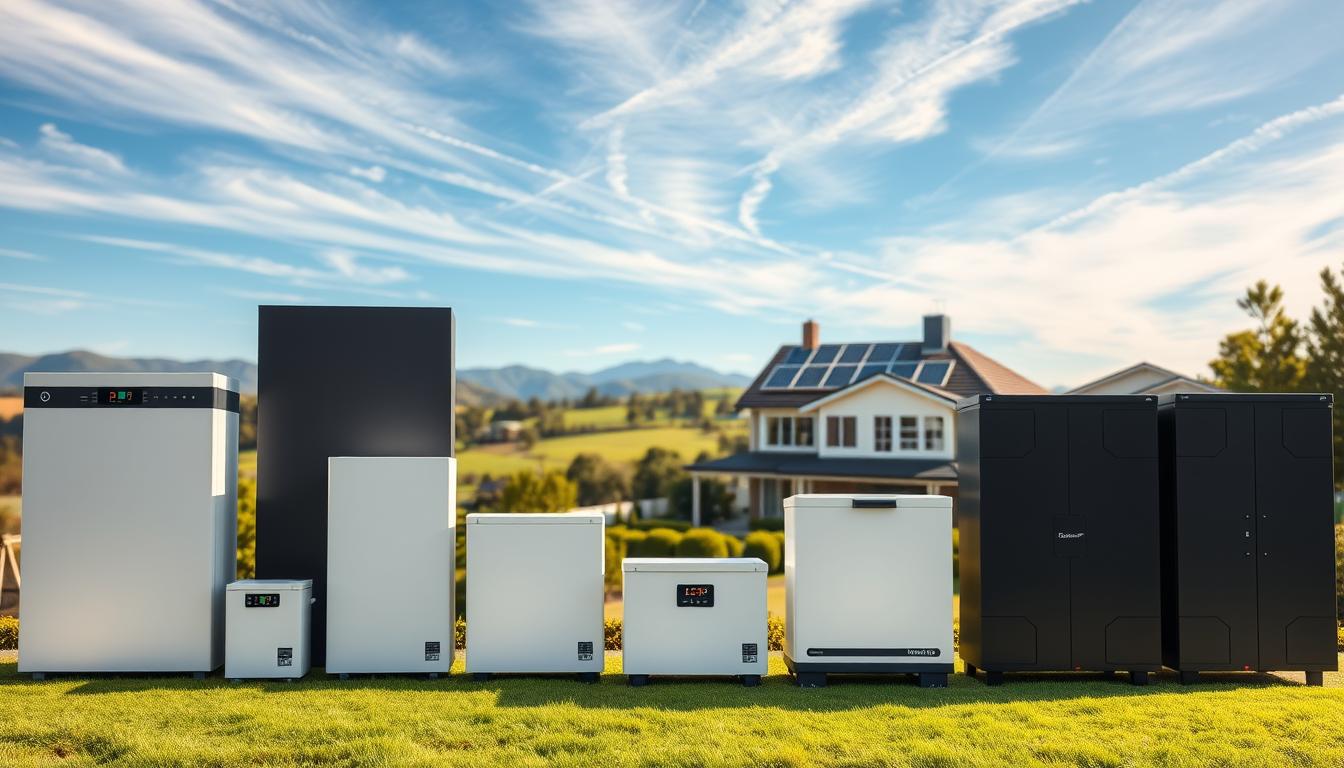
You want clear, local guidance when choosing storage for your roof solar setup. Installer feedback from 2025 shows Tesla and Sungrow tied top among preferences, with Sigenergy and BYD close behind. This helps you weigh reliability, cost and backup performance for Brisbane, Gold Coast and regional towns.
Price benchmarks for ~13–14 kWh give fast comparisons: Tesla Powerwall 3 at $13,600; Sungrow SBR HV around $9,500; Sigenergy about $11,500; BYD roughly $10,600. Typical install sits near $2,000 for a standard fit, excluding hybrid inverter extras.
We link to independent roundups at Sustainable Home Magazine so you can compare models, installers and local performance for QLD climates. Read on to match capacity, chemistry and control features to your needs.
Key Takeaways
- Installer polls (2025) place Tesla and Sungrow as top picks for Queensland homes.
- Expect around 13–14 kWh storage to cover typical nightly use.
- Price examples help you set budgets and compare value quickly.
- Look for climate-hardened features for heat, humidity and storms.
- Check app experience, backup power and VPP readiness for long-term savings.
Why Queensland homeowners are turning to solar batteries now
More families in Brisbane and regional QLD are fitting storage to keep rooftop solar working after sunset.
Falling feed-in credits mean exporting excess solar often pays less than storing it. That shift makes self-consumption more valuable and cuts your evening electricity costs.
Adding a battery helps you shift daytime generation into peak evenings, so you pay less on bills and gain predictable savings over time. Apps and smart modes let you automate charging, discharging and grid interactions to suit your routine.
Storms and outages are another driver. Storage gives reliable backup for critical loads—fridge, lights, Wi‑Fi and garage door—without oversizing your solar panel setup. With Brisbane’s sun, a well-sized system raises solar energy use and trims daytime curtailment.
- Shift generation to evening peaks for lower costs.
- Protect critical loads during outages and storms.
- Prepare for VPPs and future electrification like EVs and heat pumps.
- Learn more from independent explainers at Sustainable Home Magazine.
Installer-backed winners for Australia 2025, and what it means for Queensland
Installer votes this year show two clear leaders and a fast-moving newcomer shaping choices for Queensland homes.
Tesla and Sungrow share top spot, with Sigenergy rising fast
From 161 installer replies, Tesla and Sungrow tied for first. Sigenergy captured 17% and BYD sat at 12%.
Why it matters: installers favour proven performance, backup speed and easy maintenance. That backing helps you shortlist reliable brands when comparing battery storage options.
How these picks translate to Brisbane, Gold Coast and regional QLD
Pricing for ~13–14 kWh gives a quick apples-to-apples view: Tesla Powerwall 3 (13.5 kWh) $13,600; Sungrow SBR HV (12.8 kWh) $9,500; Sigenergy SigenStor (13 kWh) $11,500; BYD HVM (13.8 kWh) $10,600. Typical installation adds about $2,000.
| Brand | Usable kWh | Indicative price | Installer notes |
|---|---|---|---|
| Tesla Powerwall | 13.5 kWh | $13,600 | All-in-one, simple backup |
| Sungrow SBR HV | 12.8 kWh | $9,500 | Modular, scales well |
| Sigenergy SigenStor | 13 kWh | $11,500 | EV-ready, 5-in-one |
| BYD HVM | 13.8 kWh | $10,600 | LFP cells, modular |
- For hot, humid coastal suburbs, pick units with strong IP ratings and cooling.
- Regional sites benefit from near-instant backup to protect pumps and fridges.
- Compare installer quotes and visit independent roundups at Sustainable Home Magazine.
What Are the Best Home Battery Brands in Queensland?

For Queensland roofs and climate, installers and owners point to a tight shortlist of trusted names. This helps you cut straight to options that balance capacity, warranty and backup speed.
Shortlist at a glance:
- Tesla and Sungrow — top installer picks for reliability and app control.
- Sigenergy — smart all-in-one systems with EV-ready options.
- BYD — modular HVS/HVM stacks that pair well with Fronius GEN24 for DC coupling.
- AlphaESS, LG Chem and Fronius + BYD — other proven choices for varied needs.
How they compare for QLD conditions
Below is a concise comparison to help match capacity and backup needs to your roof yield and budget.
| Brand | Usable (kWh) | Installer notes | Strength |
|---|---|---|---|
| Tesla | 13.5 | Top installer votes | Whole‑home backup, strong app |
| Sungrow | 12.8 | Tied for first | Modular, cost‑effective |
| Sigenergy | 13 | 17% installer preference | Integrated EMS, EV-ready |
| BYD | 13–14 | 12% installer preference | Modular LFP, pairs with Fronius |
For impartial shortlists, spec comparisons and QLD-focused advice, check Sustainable Home Magazine. Use their guides to weigh chemistry, backup modes and price when you request quotes.
Tesla Powerwall in Queensland: features, performance and value
Powerwall packs inverter, battery and management into a single, compact system that suits many roofs and backup needs. You get 13.5 kWh usable capacity and whole‑home backup without extra inverters.
Power and durability
13.5 kWh usable gives reliable evening energy and fast response during outages. Active liquid cooling, Storm Watch and rated resilience help in hot, humid Brisbane conditions.
App control and efficiency
The Tesla app lets you set time‑based control and optimise self‑consumption. Round‑trip efficiency stays high, so stored solar energy is used effectively to cut bills.
How it compares and practical notes
For modular scaling, look at Sungrow SBR HV buyer guides and QLD case studies at Sustainable Home Magazine. Sungrow stacks start at 9.6 kWh and scale easily, using lithium iron phosphate chemistry for safety and long lifespan.
- Consider installation clearances and breaker sizing for safe commissioning.
- Check warranty, local support and app features to match your energy routines.
- Compare indicative prices and total system costs before you commit.
Sigenergy SigenStor: 5-in-one smarts and EV-ready storage
Sigenergy’s SigenStor brings inverter, EMS and optional EV charging into one compact stack. You get an integrated battery system that merges inverter, PCS, battery modules and an energy management system. This simplifies design and cuts install time on site.
Integrated inverter, EMS and optional 25 kW bi-directional DC EV charger
The unit offers an optional 25 kW bi-directional DC charger for V2H and V2G readiness. That lets you fast charge and later push power back to your home or grid as rules evolve.
Zero-millisecond backup, IP66 and high efficiency for local conditions
SigenStor provides zero-millisecond load-side backup, keeping sensitive kit online during outages. IP66 protection and a wide temperature range suit outdoor Queensland installs.
- Modular sizing: 5.38 or 8.06 kWh modules, up to ~48 kWh per stack and parallel options for larger needs.
- Efficiency: up to ~98.3% (three-phase) to maximise usable solar energy.
- Commissioning: installers report straightforward setup and smooth first-time commissioning.
For deeper feature guides and EV charging use cases, read independent analysis at Sustainable Home Magazine.
BYD Battery-Box: scalable HV/LV options and Fronius synergy
Scaling storage without major rework is a clear strength of BYD’s Battery-Box line. You can pick HVS or HVM stacks to suit inverter choice and space. Modules come in 2.56 kWh (HVS) and 2.76 kWh (HVM), letting you build from about 5.1 kWh up to ~22.1 kWh per stack.

HVS/HVM modularity, LFP chemistry and outdoor-friendly IP55
Lithium iron phosphate cells give safety and longer cycle life. That chemistry suits Brisbane heat and coastal humidity.
IP55 weather protection lets you place units outdoors and free garage space. Efficiencies run near 95% (LV) to 96% (HV), so usable capacity holds up on warm days.
- You can choose HV or LV architectures to fit inverter and performance needs.
- True stackability makes future expansion straightforward.
- Pairing BYD with Fronius GEN24 offers strong DC-coupled performance and reliable backup.
- Pricing at ~13.8 kWh sits competitively near $10,600 (ex install/inverter).
Tip: discuss three-phase power and panel-to-battery DC coupling with your installer, and explore detailed pairing guides at Sustainable Home Magazine.
AlphaESS Smile Series: neat all-in-one systems for Aussie homes
AlphaESS packs inverter, BMS and battery into a neat cabinet that suits modern Aussie houses. You get LFP chemistry for safer cycles and solid lifespan in warm coastal or inland suburbs.
Key highlights: IP65 rating, up to 96% round-trip efficiency and a 0.01 s switchover to backup keep essential power online during storms.
“A tidy, integrated cabinet reduces installation clutter and speeds commissioning on site.”
Modules start near 5.7 kWh and scale to about 34.2 kWh, so you can expand as needs change. AlphaESS has supported Australian customers since 2015 and keeps local service for warranty and parts.
- Neat cabinet reduces wall clutter and component complexity.
- Safety-first LFP chemistry suits hot QLD conditions and extends cycle life.
- Fast backup switching and IP65 weather protection protect key loads.
| Feature | Value | Benefit | Notes |
|---|---|---|---|
| Chemistry | LFP | Safety & long lifespan | Good for warm climates |
| Capacity (modular) | 5.7–34.2 kWh | Start small, expand later | Flexible for households |
| Efficiency | Up to 96% | Better solar utilisation | Improves nightly coverage |
| Protection & backup | IP65 / 0.01 s | Reliable during storms | Keep critical loads online |
Tip: compare Smile system reviews and Queensland user feedback at Sustainable Home Magazine before finalising installation and load planning.
LG Chem RESU: compact footprint with strong efficiency
LG’s RESU line packs high energy density into a compact cabinet that suits tight suburban spaces.
RESU uses lamination and stacking tech to raise usable kWh in a small form. The RESU10 gives about 9.8 kWh total and ~8.8 kWh usable at ~51.8 V, while Prime models push usable capacity with up to 100% DoD.
IP55 weather protection and a -10°C to 45°C rating make these units suitable for indoor or sheltered outdoor QLD installs. Warranties typically run 10 years with capacity-retention clauses.
Practical notes:
- Wall-mount design fits tight garages and townhouses, but check wall strength and service access.
- High DC round-trip efficiency improves self-consumption and evening coverage.
- Shade mounting in Brisbane helps keep units within preferred temperature limits.
- Compare total installed price for RESU10H and RESU16H Prime with modular stacks when sizing for household loads and backup power.
For detailed RESU comparisons, sizing tips and local installation notes, consult Sustainable Home Magazine.
Fronius GEN24 with BYD: a proven pairing for reliable backup
A Fronius GEN24 paired with BYD Battery-Box Premium offers a tested route to steady home energy and dependable outage protection.
Why this combo works: DC coupling reduces conversion losses so more solar energy reaches your battery and home. The set supports scalable BYD stacks from about 5.1 kWh to 22.1 kWh per stack, letting you grow capacity as needs change.
The Fronius monitoring suite gives clear insights into generation, export and consumption. That helps you tune charging, manage export limits and track savings over time.

DC-coupled gains, three-phase backup and scalable capacity
Three-phase backup options let larger houses and workshop circuits run during outages. Commissioning uses BYD’s BeConnect and Fronius setup for smooth integration.
- Example pricing: around AUD $32,208 for ~13.8 kWh with a Symo GEN24 10 kW, often lower after rebates (~$25,245).
- Typical warranty: about 10 years for key components.
- Installation planning: review three-phase boards, dedicated backup circuits and reserve settings with your installer.
Tip: compare DC-coupled efficiency gains against AC-coupled retrofit simplicity and read case studies and pairing analysis at Sustainable Home Magazine before you commit.
How to choose a home battery in QLD: capacity, power and chemistry
Think in terms of nightly energy: how many kilowatt‑hours must stay available after sundown?
Start by listing critical circuits—fridge, lights, modem and any medical gear. That gives a clear kWh target to size capacity for your household.
Match your kWh to household use and critical loads
Size capacity (kWh) to cover evening and early‑morning consumption plus a safety margin. Match power (kW) to peak appliance draws so the unit can run fridges and pumps without overload.
- Capacity: cover nightly needs and backup hours.
- Power: check continuous and surge kW ratings for appliances.
- Efficiency & cycles: higher round‑trip efficiency keeps more solar energy for use, and longer cycle life stretches value.
Lithium iron phosphate advantages for safety and lifespan
Lithium iron phosphate chemistry offers strong thermal tolerance, better safety and long cycle life for QLD heat and humidity. That makes LFP a smart choice when you want durable, low‑risk systems.
Also confirm inverter compatibility, plan for future solar panel or EV additions, and weigh AC vs DC coupling for retrofit ease versus conversion gains. For sizing calculators and chemistry explainers, see Sustainable Home Magazine.
Pricing in context: upfront costs, installation and ROI in Queensland
Upfront costs and real‑world installation charges shape whether storage makes financial sense for your household.
“Budget carefully — hardware is one thing; installation can change the maths.”
Typical system and install price ranges from recent market data
Use the ~13–14 kwh benchmarks to compare like for like. Indicative unit prices: Tesla Powerwall 3 ~$13,600, Sungrow SBR HV ~$9,500, Sigenergy SigenStor ~$11,500, BYD HVM ~$10,600.
Expect typical installation near $2,000 for a standard fit. Complex sites, hybrid inverter needs or switchboard upgrades add cost. One example pairing — Fronius GEN24 with BYD (13.8 kwh) — sat around $32,208 pre‑rebate and about $25,245 after federal rebates.
Bill savings, time-of-use shifting and payback timelines
Savings come from higher self‑consumption, shifting to lower-cost times and reducing peak electricity draw. VPP participation can improve returns if you accept occasional aggregator control.
- Budget for hardware plus installation and any inverter upgrades.
- Model your household consumption, tariffs and export rates to estimate payback.
- Remember outage value — food safety and work continuity matter beyond pure ROI.
For up‑to‑date price trackers, rebate guides and ROI tools, check Sustainable Home Magazine: https://lightyellow-weasel-509558.hostingersite.com.
Installation, compatibility and warranties: what you need to know
A clear installation plan saves time, avoids surprises and protects your investment. Start with a site assessment so installers can check wall space, clearances, ventilation and weather exposure.
Confirm inverter compatibility early. Check single versus three‑phase needs and how backup circuits will be routed. That reduces change orders and late costs.
Budget typical installation at about AUD $2,000 for a standard fit. Expect higher charges for complex switchboard work, hybrid inverter upgrades or difficult access.
Warranties usually run around 10 years and include throughput and end‑of‑warranty retention clauses. Read terms for allowed cycles and capacity guarantees before you sign.
- Prefer proven safety features: LFP chemistry, active cooling, high IP ratings and robust BMS design.
- Ensure compliance with AS/NZS standards and your DNSP rules to avoid delays.
- Plan for service access so battery systems can be maintained over their lifespan.
- Ask about surge protection, isolators, labelling and monitoring portals for firmware updates.
“Use an installation checklist and warranty summary to compare quotes apples‑to‑apples.”
Visit Sustainable Home Magazine for checklists, compatibility charts and step‑by‑step commissioning guides before you commit.
Backup power, Virtual Power Plants and tariff changes in Queensland
Increasingly, local quotes include virtual power plant offers alongside backup-capable storage. This shifts how you plan for outages and daily charging.
Backup setups let you pick essential circuits—fridge, lights, comms and medical gear—to keep running during storms. You can set a reserve so backup remains after several cloudy days.
VPPs can pay you credits for supplying energy at peak events. Read the fine print: discharge windows and event frequency affect when your system may export rather than hold energy for backup.
- Time-of-use tariff changes make scheduling charge/discharge valuable for savings.
- Grid-smarts in apps can automate actions to reduce peak electricity imports.
- Lithium iron phosphate chemistry suits frequent cycling and QLD heat for longer life.
| Topic | Benefit | Installer tip |
|---|---|---|
| Backup circuits | Protect critical loads | Label and test transfer times |
| VPP participation | Earn credits at peaks | Check event limits on backup use |
| Time-based control | Lower bills via scheduled charge | Sync with TOU windows and app rules |
For VPP guides, backup configuration tips and tariff updates in QLD, see Sustainable Home Magazine.
Explore top-rated home battery options at Sustainable Home Magazine
Independent editorials pull together installer feedback, specs and price snapshots so you can compare real options quickly.
Independent roundups, brand comparisons and up-to-date QLD insights
Visit Sustainable Home Magazine for unbiased comparisons, Queensland-specific buyer guides and installer‑vetted picks: https://lightyellow-weasel-509558.hostingersite.com.
- You can browse impartial roundups tailored to Australian conditions and local details for heat, humidity and storms.
- Side-by-side spec tables show capacity, power, chemistry, efficiency and warranty contrasts.
- Articles review app usability, time-based controls, VPP readiness and backup modes so you assess real performance.
- Brand deep dives cover Tesla, Sungrow (tied first), Sigenergy (rising) and BYD, with pricing near 13–14 kWh and notes on EV-ready charging, DC coupling and IP ratings.
- Practical QLD guidance explains sizing to your home loads and expected solar panels output, plus checklists for like-for-like installer quotes.
Start here to refine your shortlist, compare specs and plan a confident investment in storage. The magazine keeps price trackers and rebate updates so you stay current.
Conclusion
, You now have the facts to choose storage that suits daily use and local climate. Installer-backed leaders for 2025 include Tesla and Sungrow (tied), with Sigenergy (17%) and BYD (12%) close behind. Price examples around 13–14 kWh help set realistic budgets.
Match kWh to your household consumption and critical loads. Check app quality, safety chemistry, IP rating and transfer performance alongside price. Remember that ROI depends on tariffs, time-of-use shifting and any VPP incentives you accept.
For step-by-step guides, calculators and Queensland-specific comparisons, visit Sustainable Home Magazine. Use their tools to validate your shortlist and plan installation timing so your battery, energy systems and solar panels deliver lasting value.
FAQ
Which solar battery brands suit Queensland homes best?
You’ll find several strong contenders for Queensland conditions: Tesla Powerwall, Sungrow, Sigenergy, BYD, AlphaESS, LG Chem and Fronius paired with BYD. Look for lithium iron phosphate (LFP) chemistry, outdoor IP ratings, and vendor support in Brisbane, Gold Coast and regional areas.
How much usable capacity should your household aim for?
Match usable kWh to your nightly consumption and critical loads. Many households start with 10–14 kWh for evening use and essential backup. If you run EV charging or want multi-night autonomy, consider 20 kWh plus or stackable modular systems.
Is lithium iron phosphate (LFP) the right chemistry for QLD?
Yes. LFP offers superior thermal stability, longer cycle life and safer performance in hot, humid climates. That makes it a practical choice for Queensland where heat, storms and outdoor installs are common.
Can a Powerwall handle whole-home backup during blackouts?
Tesla Powerwall can provide whole-home backup when correctly configured with a compatible inverter and switchgear. Check installation design and load management to ensure critical circuits and large loads like aircon are supported.
What IP rating should you look for for outdoor installation?
Aim for IP55 or higher for long-term outdoor durability. Some models like Sigenergy offer IP66, which gives extra protection against dust and heavy rain—useful for exposed coastal or regional sites.
How important is an integrated inverter or DC-coupled system?
Integrated inverters simplify installation and improve round-trip efficiency. DC-coupled arrangements often boost solar-to-storage efficiency and suit new installs or retrofits targeting high self-consumption and EV charging.
What typical warranties and lifespans do reputable brands offer?
Leading brands usually provide 10 years or a specified cycle warranty. With LFP chemistry, expect 10–15 years of usable life depending on cycling patterns and temperature management.
How much does installation add to system cost in Queensland?
Installation varies by site complexity, switchgear needs and whether the inverter is replaced. Expect a significant portion of total cost—get three quotes from accredited installers to compare inclusions and permitting.
Will a home battery lower your electricity bills in QLD?
Yes, if you pair appropriately sized storage with solar and use time-based control to shift consumption from peak to off-peak. Savings depend on household use, feed-in tariffs and whether you’re on time-of-use pricing.
Are any brands better for EV charging integration?
Sigenergy and some BYD configurations offer strong EV-ready features, including bi-directional charging options. Check for integrated EMS and compatible chargers if you plan vehicle-to-home or vehicle-to-grid later.
How do you choose between high-voltage (HV) and low-voltage (LV) battery systems?
HV systems often provide better efficiency and smaller cable runs for new installs, while LV types can be more modular and easier to expand. Consider inverter compatibility and future expansion when deciding.
Should you prioritise efficiency or usable capacity?
Balance both. Higher round-trip efficiency reduces wasted energy, but usable capacity determines how long you can run loads. Pick a system that meets your daily kWh needs and maintains strong efficiency for real-world savings.
What safety features should you expect from a reputable system?
Look for thermal management (active cooling or passive design), certified LFP cells, built-in battery management systems (BMS), overcurrent protection and compliance with Australian electrical standards and installers’ certification.
Can batteries withstand Queensland heat and flooding risks?
Many modern systems are designed for wide temperature ranges and have IP ratings for water ingress. For flood-prone areas, install above predicted flood levels and choose models with proven outdoor resilience and corrosion protection.
Where can you find installer-backed comparisons and up-to-date QLD insights?
Consult independent roundups from reputable publications and seek local installer feedback. Local installers can advise on performance in Brisbane, Gold Coast and regional climates and on warranty support within Queensland.